Portland, England
This was a new port for us. The Isle of Portland
is 4 miles long by 1.7 miles wide. It's south of the English Coast
in the English Channel. It's known for its stone, a special limestone,
which is mined there in a large quarries.

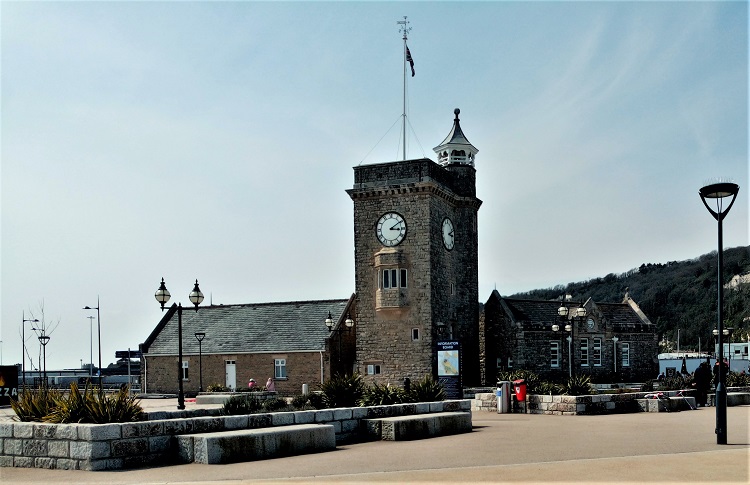
The Portland Castle, built in the 16th century, was near the dock.
 
We walked over a ridge of gravel to the "beach." This
ridge was constructed in the late 1800s and connects the island
to the mainland, which created one of the world's largest man-made
harbors. Now there is a train track and a road connecting the
island to England.

Looking north toward England...

...and south toward this rocky island.


We took a bus to Southwell, which was closer to the southernmost
end of the island, but we had to do a bit of hiking from this
suburban intersection to get there.


We visited with some horses along the way.

The map indicated that there was a trail along the fence and another
couple was considering going on that trail. They decided to continue
along the road. We took the road less traveled.

The trail led to a large quarry. We walked around to the other
side toward the coast.

The trail stopped, but we continued along a very narrow ledge
to get to the other side.

We found the Coastal Trail.


What a rugged shoreline.

There were some ruins. This island has been inhabited since the
Stone Age.


The beach cherries were in full bloom.
 
We'd been alone on the Coastal Trail, but now we were approaching
the south end of the island.


There were several very large blow holes that were covered with
metal grates held in place with heavy blocks of stone.
Because the seas were calm, there was not a blow hole show on
this day.

Here's another blow hole where you can see how far the water has
to shoot up to reach the top of the blow hole.

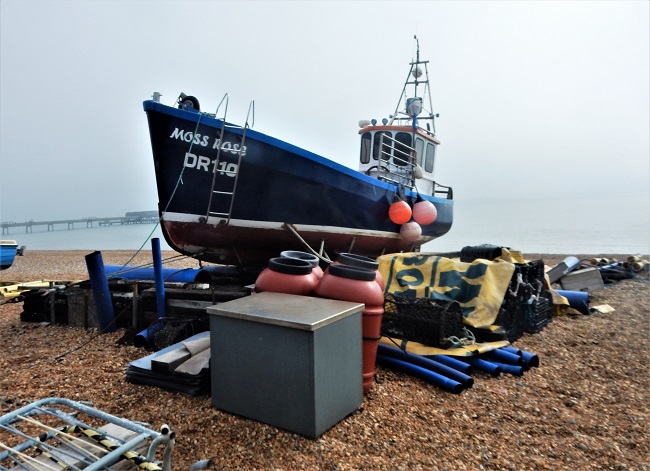
There was a fishing village here, which was puzzling since there
is no easily-accessible shoreline.

But all the boats were outfitted with metal clasps on each side
of the center and...

...there was this crane. So we guessed that the boats are rolled
to the crane and the people get into the boats with all their
gear and are lowered into the water. We thought that this activity
would be limited to times when the seas were calm.

It was early spring here, so people were working on their cabins.
In the background is the lower lighthouse, which is now a bird
observatory.

We took this photo of the Portland Bill lighthouse and its obelisk
from our bench where we had lunch.
 
We caught this view of both the higher and lower lighthouses as
we headed back to the bus stop in Southwell along the road.

Along the way, we saw several herds of sheep.
 
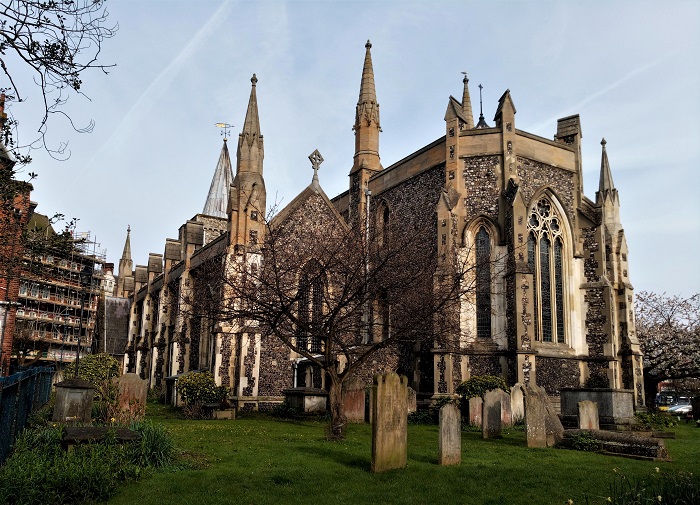
A classic red phone booth and a stone church in Southwell.

We were happy to see the bus. We'd been on our feet for a long
time.

A nice send off from the local choir.

We passed the fortified breakwater as we sailed to our next port,
Dover, England, which was a substitute port for the two we had
missed in France. Brest, was for high winds and a narrow port
entrance and the other missed port Le Havre, which is the port
for Paris. Unfortunately, there was political unrest and workers'
strikes in both the port and in Paris.
|