Agadir, Morocco
Agadir is in southern Morocco south of the Atlas
Mountains. We were signed up for a strenuous, 7-hour ship excursion,
which included "a hike through the desert."

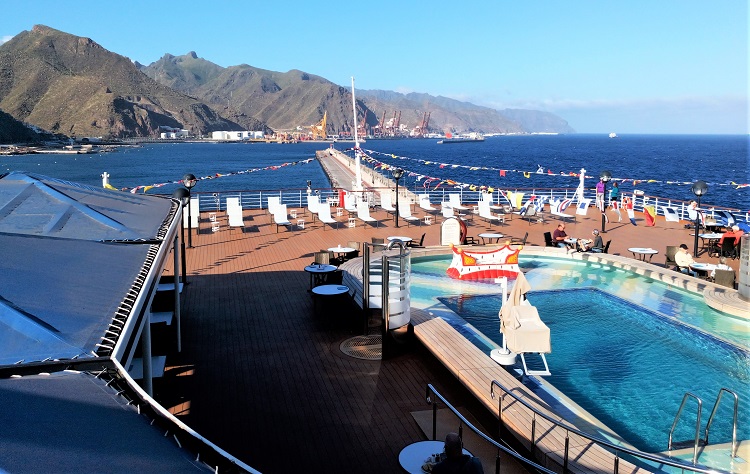
An early morning fishing boat was heading out as we were sailing
in.
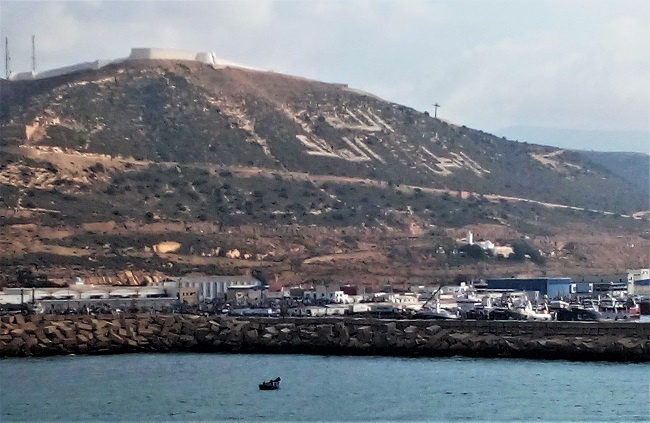
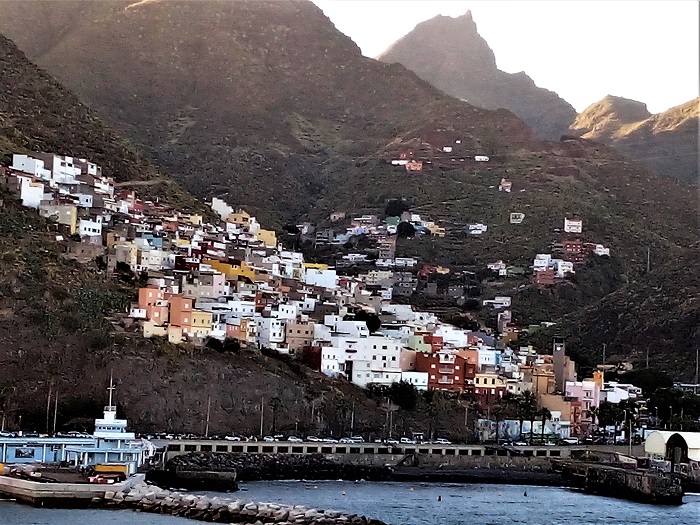
We could not read the Arabic writing on the hillside.

The excursion was in 4 separate 4-wheel drive vehicles. Our driver.
This was during Ramadan, when the Muslims fast all day and eat
only once after sunset.

From our car.
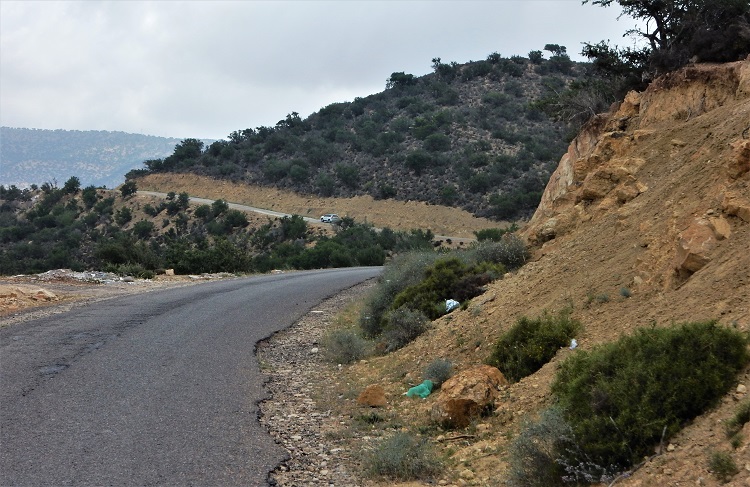
The road became more treacherous.
 
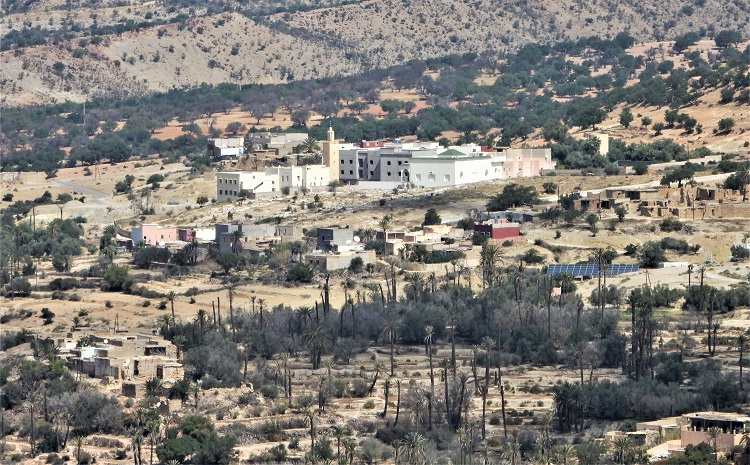
Our guide, Hassan, explained at this overlook that the villages
we could see were actually family clans where everyone has the
same family name.

A very arid landscape.
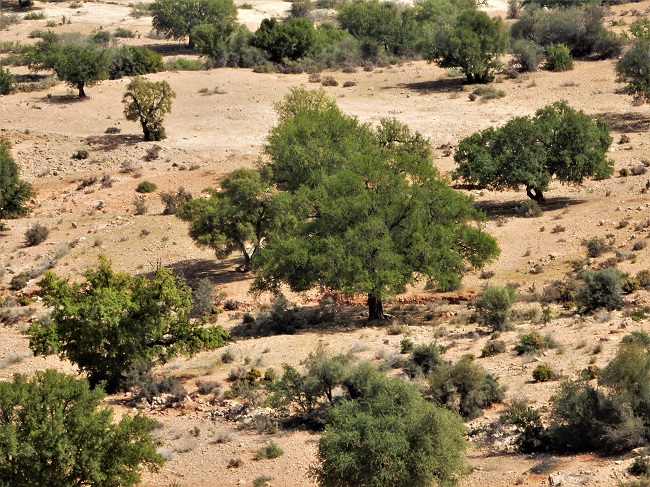
He pointed out that these trees are the argan trees (Argania
spinosa), which are now endemic to southwestern Morocco. We'd
learn more about these trees later in the excursion, but click
that link for further information on the trees and its valuable
oil.

Goats are the livestock here, but apparently they also run wild.
They are known for climbing the argan trees to feed on their thorny
leaves and on the fruit. During the season when the argan fruits
ripen, the goats are herded and penned up so they don't eat the
dropped fruit.

We saw quite a few bees along the way and people here provide
small water features to keep the bees coming back in this arid
country.
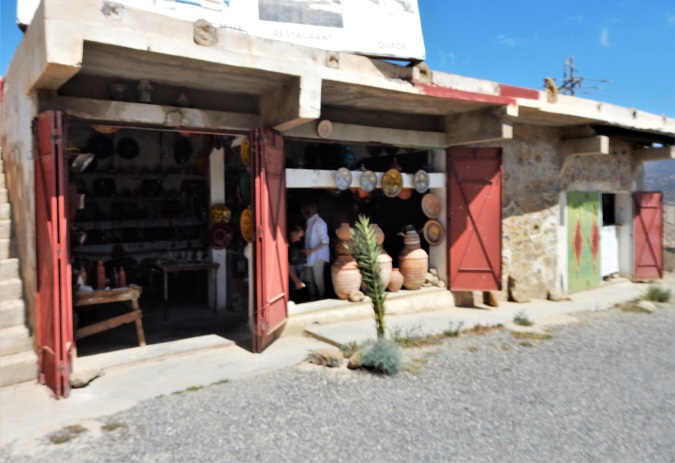
The overlook where we had stopped was behind a roadside market
and there was a primitive single hole-in-the-ground toilet in
the back of the building, which most of our group took advantage
of. We walked around the area while we waited.


Apparently, most of these pieces were fossils.

The vendor's stone house was next to the shop...
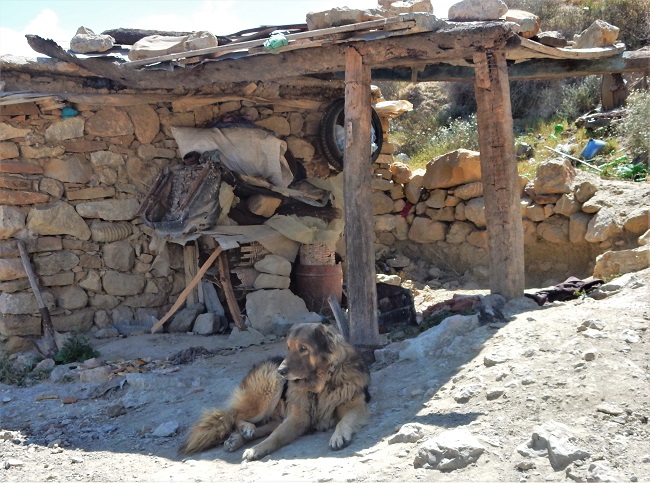
...which was guarded by this dog.
 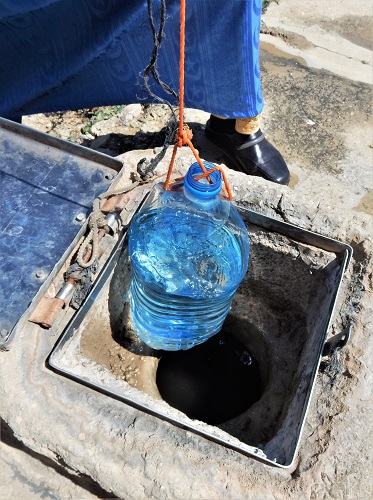
Dipping water from the cistern.
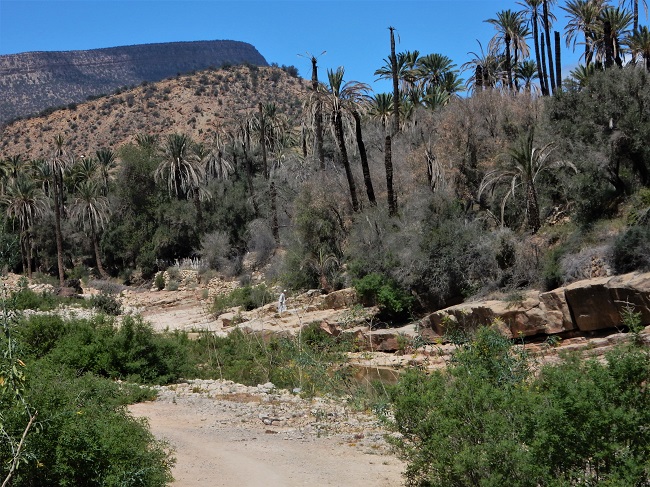

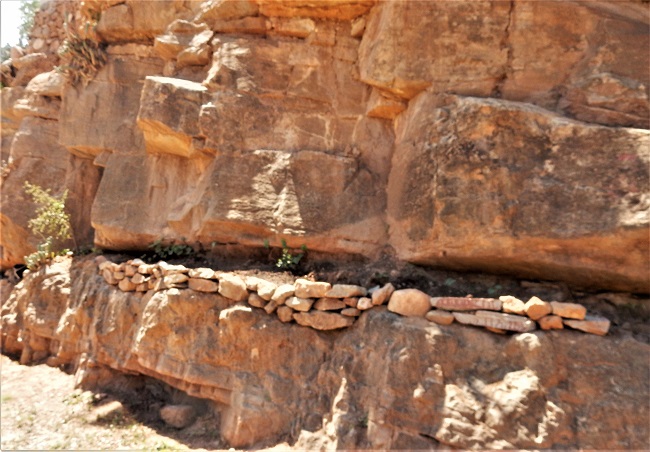
When you live in a tough arid climate and the land is patrolled
by goats, you need to be inventive. These small stones in the
crack held enough soil...
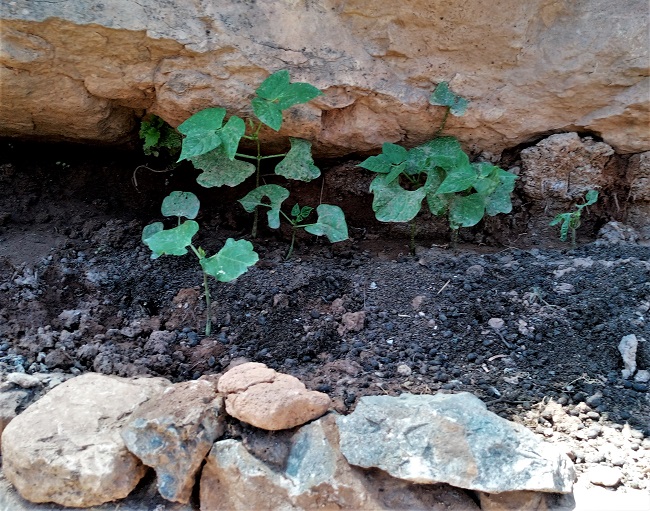
...to grow beans. The soil had obviously been irrigated.
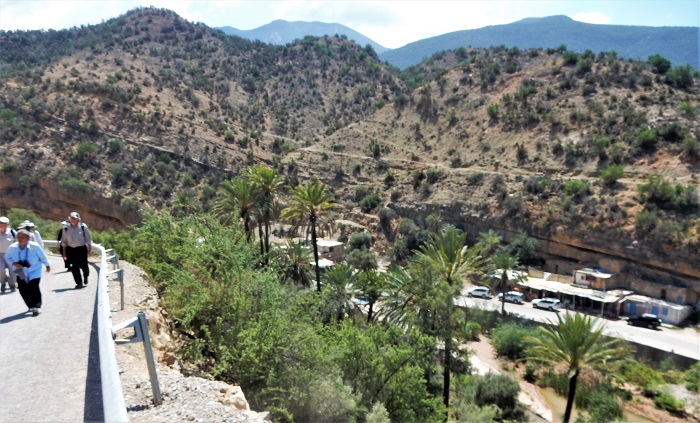
Our hike started with an uphill climb on a road. Our cars were
parked next to that building in the valley.

We approached this village.


The argan fruit looks like an olive.

Bee hives were surrounded by a dense stick fence to keep the goats
out.


There were pollinators of various types from the beetle above
to tiny butterflies like this one.
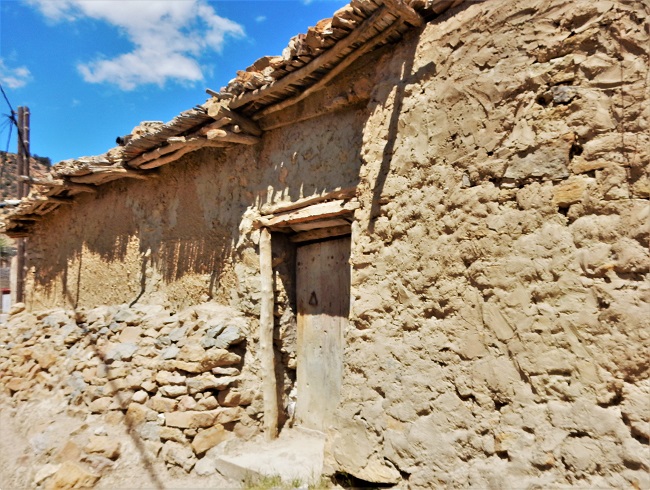
We walked through a village.

This is probably Tree tobacco (Nicotiana glauca), which
native to South America, but has spread to various parts of the
world including Morocco. While it's basically a poisonous plant,
various peoples have smoked it.

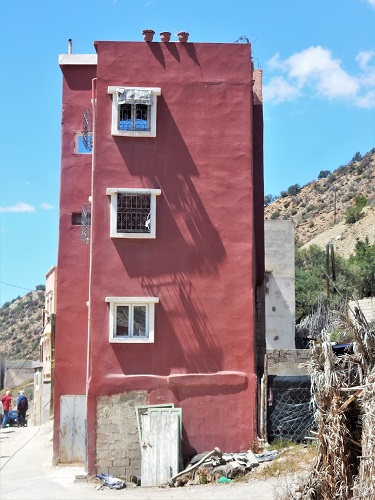 

We headed out of the village down into the bottom lands, which
supported more greenery.
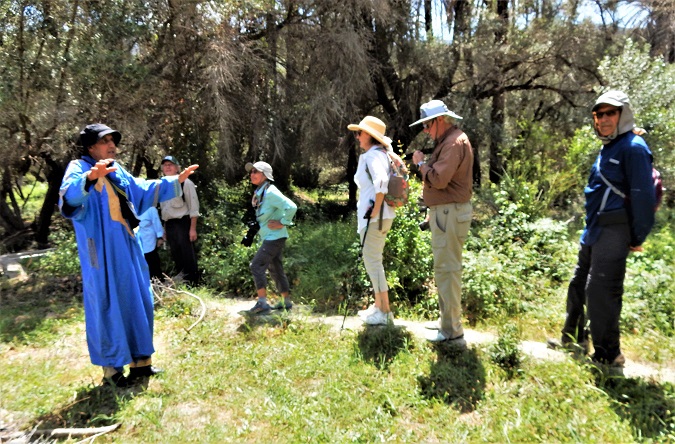
Hassan explained how people grow stuff in this ecosystem.

Rudimentary fencing to keep out goats and to let others know that
this land is being worked in some way.
 
Permission to pass had been granted, but the people working the
land were watching us as we walked along the pathways.
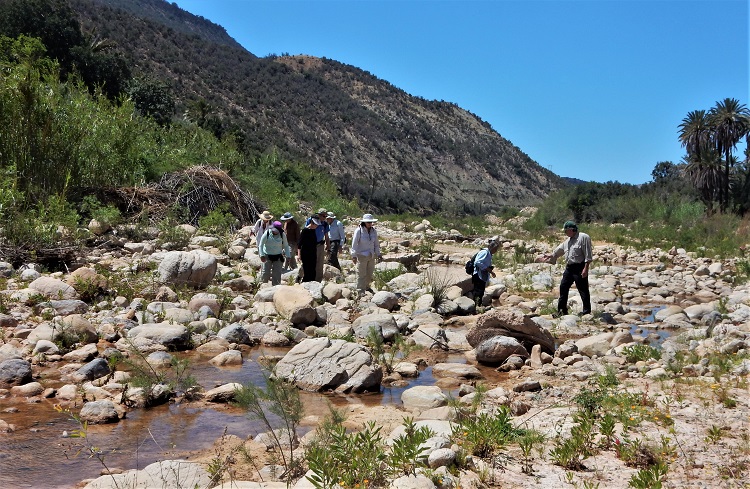
The footing was tricky as we crossed the creek.
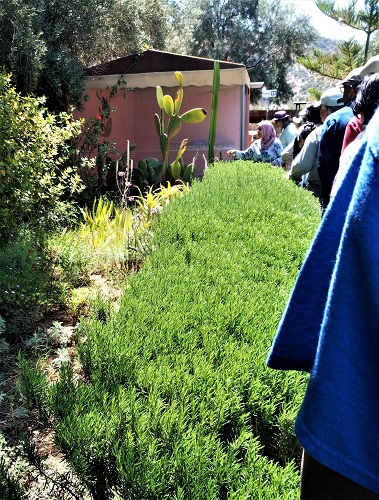 
We then stopped at an argan processing cooperative. First we went
through the herb gardens where each bed was surrounded by a tall
rosemary hedge. A young woman tried to tell us all about each
of the herbs and what they were used for. It was hard to hear
and too far to see what she was talking about. A fountain was
in the center.

We were served narrow slices of flat bread and six dipping choices
including argan oil, olive oil, almond oil and three types of
honey. They were delicious!
 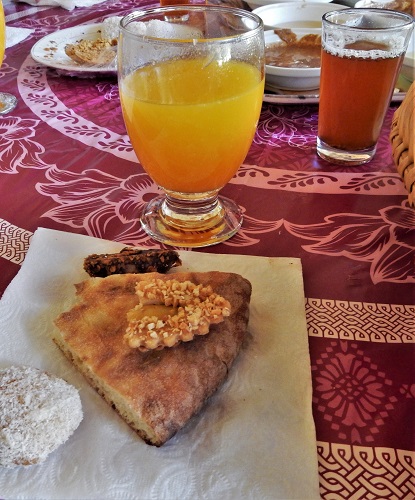
Tea was poured from great heights. We were also served various
cookies and a fruit juice. Yummy. This served as our lunch. There
were also clean rest rooms here with actual toilet seats.

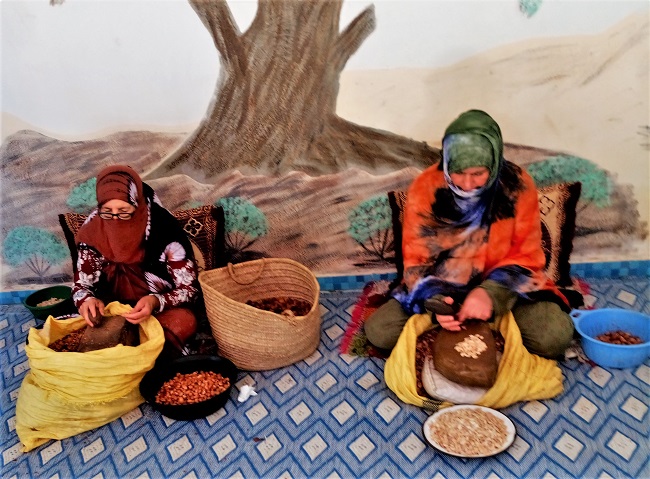
Then we learned about the tedious hand-cracking of the argan fruit/nut
so the seeds could be retrieved without being damaged. The raw
seeds are used for cosmetics, but the seeds need to be roasted
to produce the oil.
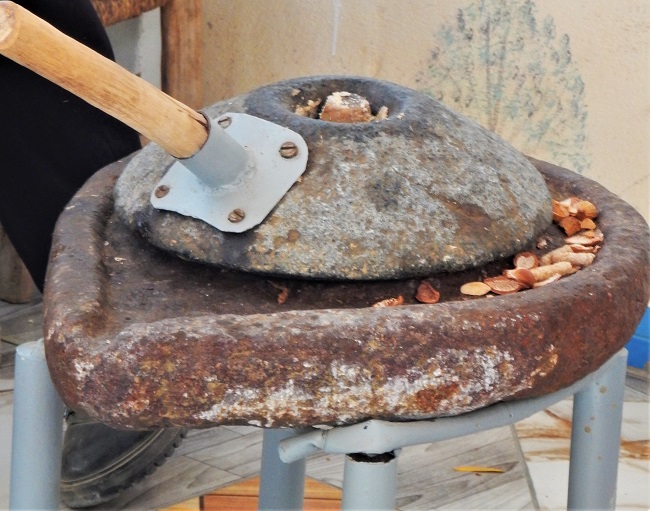
The grinding of the seeds after roasting. After the tastings and
the demonstrations, we were led into a showroom where the young
woman explained about all the products they had for sale and we
were encouraged to try the various lotions. We sat through the
explanations, but even though our skin was softer after using
these products, we did not buy anything.
 
While our shipmates were buying various products, we crossed the
street for a closer look at the trees.
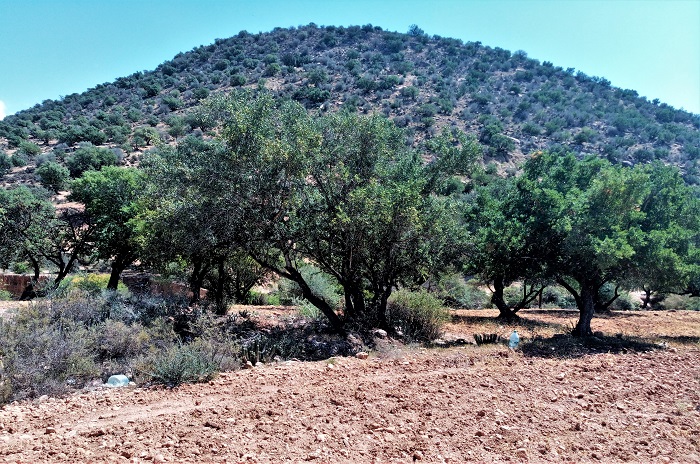

Looking back across the road at the front of the argan processing
facility and showroom.
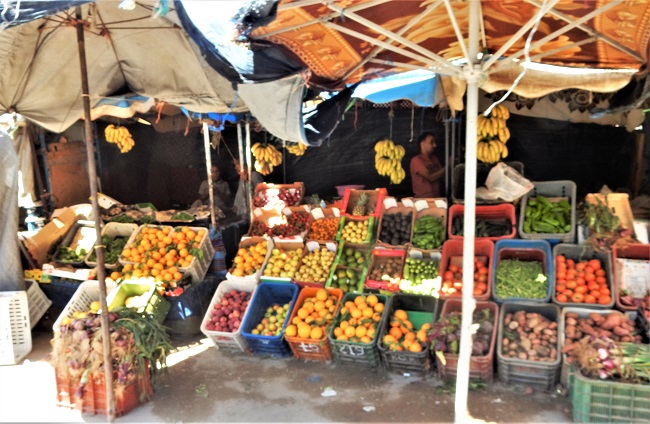

Markets on the way back to the ship. It had been an interesting
day. Our next port was Casablanca, Morocco.
|