Luderitz, Namibia
This was a tender port and a new port for us.

It would be yet another walking day for us.
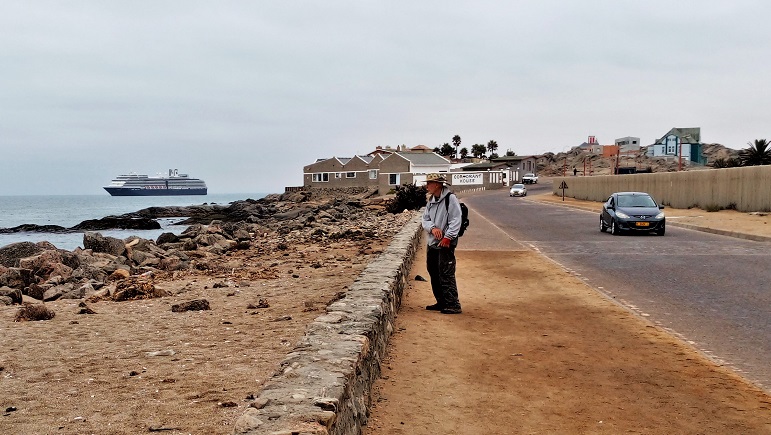
Our first destination was Shark Island, which used to be an island
and was used as a penal colony, but now, a causeway connects it
to the mainland and it's used for B&Bs, a park, and camping
site.
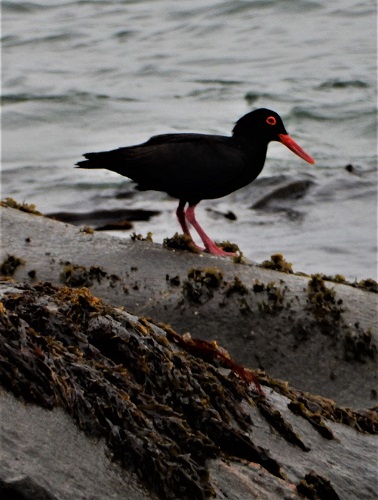

Lots of bird watching opportunities out here as well. The African
Black Oystercatcher (Haematopus Moquini) is endemic to
South Africa and Namibia. Cormorants and other birds were all
fun to watch.

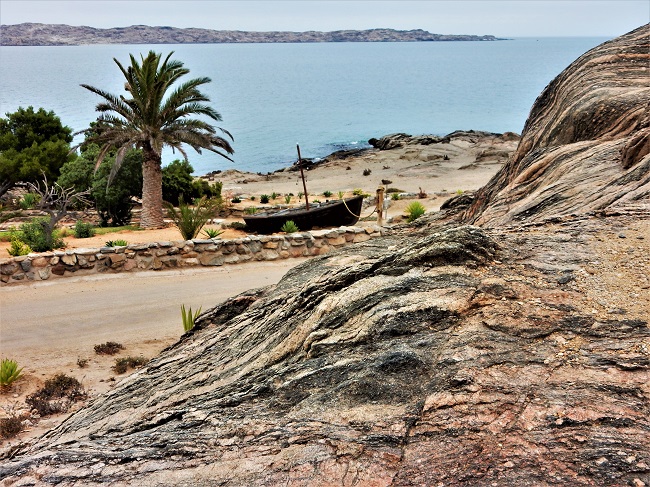
Shark Island is mostly a large rock outcropping that has been
worn smooth by the winds and the seas.
 
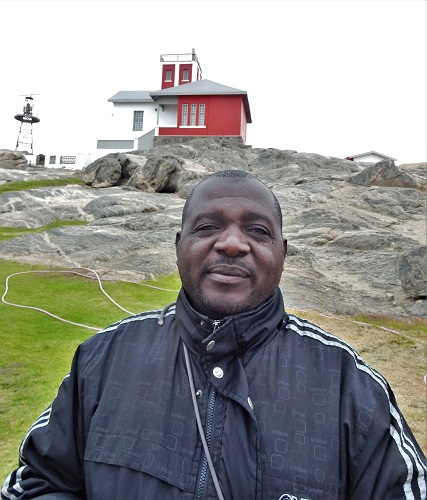
Trying to get just the right angle can make taking photos a bit
risky. The park/reserve includes this lighthouse.
 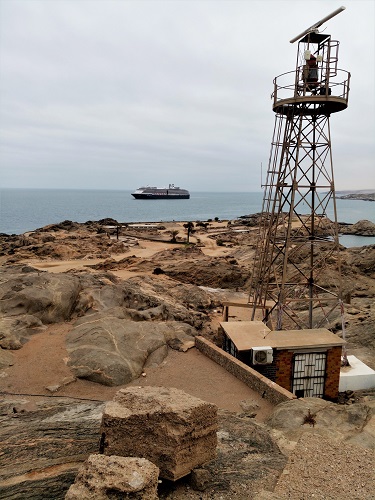
We paid our entry fee and continued. The real working lighthouse
is this metal one, which is less picturesque than the red and
white structure.

A view back to the village and the church from the lighthouse
hill.
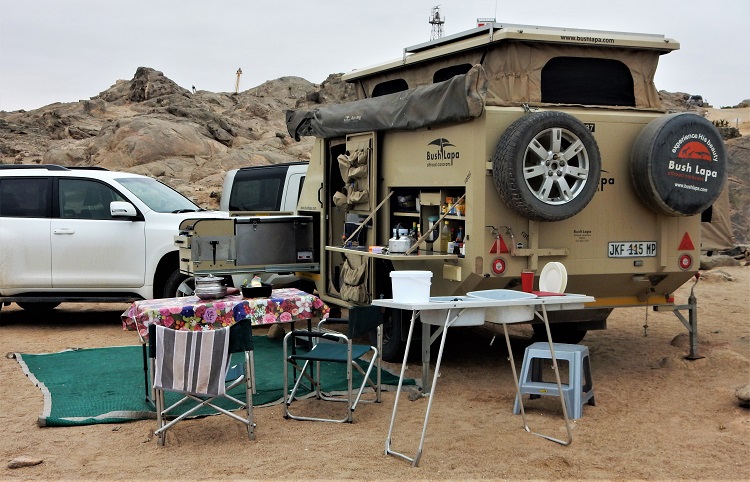
A rugged-looking and compact camping rig. The stove pulls out
and the cupboards open up to form a workable outside kitchen.
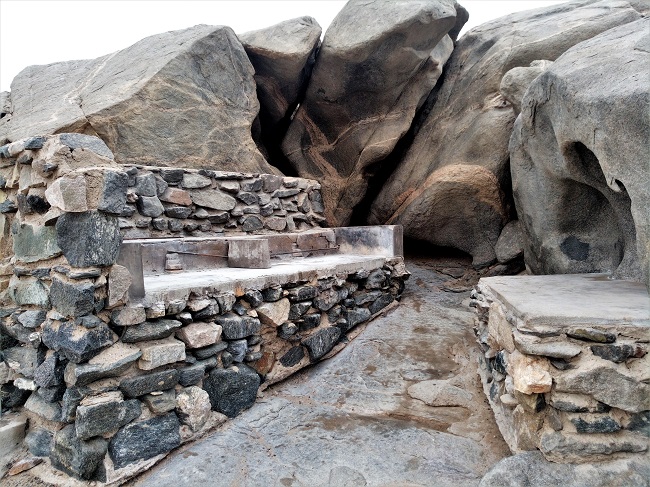
Some of the camping sites have extensive fire pits tucked into
the hollows of the rocks.
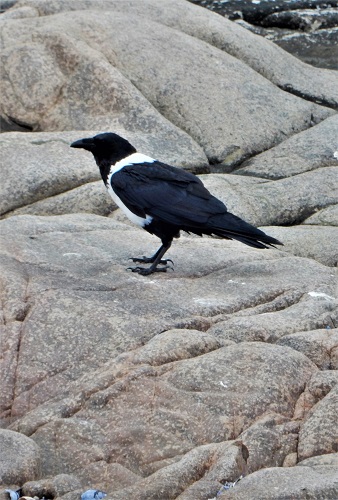 
A Pied Crow (Corvus albus): This species is widely distributed
in most of sub-Saharan Africa. And one of the acacia shrubs (Acacia
sp.) growing in a crack in the rock was in bloom.

Out at the end of Shark Island, there was a good variety of birds.
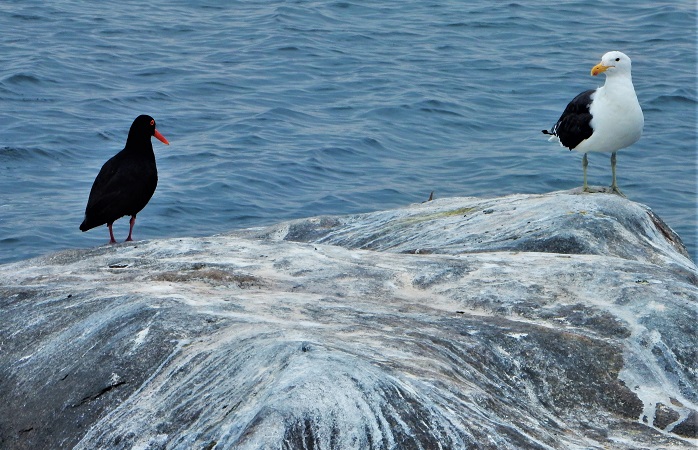
It's easy to spot the birds' favorite rocks.
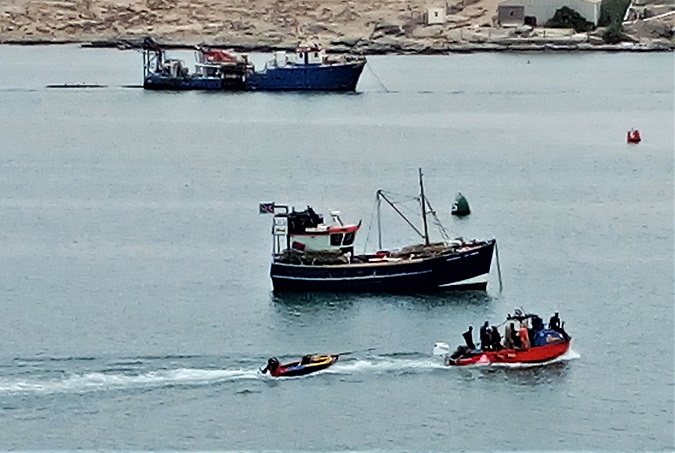
Boat traffic as seen from the end of Shark Island...
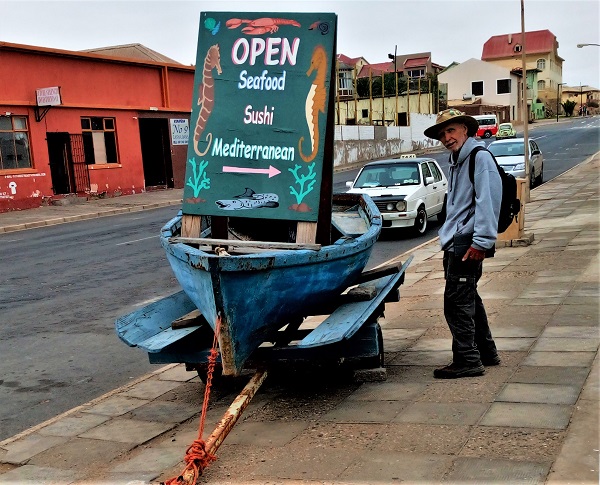
We liked this boat-based sign--how appropriate.
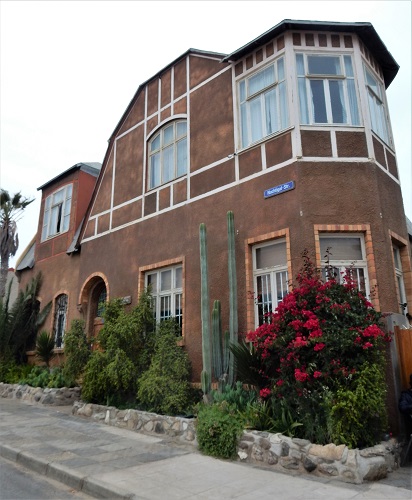

We walked back from the island and through the village toward
the main church.
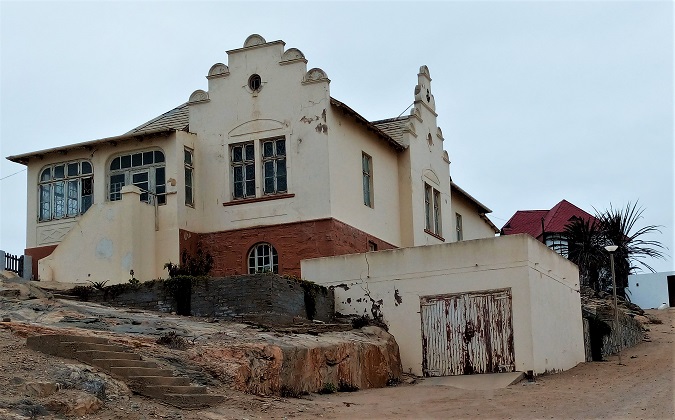
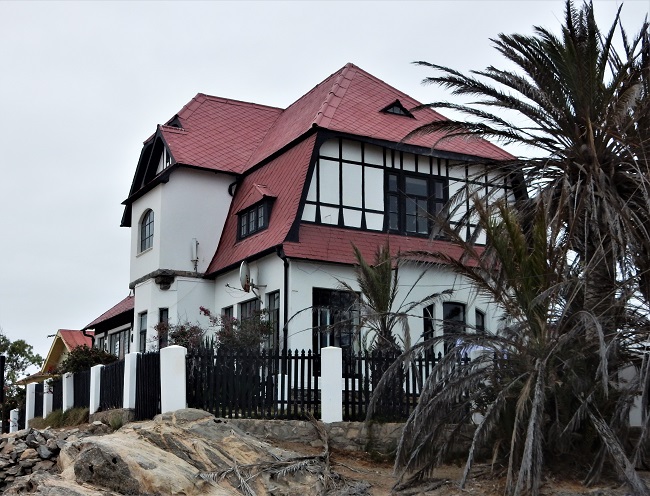
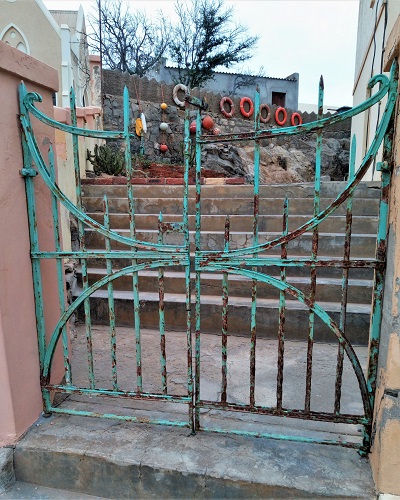
There were some pretty interesting German-style houses in various
states of repair in the village.
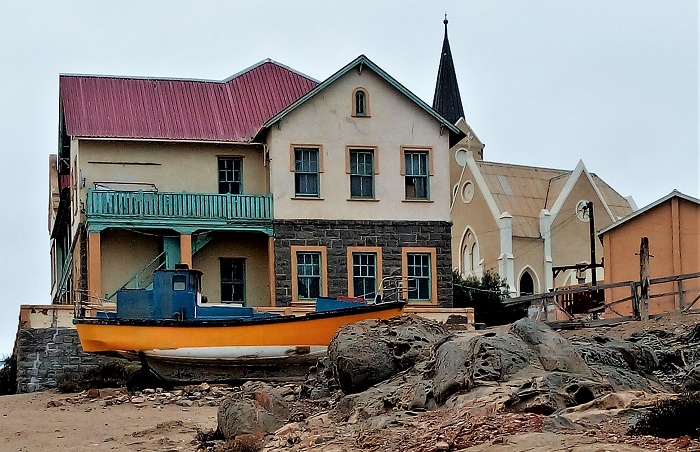
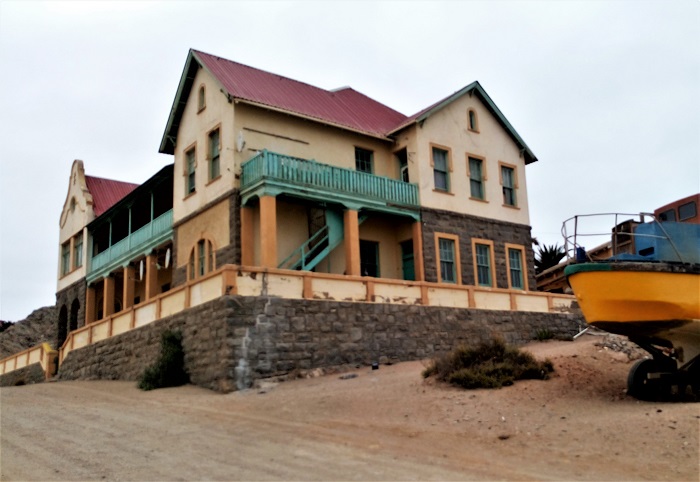
Some of the houses were quite large and were probably used as
inns.
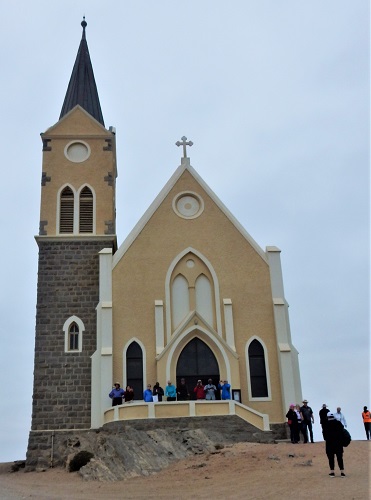
Many of our shipmates occupied the church's front balcony.


The back of the church and a close-up of one of the cute flowers
growing in the cracks.
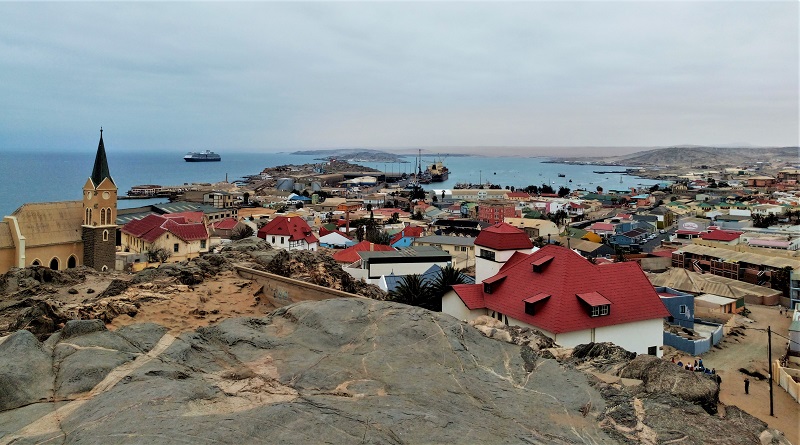
We climbed the hill behind the church.

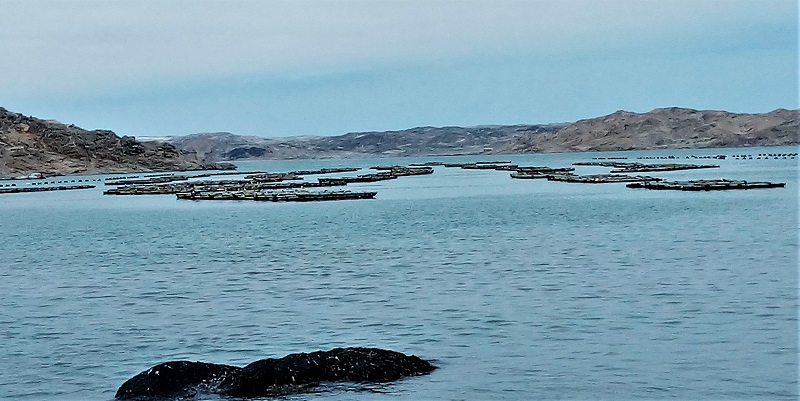
In the bay behind the church, there were a few types of aquaculture
including shellfish and seaweed.

We set up our lunch spot on rocks with smoothed out indentations
that our butts fitted perfectly. Then we headed back.

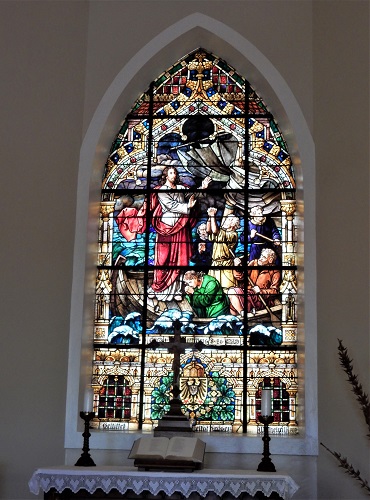
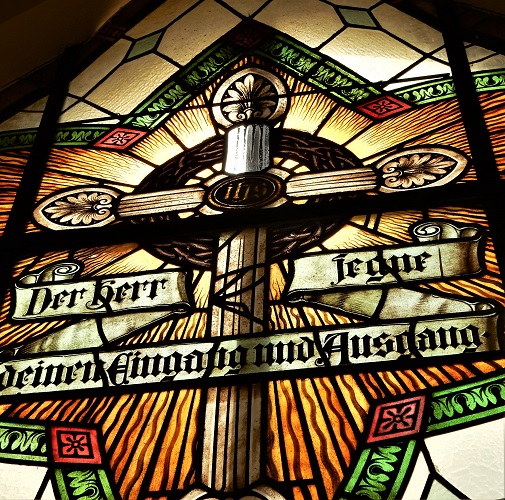
This time we went into the church.


Skilled laborers have a constant stream of work in this town.


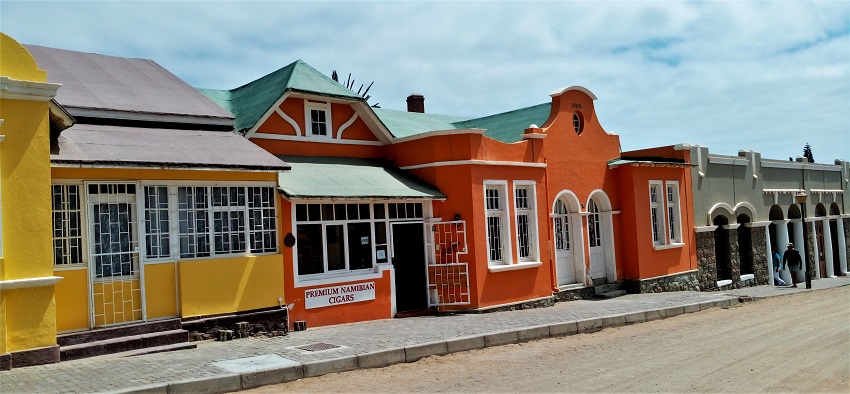


A community center.

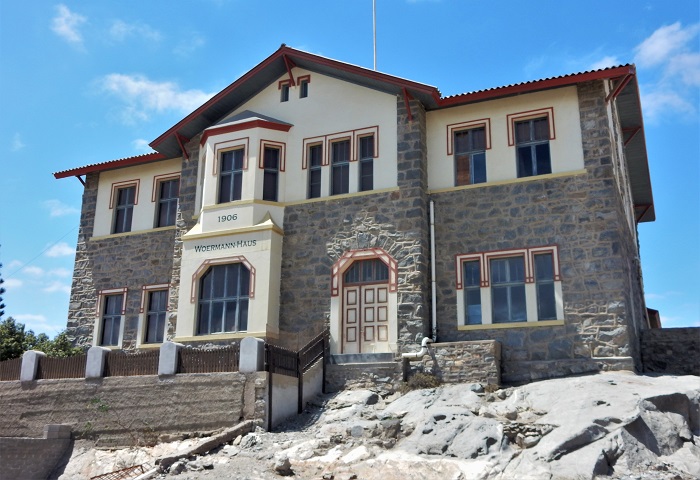
And so we bid Luderitz, auf wiedersehen and boarded a tender back
to the ship.
Our next port, Walvis Bay, Namibia is not too
far north from here.
|