A Corunña, Spain
This was a new port for us. It's on the northern
coast of Spain. Before we left the ship in the morning, it was
announced that this would be an extra long day because we would
miss Brest, France, our next port, due to high winds.
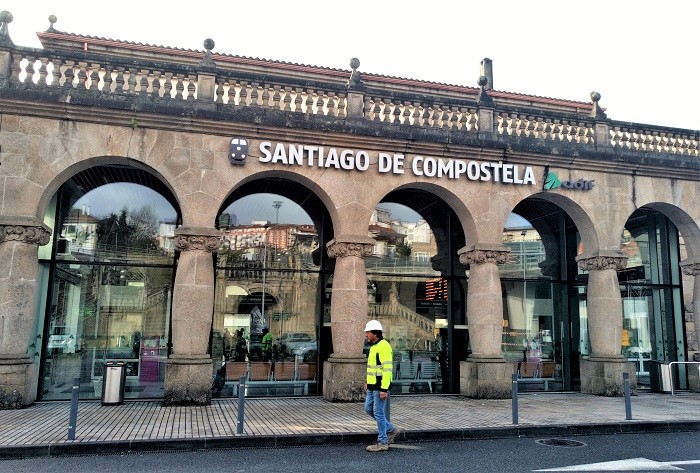
We took a train to Santiago de Compostela where there is a famous
cathedral.

The grand staircase up into town from the train station.
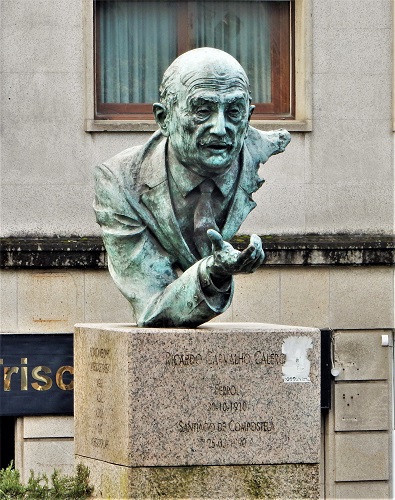 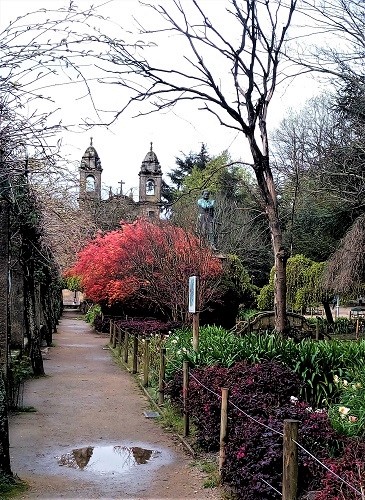

We were happy to find this park with its subterranean rest rooms.
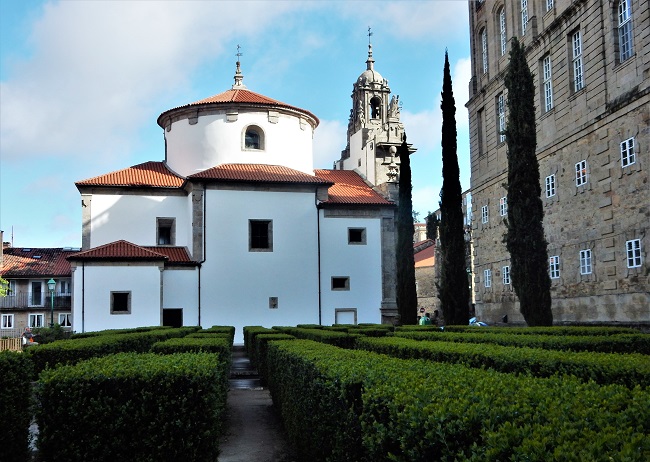
A charming white stucco building with an orange tile roof...
 
...looks entirely different from the front because of its ornate
stone façade.
 
On the left is a closer look at its doorway, but across the plaza
is the even more ornate and famous
Santiago
de Compostela Archcathedral Basilica. This is the door where
the tourists enter.
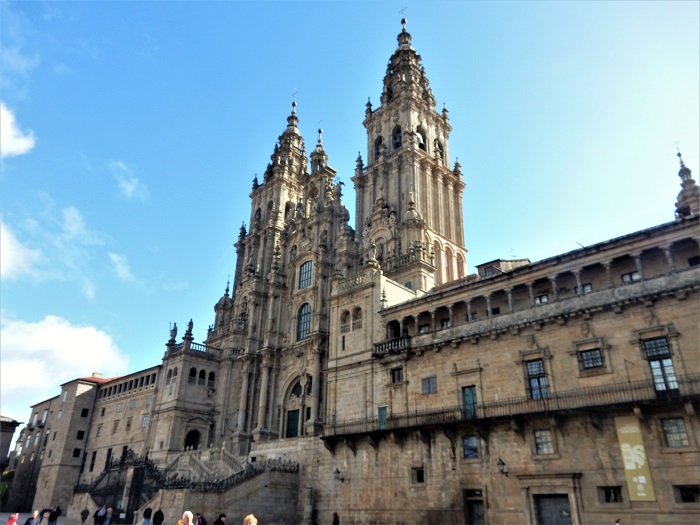
This cathedral is huge, and unlike most churches, this one has
four facades.
Its claim to fame is that St. James the Great is buried here.
 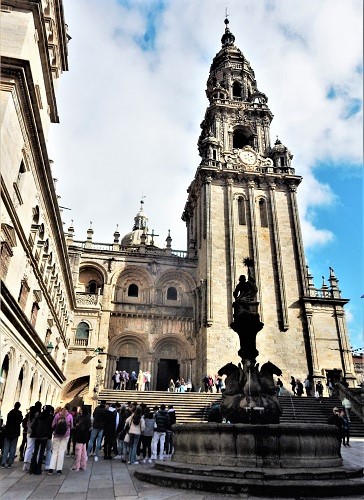
 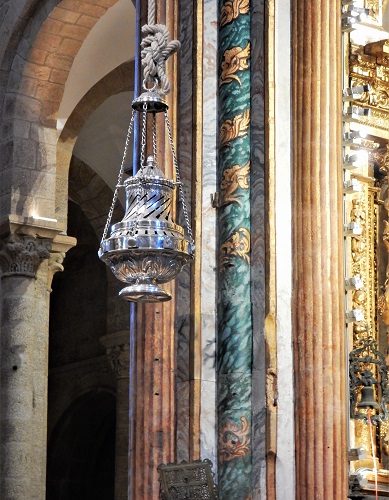
The interior is extremely ornate.

The pipe organ is massive.

The angels carrying this ornate Paso reminded us of the procession
in Cadiz on Easter just a few days prior.
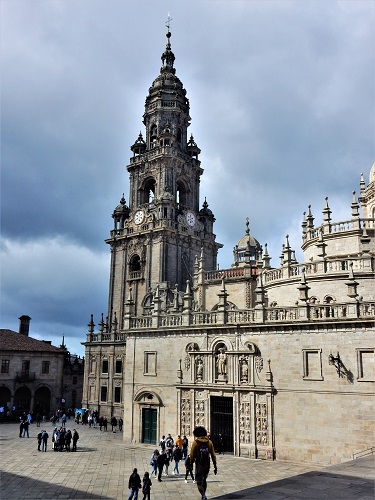 
On the left a look back at another facade. On the right another
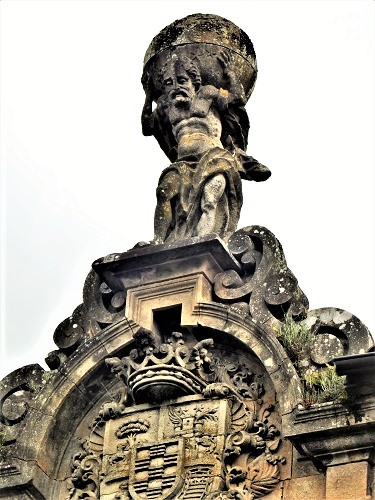
church doorway with a figure, but...

...that figure had slit his own throat.
 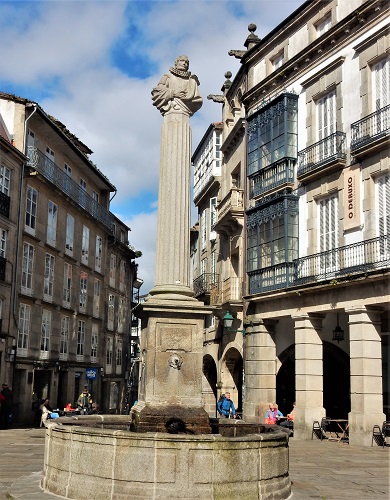
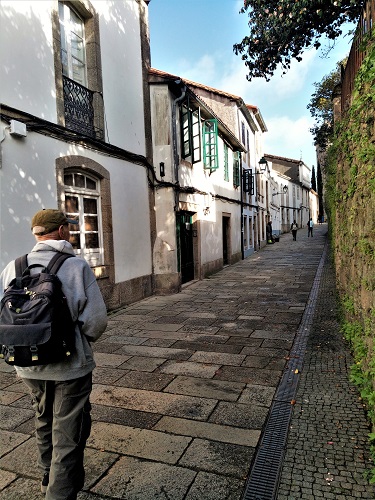
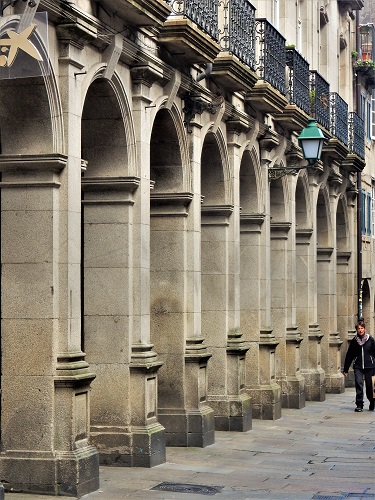
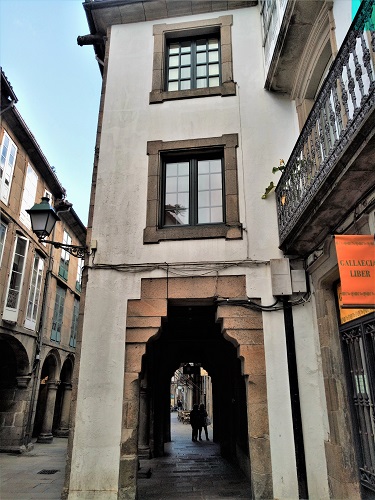
Walking through the rest of this city offered many more picturesque
venues.

The grape leaves were just emerging from this vine trellised on
the balcony.

There were a few more modern sights as well.
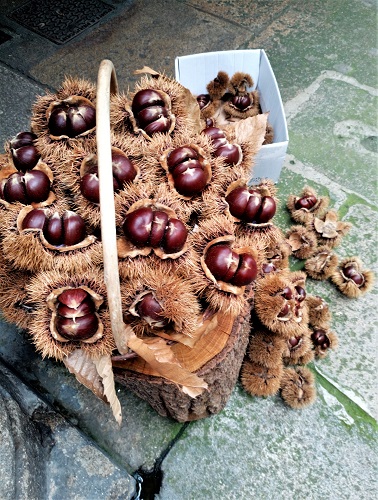 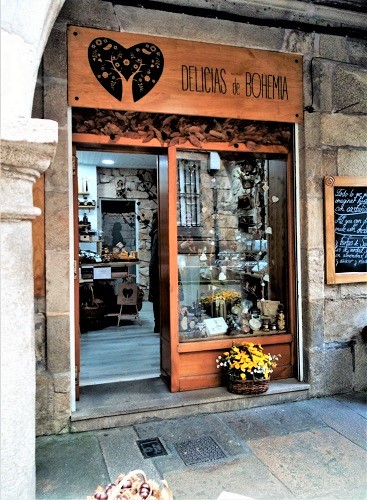
These chestnuts were offered for sale in front of this cute shop.
We had lunch back in the garden where we'd started our day in
this ancient city.
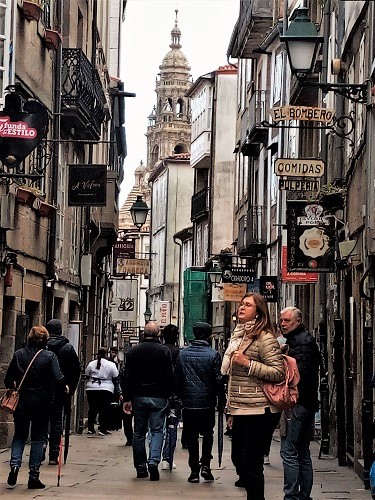 
The cathedral dominates the skyline in much of the city. We walked
into this courtyard...
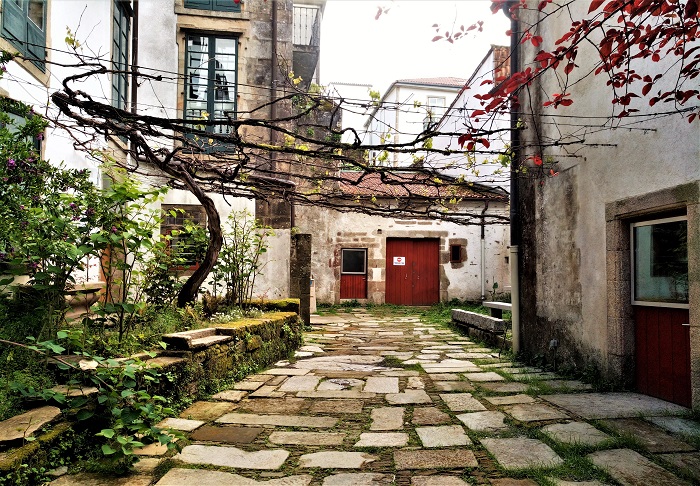
...where a grapevine was beginning to leaf out. We could imagine
that later in the season that tables and chairs would be set up
here for some shady outside dining.
 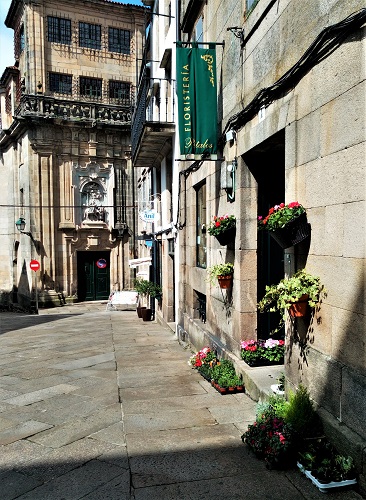
A flower shop...
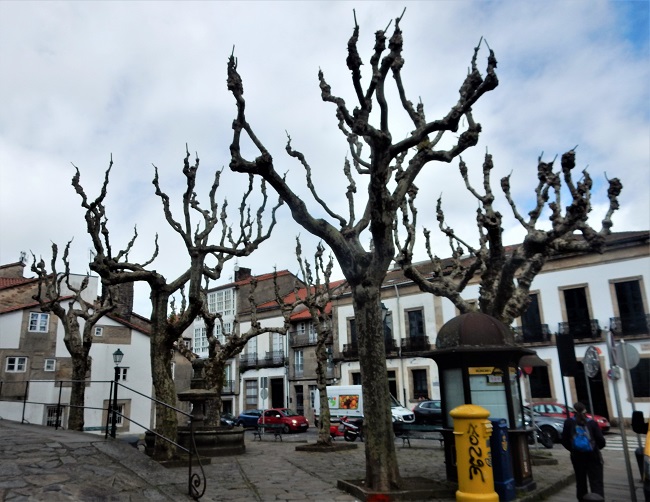
Many of the trees in European cities are pollarded to keep them
from getting too tall and to force the trees to produce dense
growth in response to being cut. At this stage, before the leaves
have emerged, I think it's really ugly.
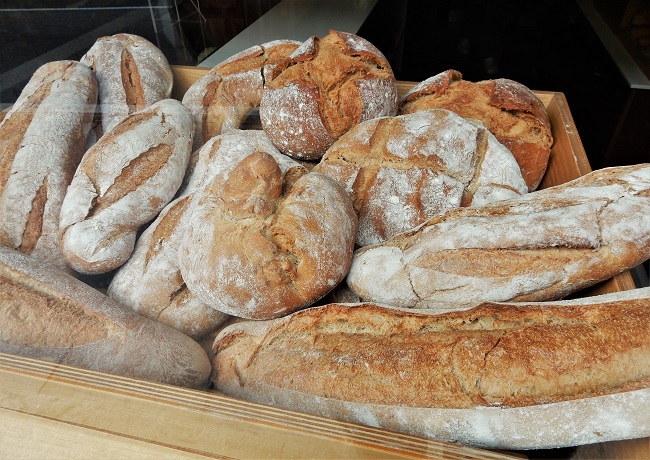
The smell of freshly baked bread wafted from some of the shops.
 
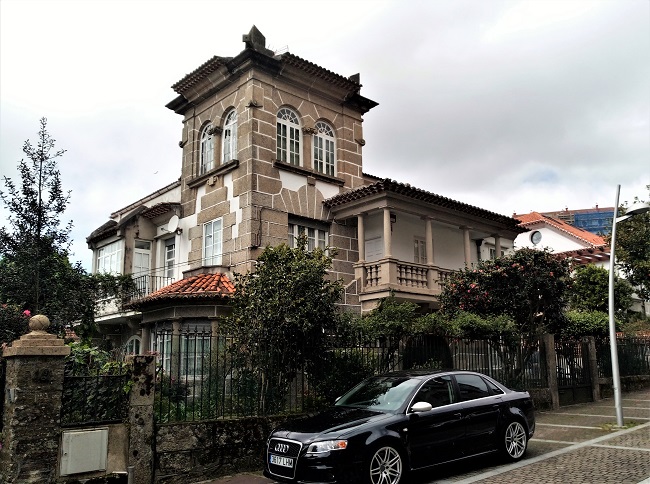
This elaborate building is now a school.
We took a different route back to the train station through a
suburban neighborhood.
It was a stark contrast from the rest of the city.

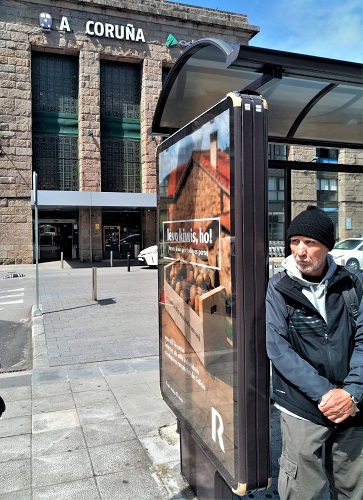 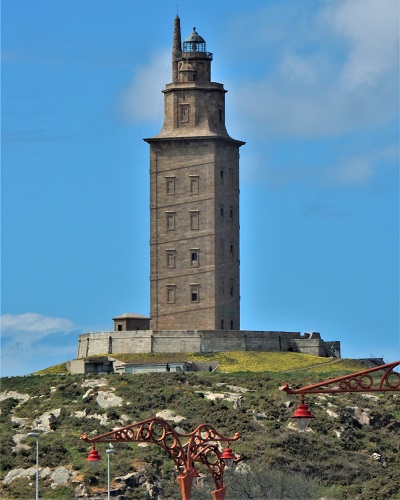
Because of our long day in port, we decided to go on a second
adventure. We caught a bus (right outside of the train station)
to a point of land, which is a UNESCO World Heritage site. It
includes The Tower of Hercules, the oldest known extant lighthouse.
It was built in the first century by the Romans and renovated
in 1781. Today, it's the second tallest in Spain.
 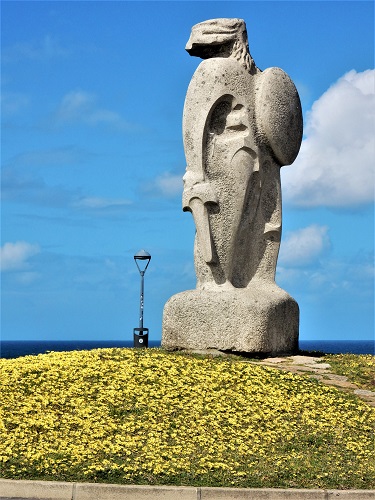
There is also a sculpture garden out on this point of land.
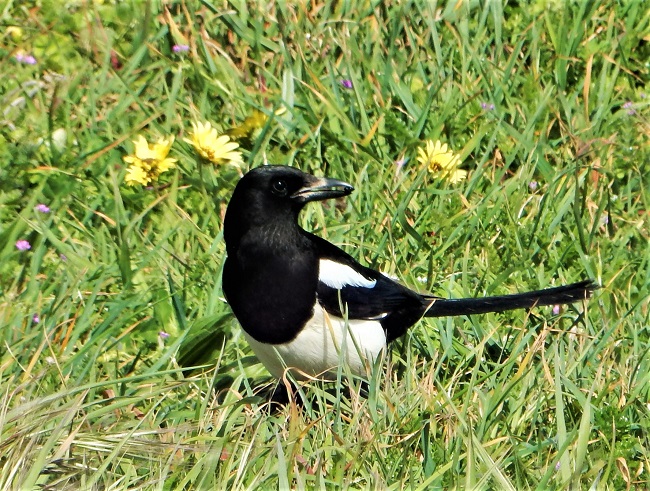
Pied Crows were beautiful and were plentiful.


The seas were rough.
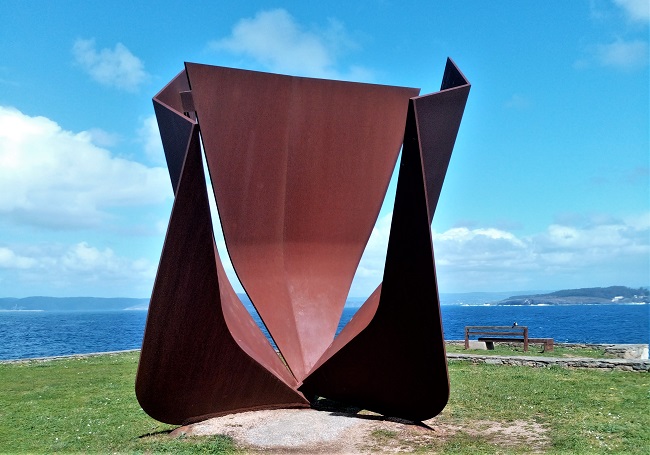
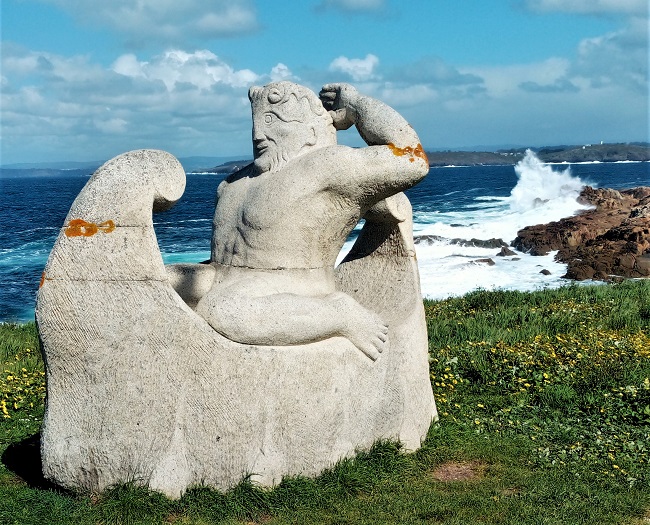
Hercules of the sea...

A European Stonechat (Saxicola rubicola) perched on Hercules'
stone hand.
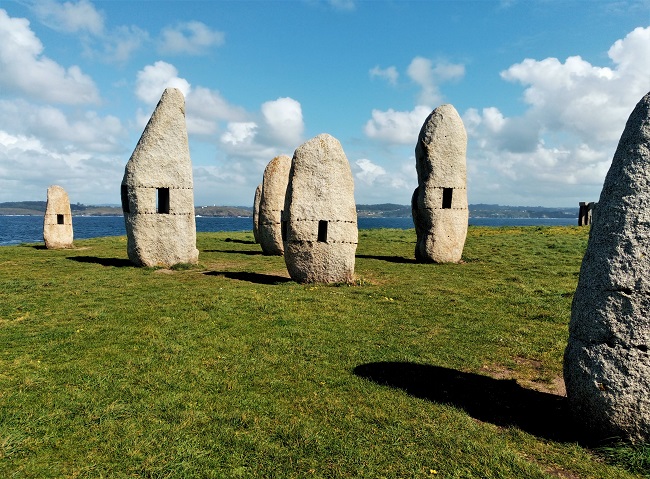
There were several large and intersting art installations out
on this grassy point.
 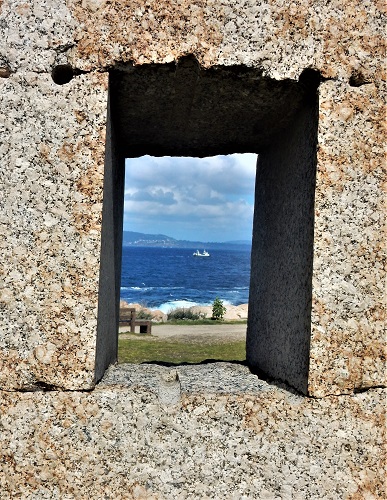

A Stone-Henge-like art installation.

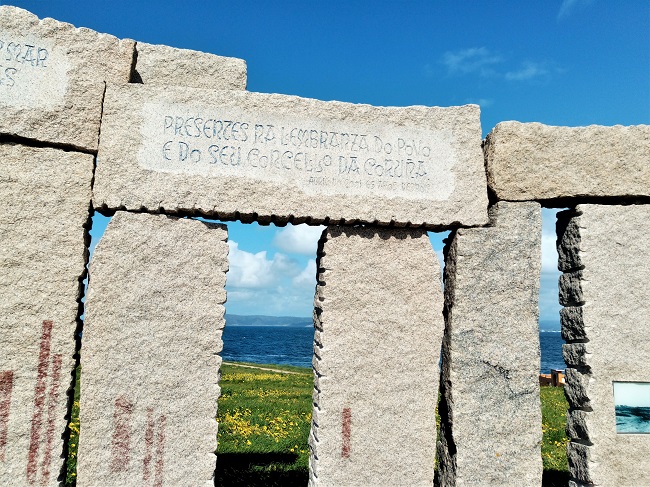
But with writings and a photo on this side of the rocks.
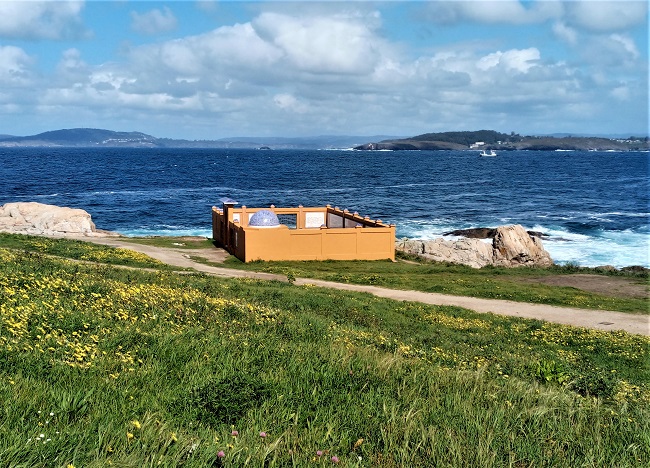
A room with no ceiling was down by the shoreline.
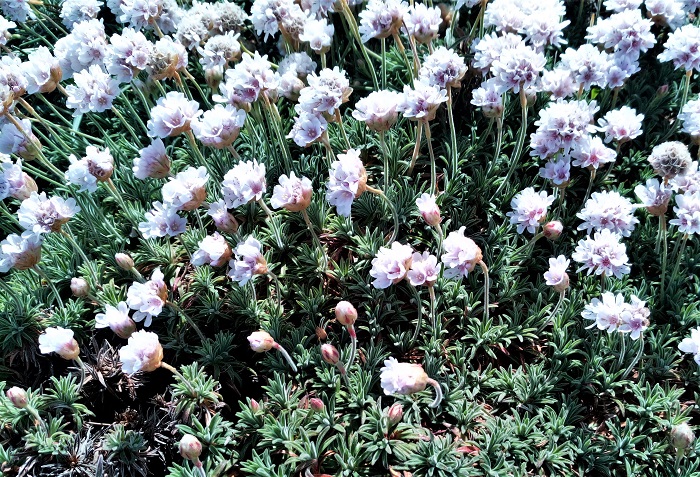
There were quite a few of these flowers in the field.
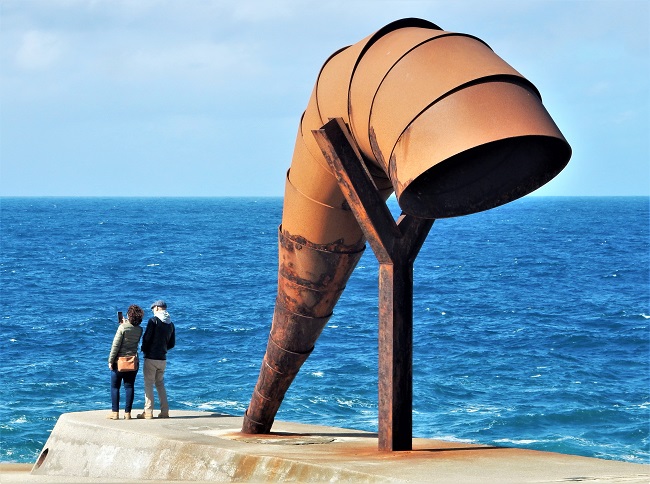
A giant megaphone...
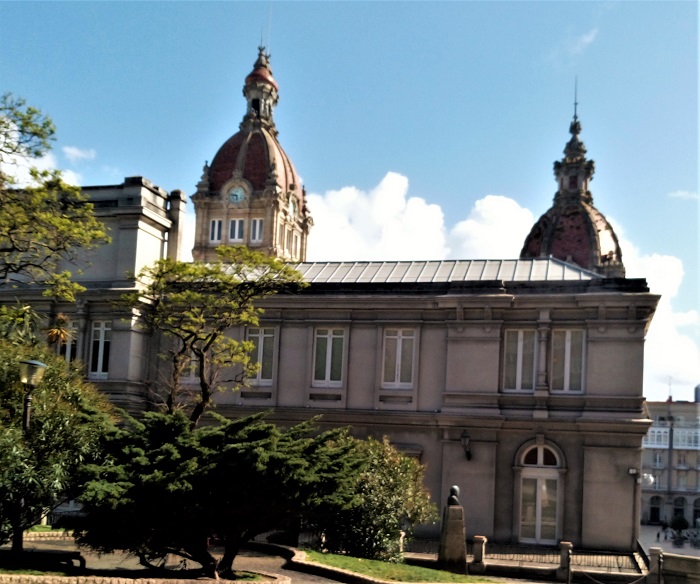
Back in A Coruña...
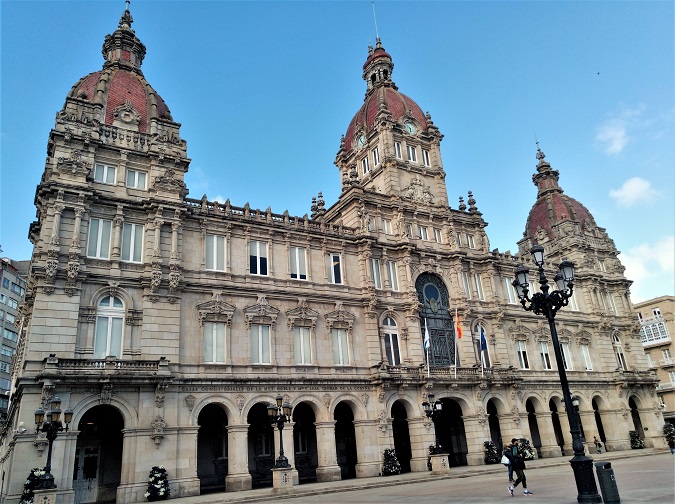
... its City Hall.
 
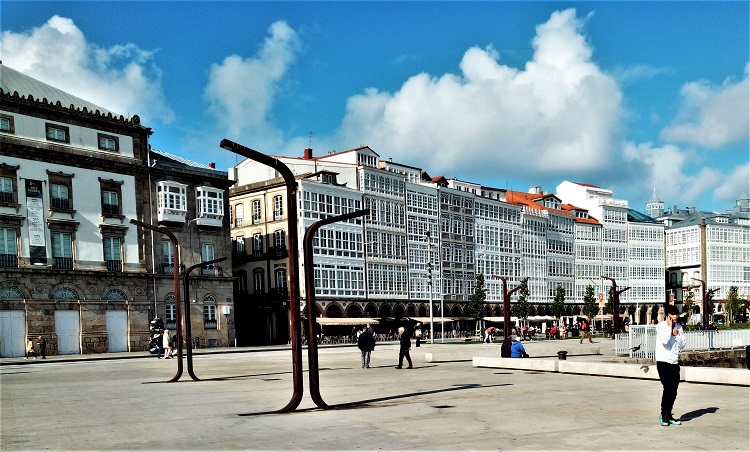
Most of the buildings have glassed-in balconies called galerías.

 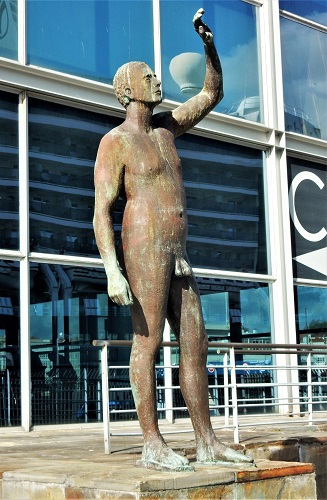
These two sculptures greet the ships that tie up to this dock.
How risqué!
We'd have an unscheduled sea day when we could
rest up. We appreciated that because we needed a break after the
13 miles on our pedometer on this day. Our next port was Portland,
England.
|