La Possession, Reunion Island, a French possession
We'd been to this port in 2018,
so go to that page to see what we did that time.

For the first time on this cruise, we took a HAL shore excursion.
It was an 8-hour tour to view waterfalls in a huge caldera in
the center of the island, to visit a vanilla plantation, to have
lunch, and to stop at a craft market and shopping area. Bertrand,
our guide spoke French as his first language, but did a good job
of keeping up a running commentary for the whole bus trip with
Reunion history and his personal history.

A Hindu temple through the bus window.

The first stop was the vanilla plantation, where most of their
vanilla plants, which are orchid vines, are grown in screen houses
like this one. Vanilla planifolia is a species of vanilla
orchid, which is native to Mexico and Belize. In its native region,
it's pollinated be several species of bees, but when it's grown
in the islands in the Indian Ocean, those bees are not present,
so all of the flowers must hand pollinated in order to produce
fruit, which is not a bean since it's not in the bean family.

A worker on the vanilla plantation described the process in French.
 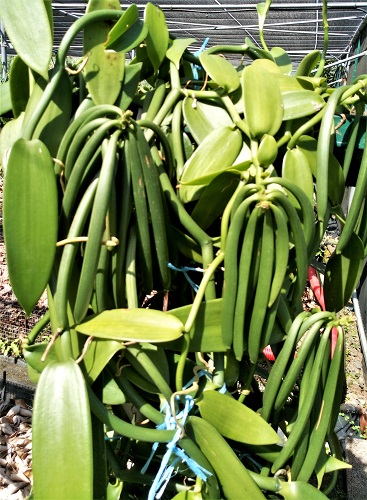
Bertrand translated the French for us. The vanilla bean-shaped
fruit takes about 5 months to mature.
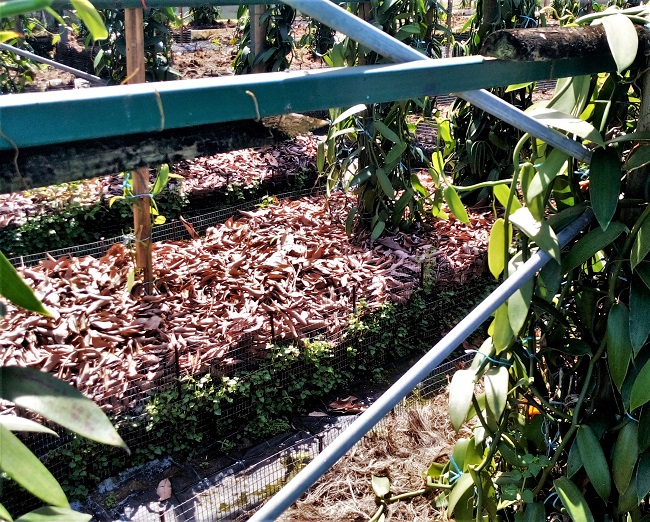
The leaves are used as mulch.

There were two buses at the plantation at one time. That's a lot
of presenting to get through all the material.

We were shown the more natural and sustainable shade-grown vanilla
method where it was growing on Dracaena trunks. (Dracaena is a
widely-grown tropical house plant with narrow, variegated leaves.)
 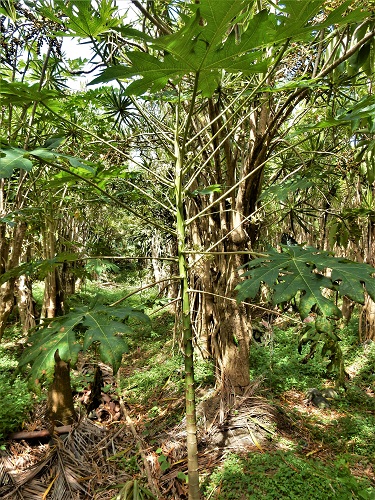
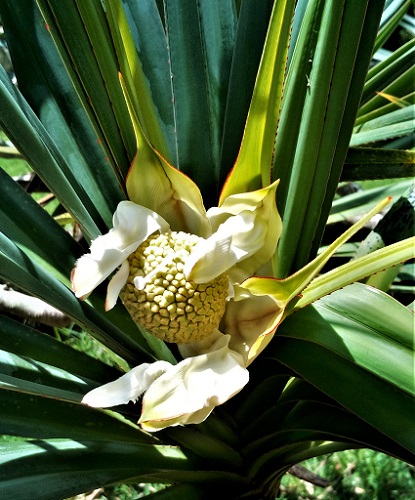
Also in the shade-grown section, we found this pretty white flower
and a small papaya tree growing in the understory.
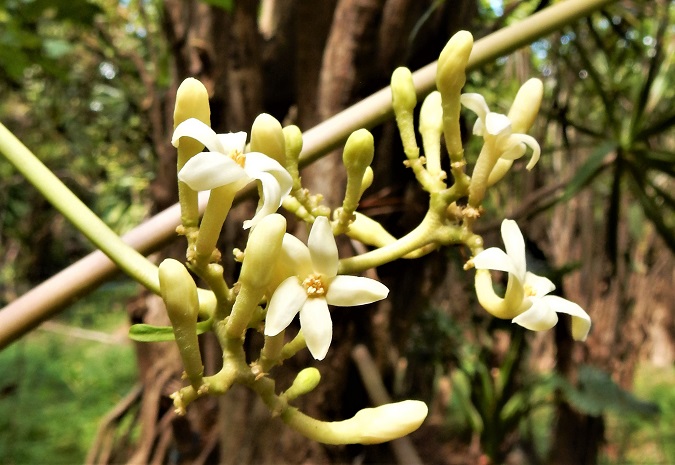
It was interesting to see the papaya flowers.

A coffee urn was in the covered alcove of this yellow building.
The coffee was labeled vanilla coffee and was quite good, but
when they added creamy rum to the coffee, it was much better.
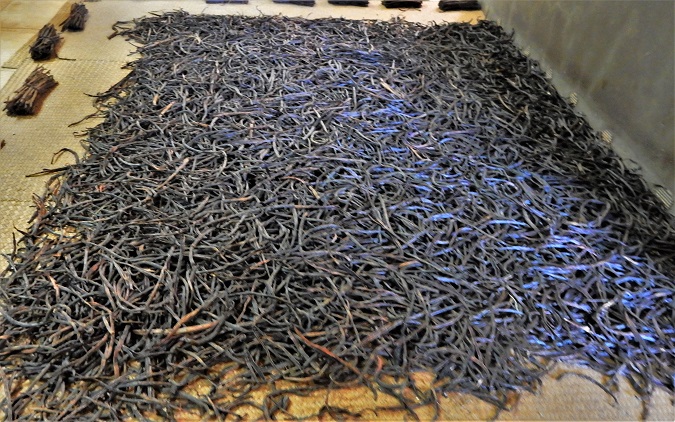
Inside that yellow building were a few stations where people explained
further aspects of the harvest and how the fruit needed to age
for two years before the curing or fermenting could begin. Finally,
the insides could then be scraped from the fruit and mixed with
alcohol and other fluids to create the extract. This is why pure
vanilla extract is so expensive.
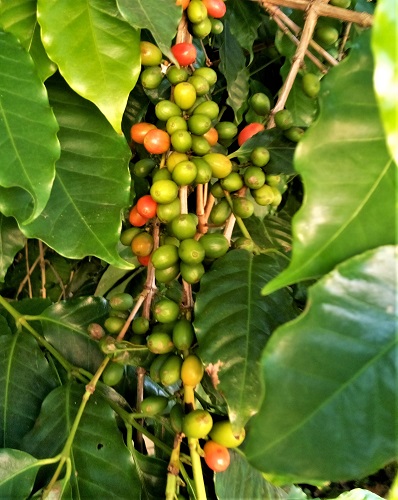
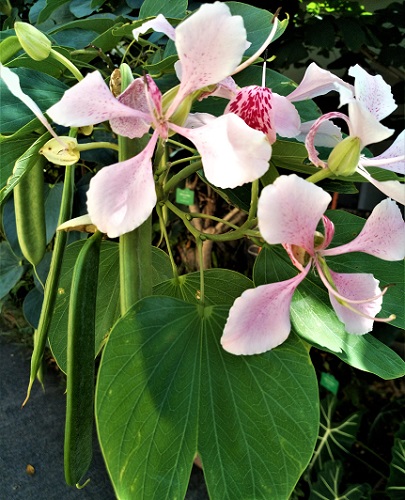
Also, in the gardens around this site were coffee shrubs and orchid
trees which are not related to the vanilla orchid.
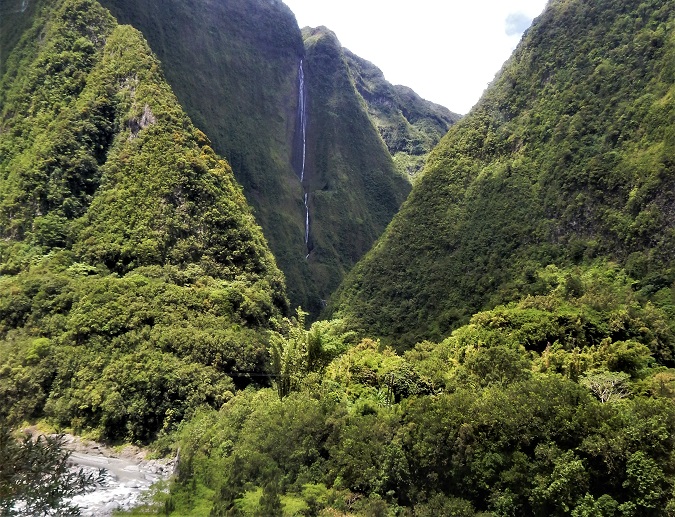
Taking photos of the many waterfalls through the bus windows was
problematic because of the motion and the many wires in the way.
There were many switchbacks and hairpin turns on this part of
the excursion.

We stopped at a scenic overlook.
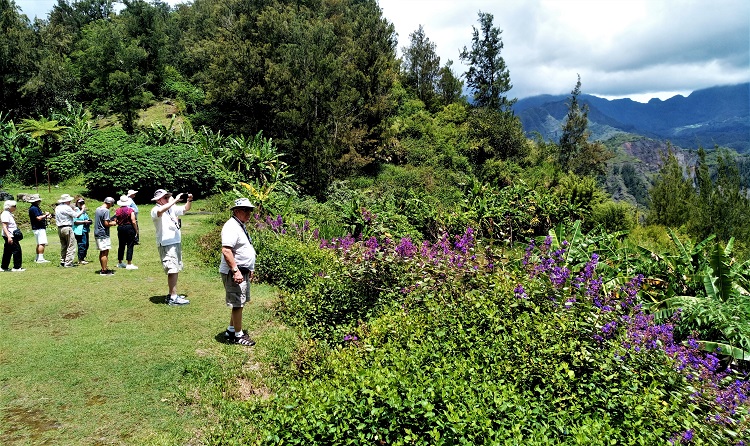
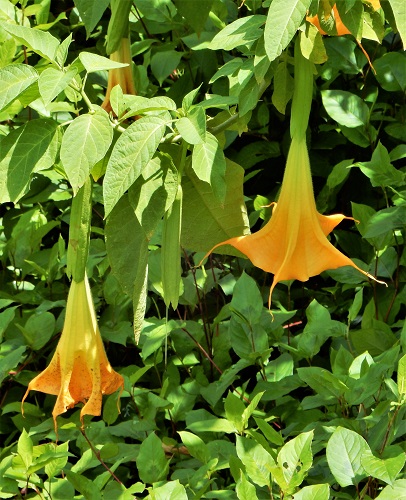 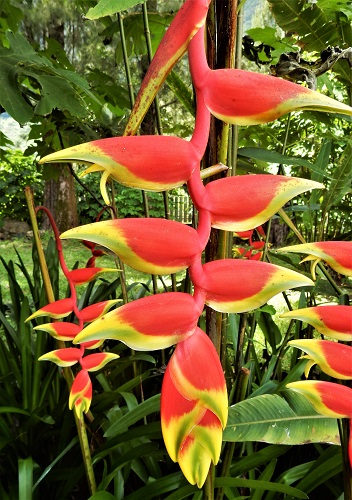
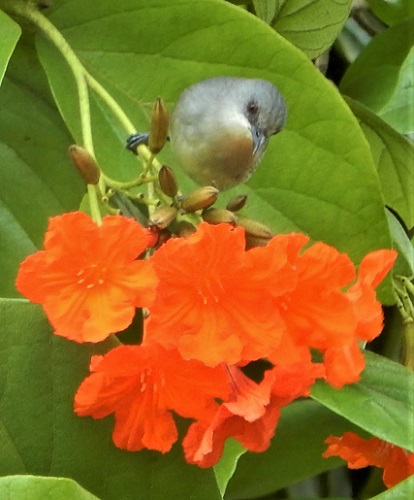
Angel trumpet tree and heliconias also decorate the overlook area.
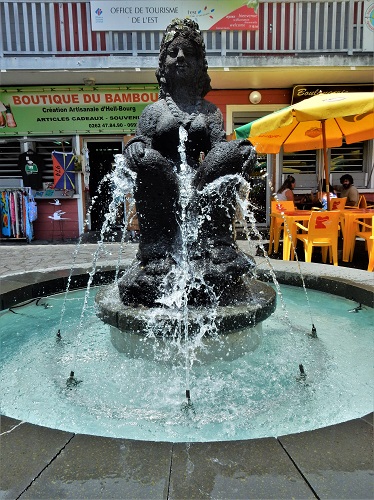 
Then were were dropped off in a tourist spot where you could buy
souvenirs.
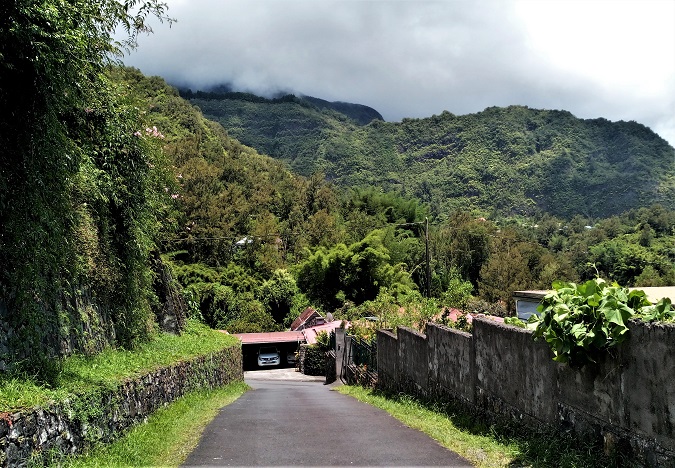
We opted to walk to the outskirts of the village.
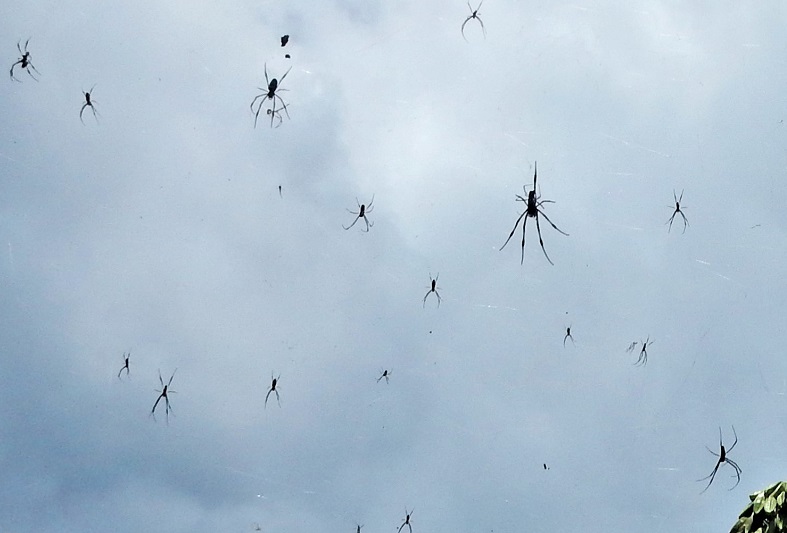
We found a yards-long spider colony. This photo does not begin
to capture the extent of all the spiders there.
 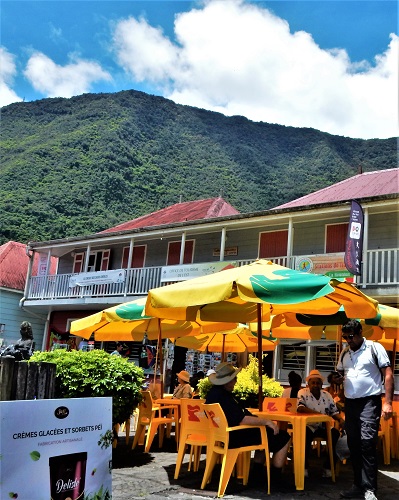
Back in the village, we talked with some locals while we waited
for the bus.
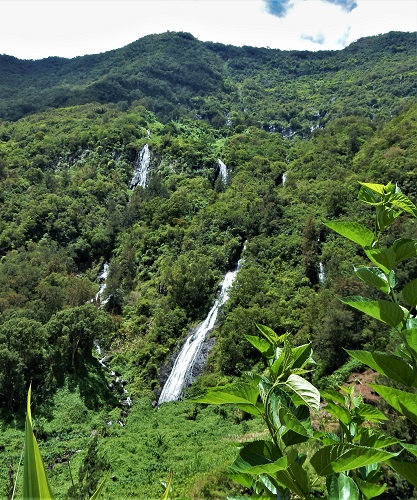 
We stopped at another overlook which featured many waterfalls.
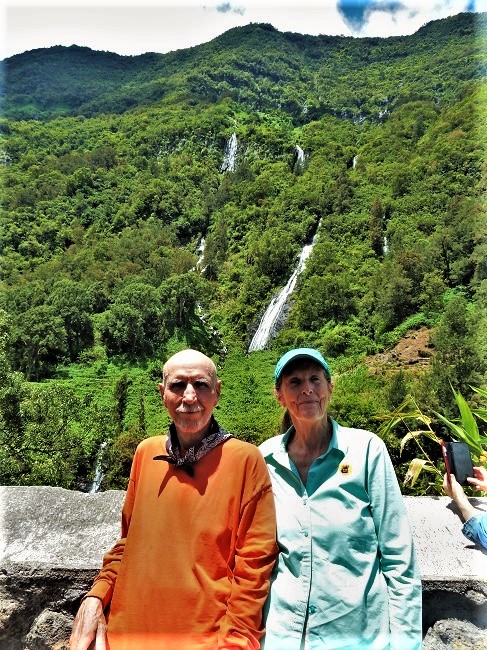 
There is a trail to the main waterfall behind us in this photo.
We were envious of the guy with the red shirt who had hiked out
there. Bertrand said that there is a swimming hole at the base
of the waterfall.

Then we went to the mountain village where we had lunch.
The restaurant was set up to accommodate two busloads of tourists.
There was a sign at the front door apologizing to their regular
local customers that they would be full for today's lunch. Our
bus arrived first, so we got the outside tables, while a second
bus from our ship got the inside tables. We were happy to have
the breeze.

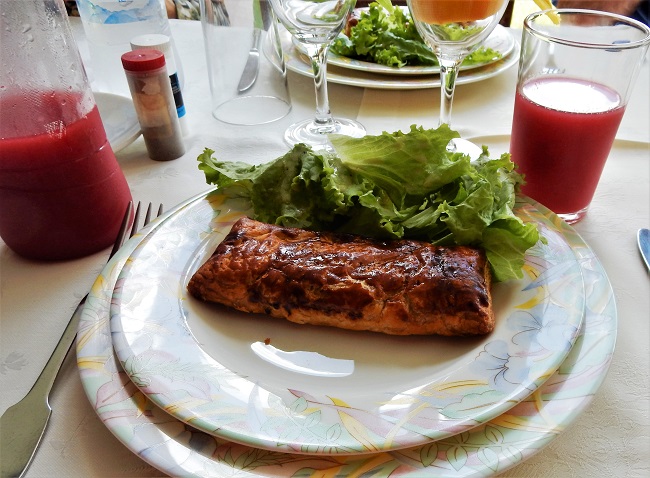
It was a lovely lunch beginning with a pastry filled with a chaote
(a type of green squash) paste. The delicious main dishes were
fish and pineapple stew and chicken and pineapple stew. Served
with a pink fruit smoothie with optional strong alcholic beverage
added. Followed by a nice pastry dessert.
 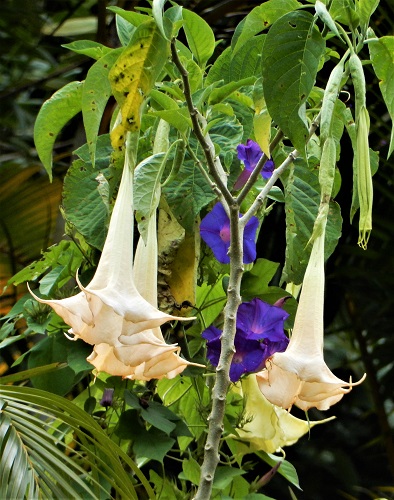
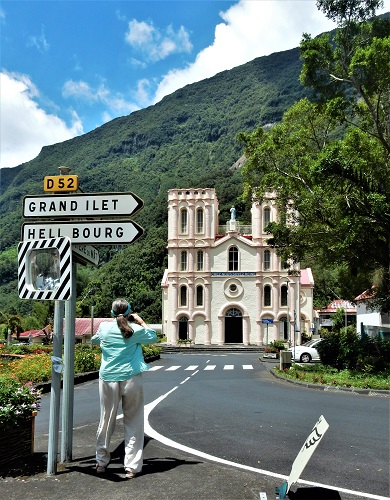
We waited for the bus in the village square.
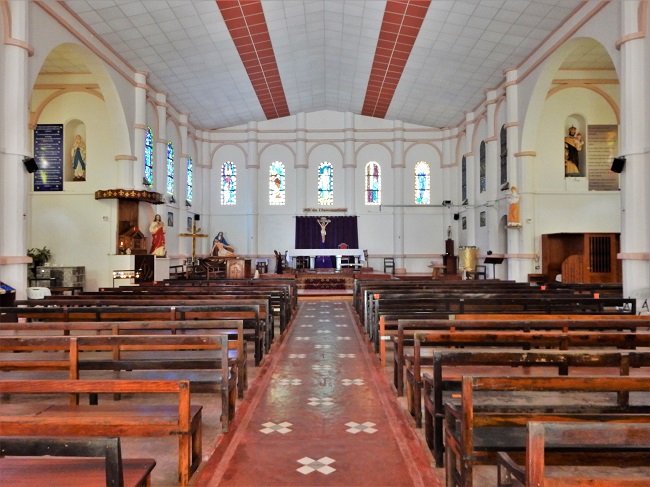
Inside that church...
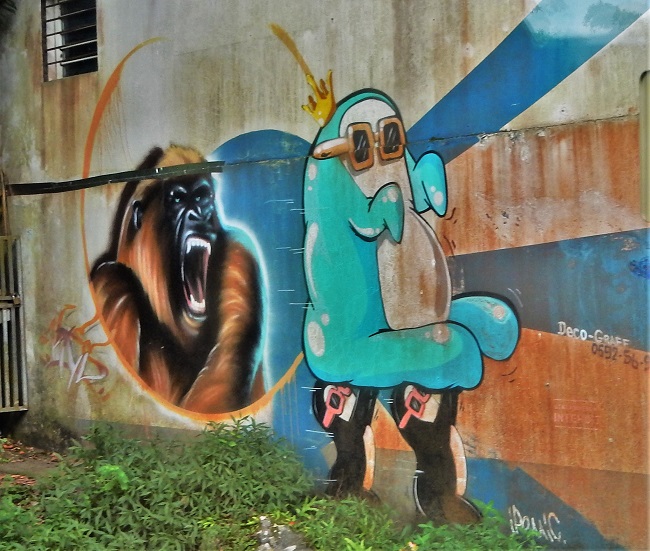
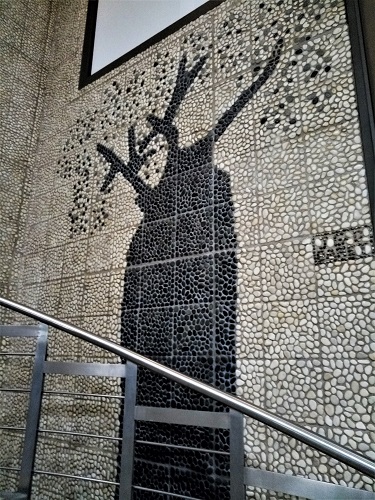
Odd street art from the bus...

A church in the distance from the drop-off point for our final
45-minute stop at a craft market and shopping area.
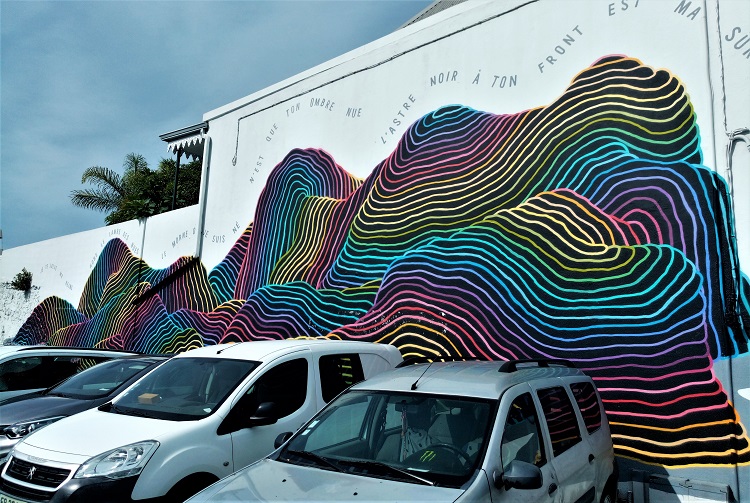
The French words above this mural are some type of salutation
to a queen alluding to dark shadows and stars.

This was the entrance to the craft market, but we walked on by
on our way to a garden that was not too far away.
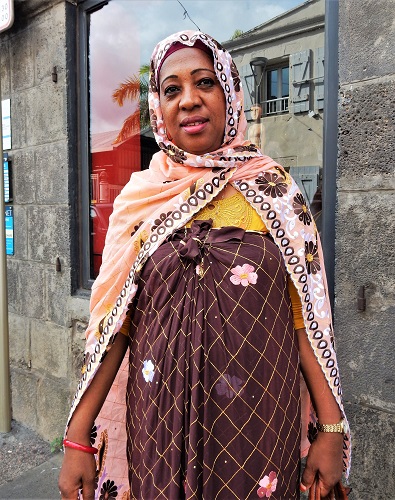 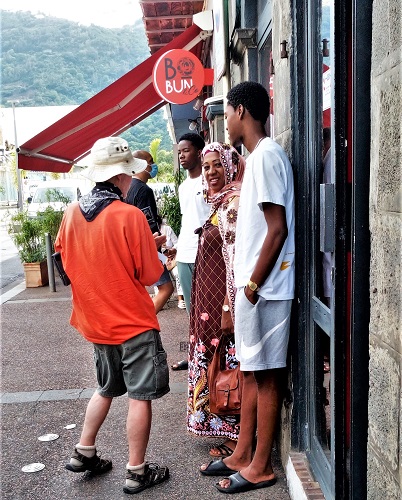
On the way, we stopped to take a photo of this woman. Her son
translated our request. She wanted to know why we were interested.
Dean said because you're beautiful, which after translation made
her smile.
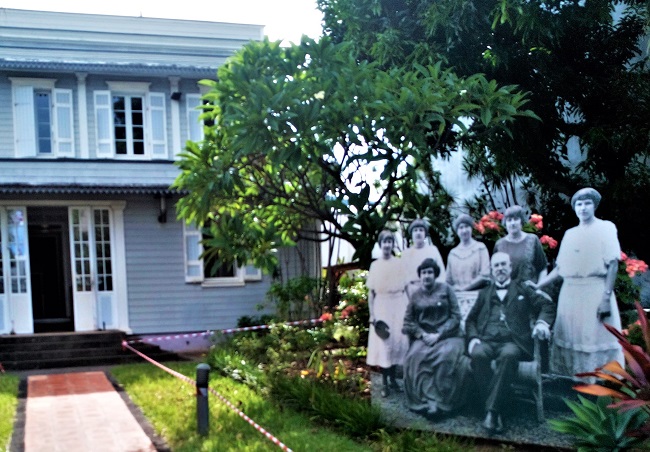
We passed a few museums in this neighborhood, which sometimes
included black and white cutouts showing the original families.

After our 10-minute fast walk, we reached the garden.

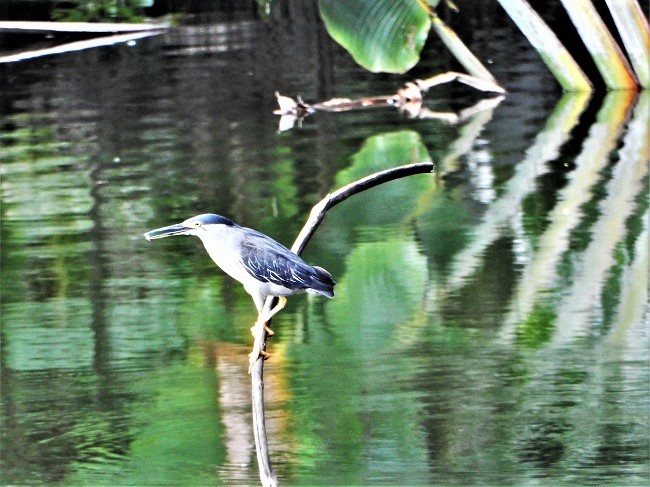
Just inside the garden gates, a pigeon guru.

He asked Dean if he spoke English. He liked seeing the photos
that Dean took and said that they were beautiful.

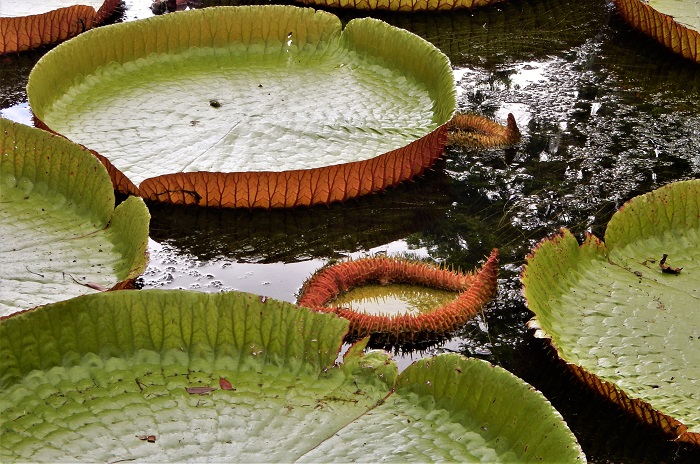
The garden was only a few acres, but it included a water lily
pond.

And there was a museum in the garden housed in a building that
was a replica of the White House in Washington, DC. Unlike that
white house, this one had no fence and all the windows were wide
open.

There were groups of kids in the garden apparently with their
teachers for supervised games.
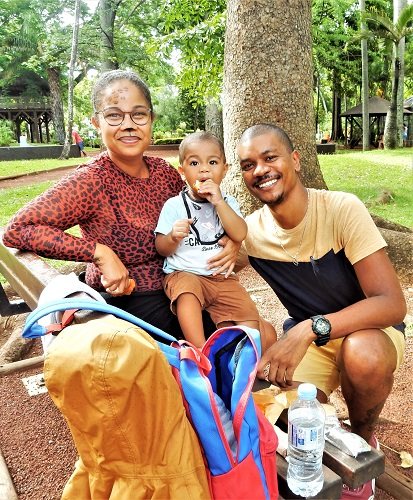 
A lovely little family where the mom wore a leopard skin top and
cat make-up was having lunch in the gardens. We walked quickly
back to the craft market so we could make the bus back to the
ship, but we had a bit of extra time so we made a quick tour of
the craft market. In the end the whole tour was about eight and
a half hours and we saw much more than we would have on our own.
Our next scheduled port was to have been Tolanaro
on the south end of Madagascar, but it was canceled for several
reasons, but mostly because of a tropical cyclone called Freddy.
Bummer. So, it was four sea days until our first stop on the actual
African continent, Maputo, Mozambique.
|