Fremantle (Perth), Western Australia
First, a bit of cruising history: On the 2020
world cruise, after the pandemic hit, all cruising came to a screeching
halt. As it turned out, Fremantle was the end of the world cruise
for the passengers. All the passengers were flown home from the
Perth airport. So three years later on this world cruise, more
than 400 passengers of the ill-fated 2020 world cruise were on
board. HAL held a special celebration for them the day before
arriving at this port. We were invited since we'd were on the
first
leg of that cruise where I was a lecturer. It was a touching
celebration.
We'd been to this port in 2015
and in 2018,
so go to those pages to see what we did then. One thing we did
not do before was to go to Rottnest
Island, which is eleven miles from the mainland and is home
to the largest population of quokkas: cute marsupials that were
mistaken for rats by a Dutch captain who named the island in 1696.
 
The sail-in included small red and green lighthouses on each jetty
and the Maritime Museum.
 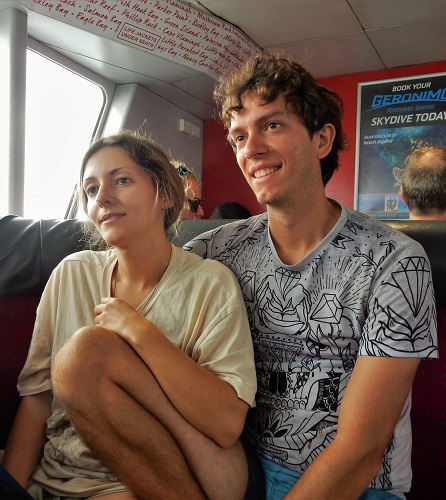
We walked down to Shed B as soon as the ship was cleared, so we
could make the 8:30am ferry to Rottnest Island. The fee for the
ferry also included the entry fee to this national park/reserve.
We sat with this young couple who are spending a few years living
and working around the world. She's an architect from Vancouver
and he's Italian pizza maker.

This little freight ferry arrived shortly after we did and pulled
right up to a stony shore and then lowered its ramp to offload
its vehicles and cargo. The guy with his hand raised next to the
propane truck was giving the signals to the helmsman.
 
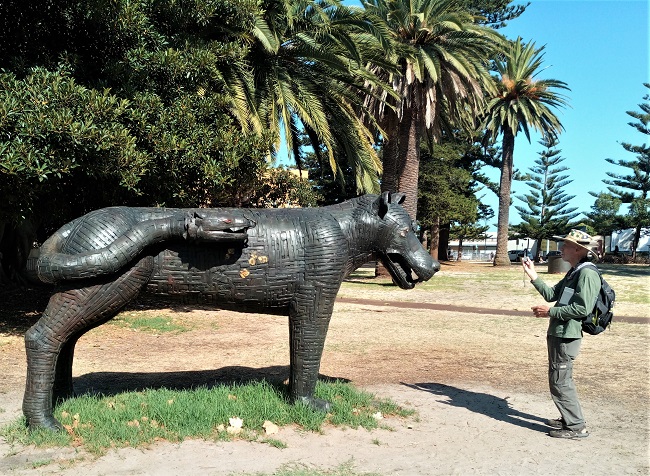
This monument recognizing the indigenous peoples was near our
ferry dock.

We headed along the shoreline trails and would reach that lighthouse
on the point and beyond.

Quite the impressive seed head from a sedge. Once these detach,
they blow around like tumbleweeds and we saw them caught up in
the beach vegetation.

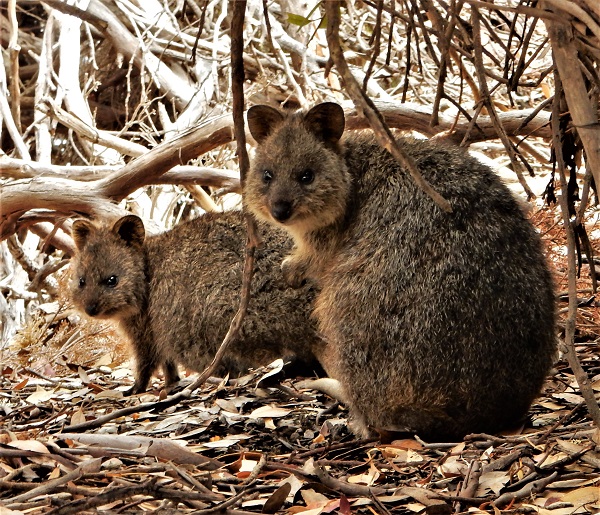
Quokkas (Setonix
brachyurus) are cute marsupials related to kangaroos that
are not at all skittish of people since they are found on islands,
especially this one, and other habitats where the introduced predators
such as the red fox and the domestic cats and dogs have been removed.

This is how close we were.

The lighthouse from that first photo...
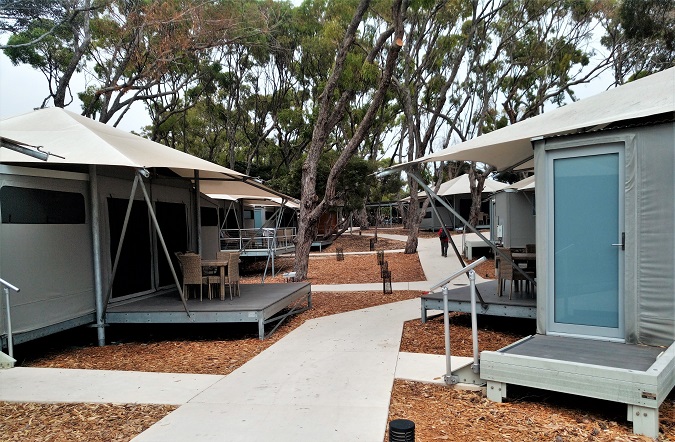
We were surprised to see the extent of this glamping resort on
the island near that lighthouse.

The coastline consisted of rocky areas interspersed with beautiful
beaches.
 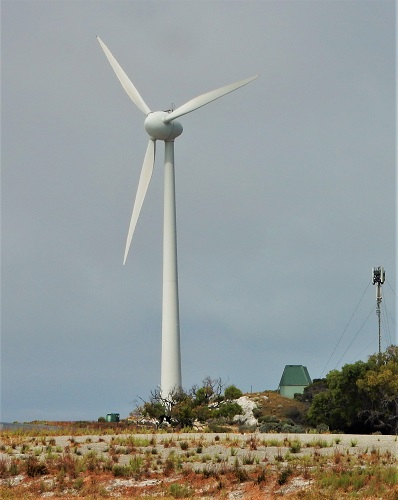
There was a large wind turbine, which, we guessed, provided enough
electricity to power the island.
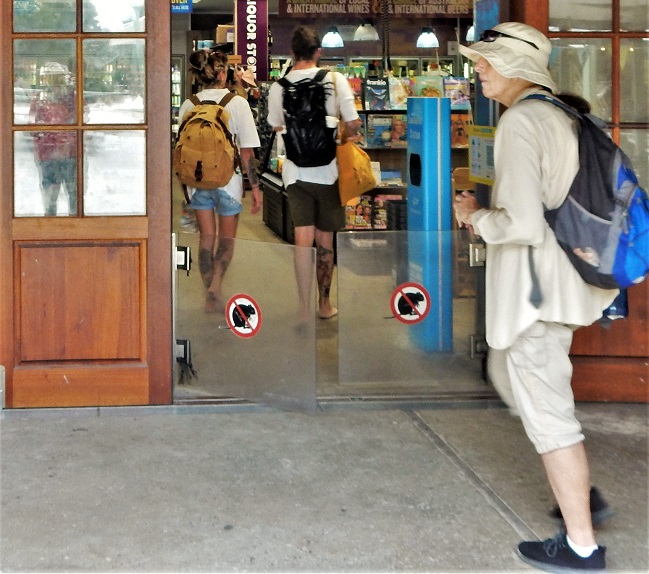
We knew it was going to be a long day, so we bought some energy
bars and bananas at the local general store. We were amused to
see the anti-quokka doors to keep these animals out of the store.
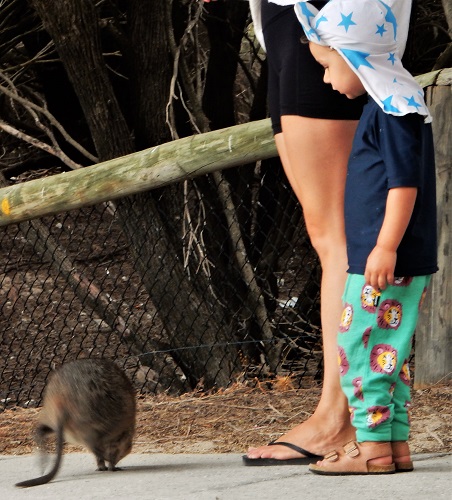 
A Raven protests from a nearby tree saying that he's cute, too.
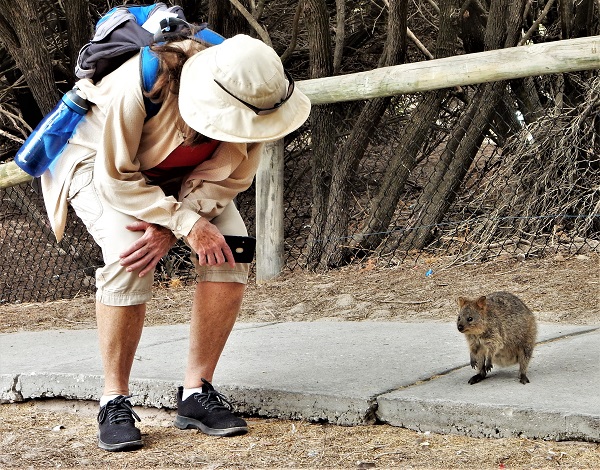
I'm a quokka whisperer.

We watched this Crested Tern (Sterna bergi) grooming itself
on the beach. These are the largest and one of the more common
terns in Australia.
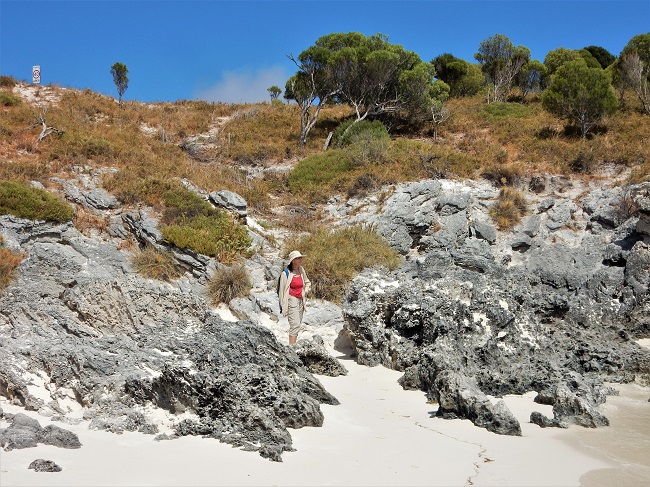
The trail went along the beach for a while and then headed up
behind where I'm standing in this photo.
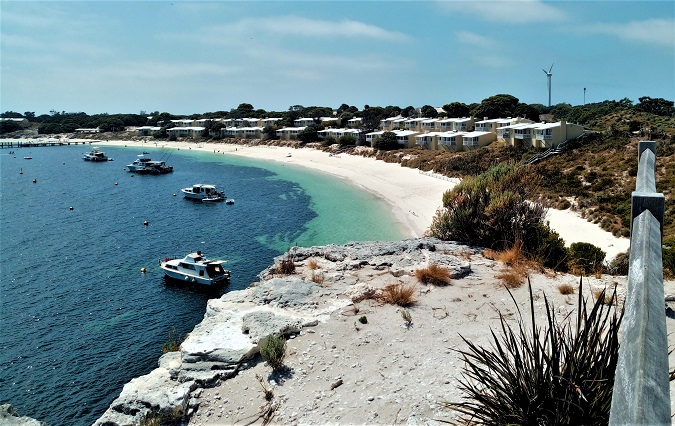
Looking back...

Looking in the other direction was a much smaller beach.

There were hundreds of birds in this lake.

On the left is a female Australian Shelduck (Tadorna tadornoides),
AKA the Chestnut-Breasted Shelduck, the largest duck in Australia.
The female has white eye rings and both the males and females
have striking white patches in their wings that are visible when
they fly. The wading birds with the brown heads are Red-necked
Avocets (Recurvirostra novaehollandiae). The rest of the
birds in this photo are Banded Stilts (Cladorhynchus leucocephalus).

In addition to the stilts and the Avocets, these ducks are probably
the Australian wood duck (Chenonetta jubata) and in the
foreground an immature and a mature Crested Terns.

The physical difference between this female Australian Shelduck
and the Stilts is comical. The Stilt to the right of the Shelduck
is a Banded Stilt, but the other one with black on its head is
a Pied Stilt.
 
A longer view of that lake with all those birds with the island's
second lighthouse in the background. We did walk around this lake
as part of our walk along a marked trail, but we did not reach
the second lighthouse. There was a sheltered picnic table next
to the road that led to this beach.

We sat in the shade and ate our nut bar and banana lunch.

As soon as we sat at the picnic table a couple of lizards came
out of the grasses, apparently to beg for food. This was a king's
skink (Egernia kingii), the largest skink on the island
and the others were spotted skinks, which were not readily identified.
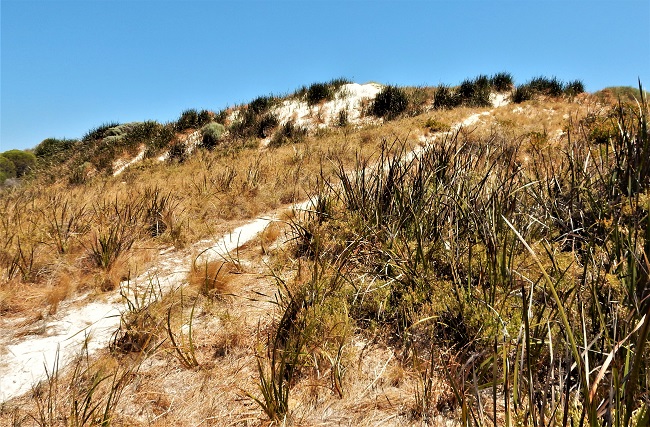
After lunch, we climbed to the top of a large sand dune.


Looking back, there was a good view of Geordie Bay and the trail
where we'd hiked.

Looking forward.

We had followed the trail inland and found this salt pond with
red glassworts around the edge.
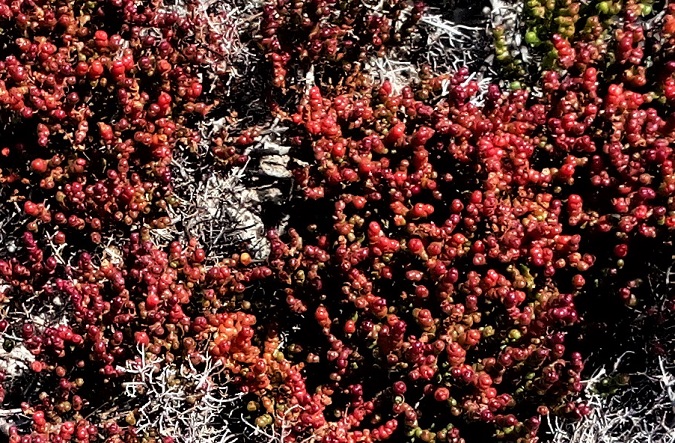

In this harsh environment, many of the large trees were dead on
one side, but...

...were alive on the other side, and in this case, the tree was
even flowering on the alive side.

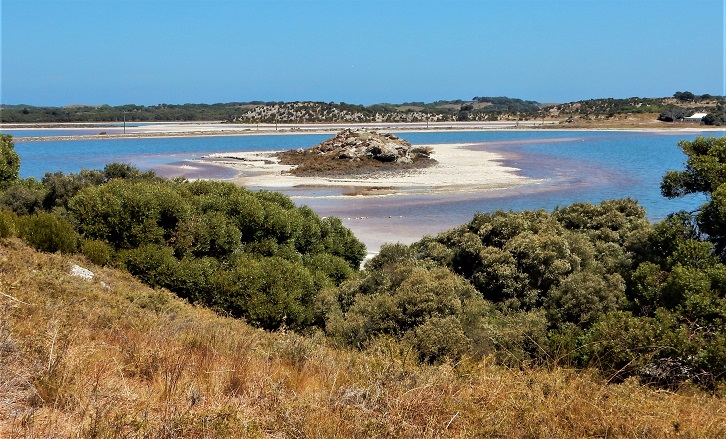
We continued on this trail around and in-between these interior
salt ponds and lakes.
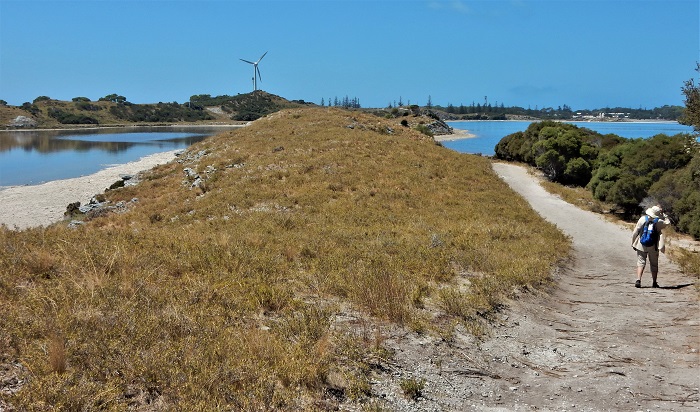
Heading back to the wind turbine area.
We made the 2:30pm ferry off the island. We'd put in a long, hot
day. Our pedometer showed ten miles for the day.
|