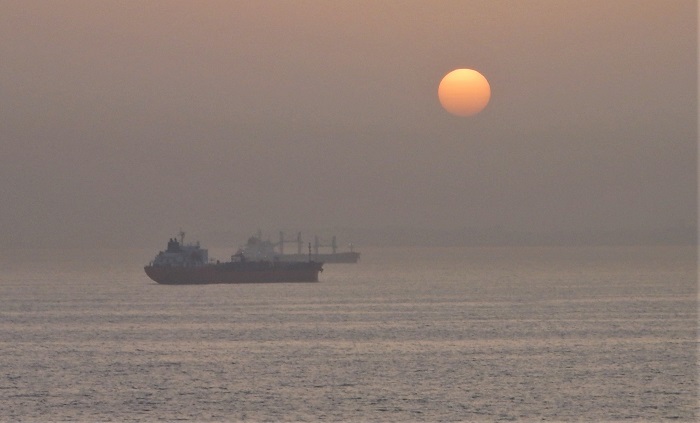
Banjul, The Gambia
We stopped at this port in 2018,
and some things were different this time, especially the wetlands
area next to the town.

The Freedom Arch as seen from the ship. We'd walked to it in 2018,
but not this time around.
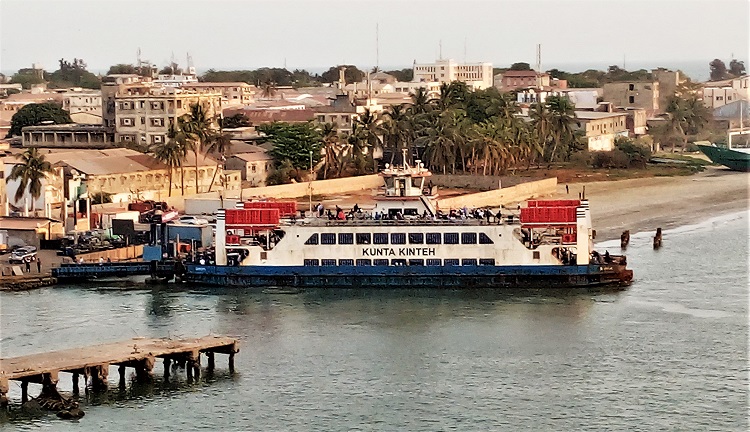
The local ferry. Kunta Kinteh was the name of the ancestor in
Alex Haley's "Roots."
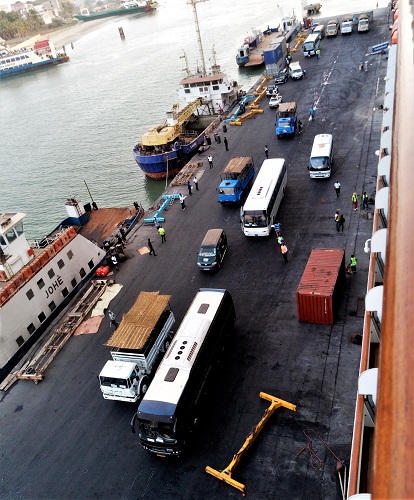 
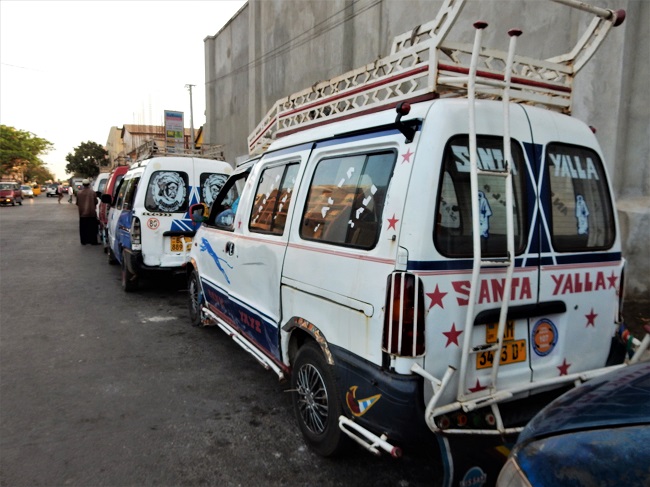
The merchants hauled their wares on handcarts to our dock area.

Note the flimsy shade roof on the 4x4 vehicle which was slated
to carry people out into the wilds.
 


We walked along the beach from the ship, because there seemed
to be a lot of action there.
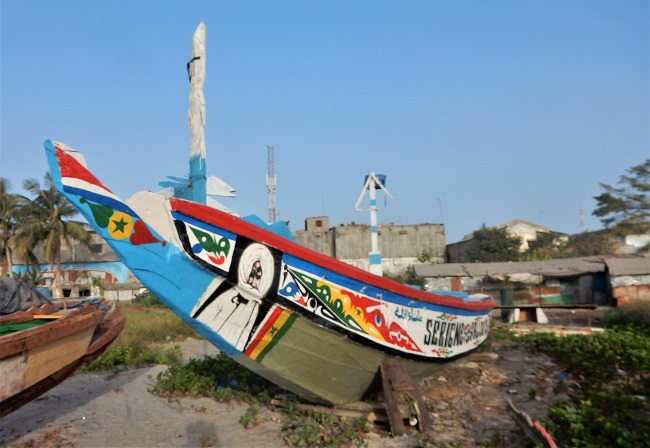
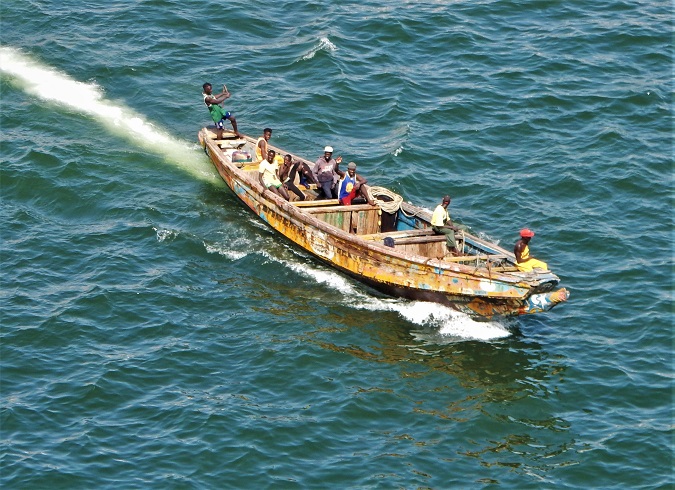
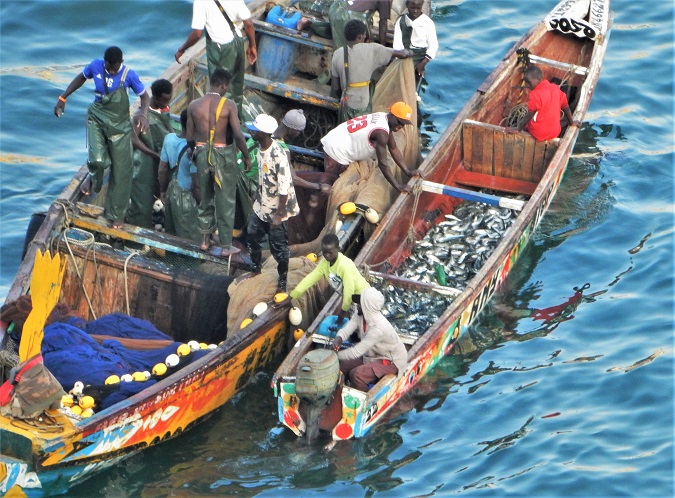
Many of these boats had elaborate designs painted on them. Here
is the front half of one boat...

...and the rear.

Some of these boats were used as ferries and some of the passengers
were carried off the boat so they would not have to get wet. We'd
never seen anything like this before and we wondered if they paid
extra for this service.


When you looked down the beach, lots of people were waiting for
rides and those with buckets and pans were waiting for fish. Note
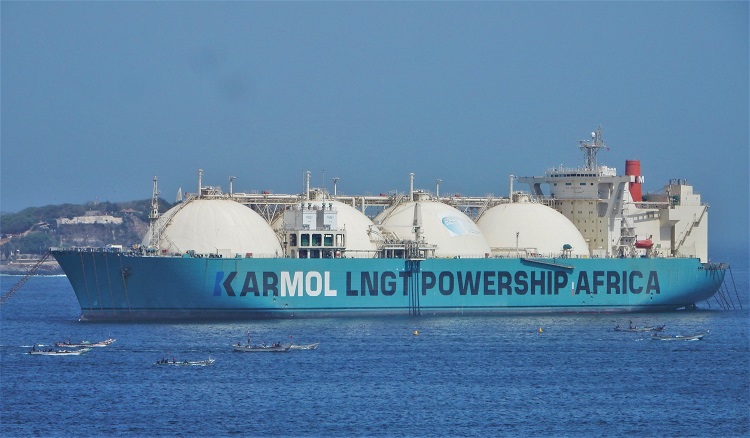
also, the big yellow ship that provides power for the community.

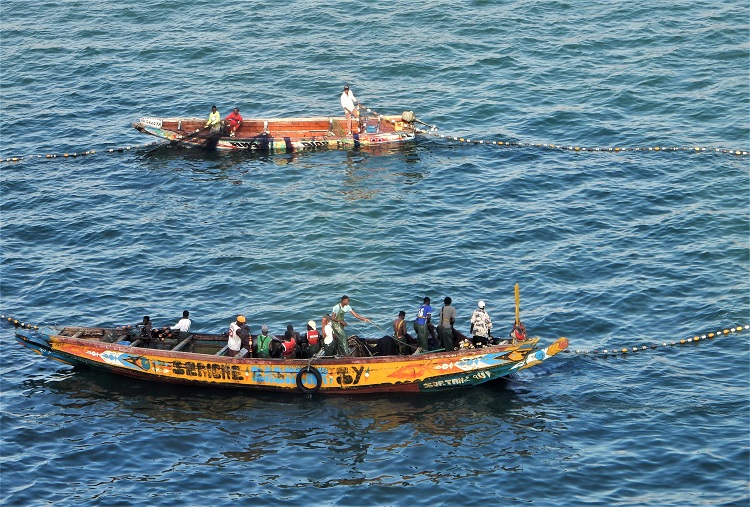
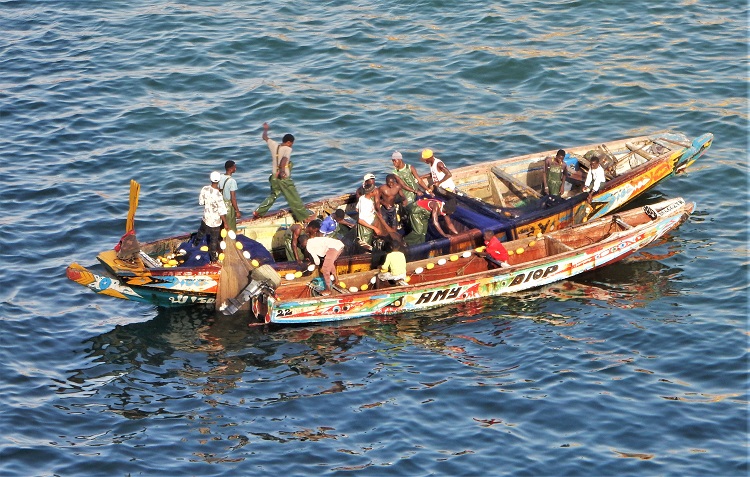
The fish were unloaded.
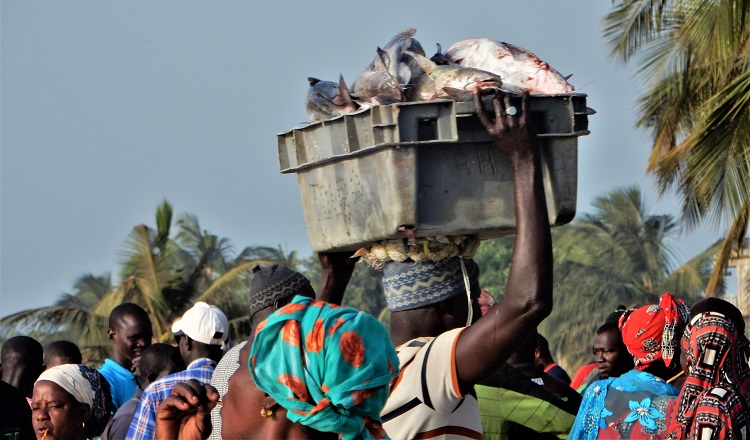


Much like Manta
in Ecuador, even though we did not understand how it worked, we
could see that people were keeping track of the fish and the money
somehow.
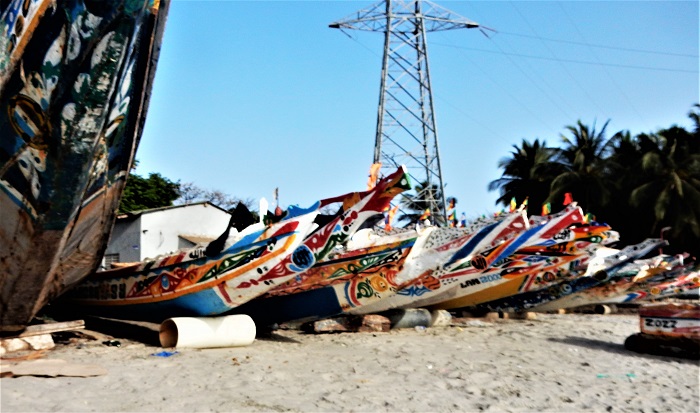
After a while, we moved on past the fish and ferry boats. There
were guards that would not let people pass under the power lines
coming from that power ship on the beach, so we had to move inland
where we passed under those same power lines. This made no sense
to us, but whatever.
 
We saw this guy and others meticulously baiting hooks on multiple
lines.


We followed this dirt path through the village next to the beach.
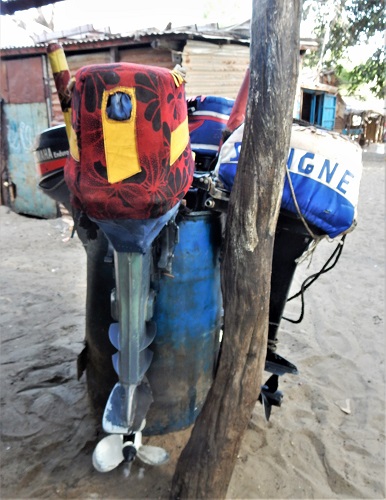 

Empty shells that look like small conchs.


We didn't expect to see this, but it makes sense when you see
how well-dressed many of the women are.
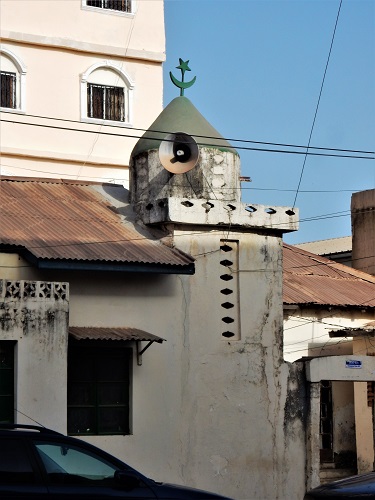 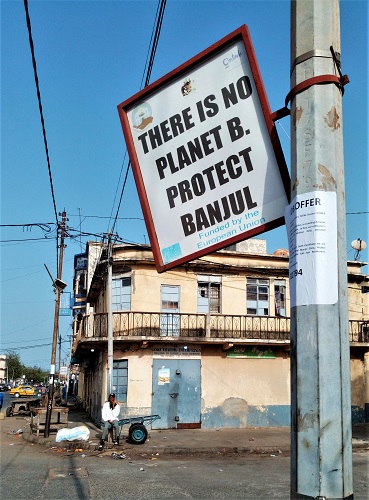
There were a couple of small mosques in the village. And this
hopeful sign looks out of place in this poor village where residents
are just barely eking out a living.

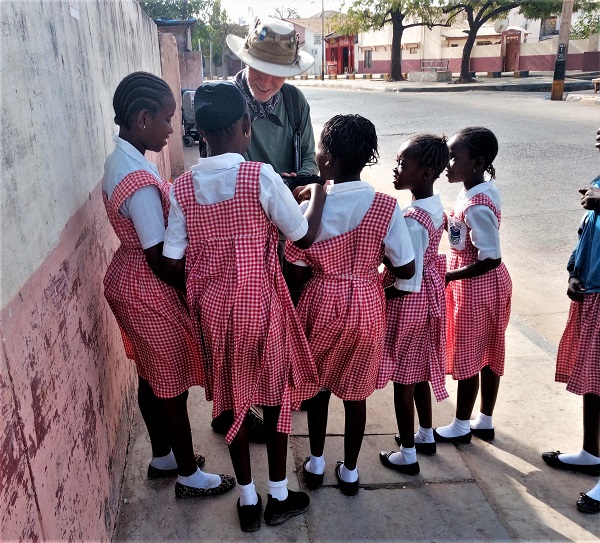
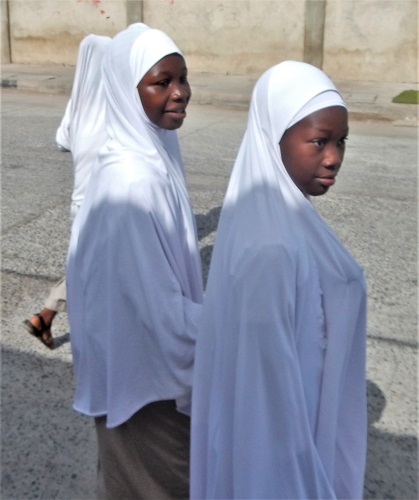
Earnest schoolgirls said that we could take their picture, and
then of course, they wanted to see themselves.


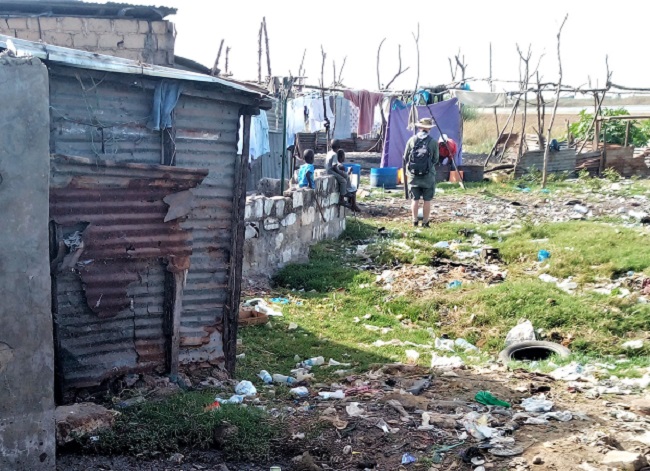
Then we headed out to the wetlands where we had seen so many interesting
birds five years ago, and like before, there was trash on the
way out there.
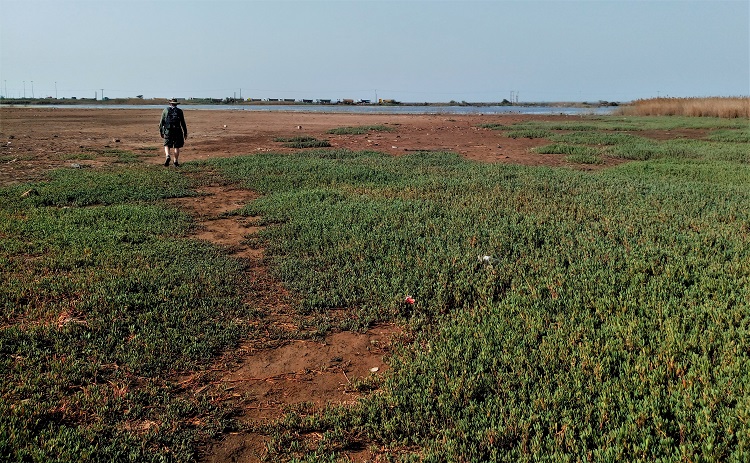
But, what was different was that there was much less water. It
was no longer a wetland.
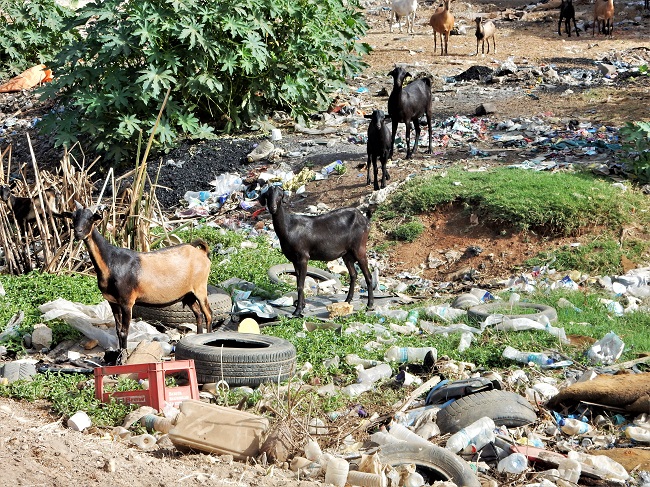
A group of goats worked the area between the houses and the dried
out wetlands.
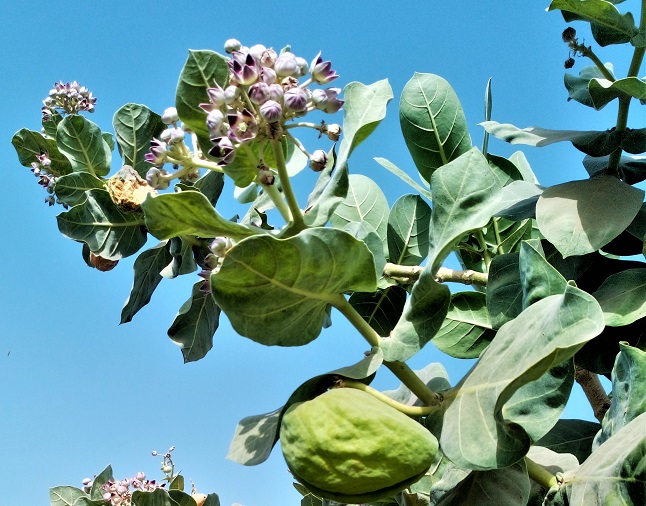
There were quite a few giant milkweeds (Calotropis gigantea)
in the area.
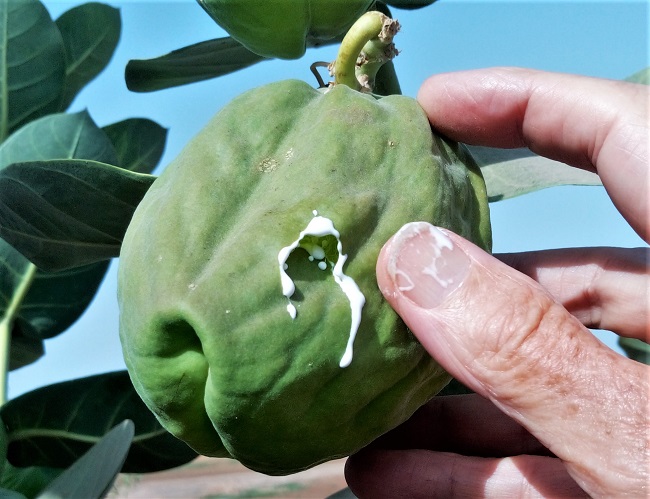
This is why it's called a milkweed. This juice contains alkaloids
and this plant is avoided by goats and other animals because it's
bitter, but it is eaten by monarch caterpillars and those bitter
alkaloids make them less likely to be eaten by birds.
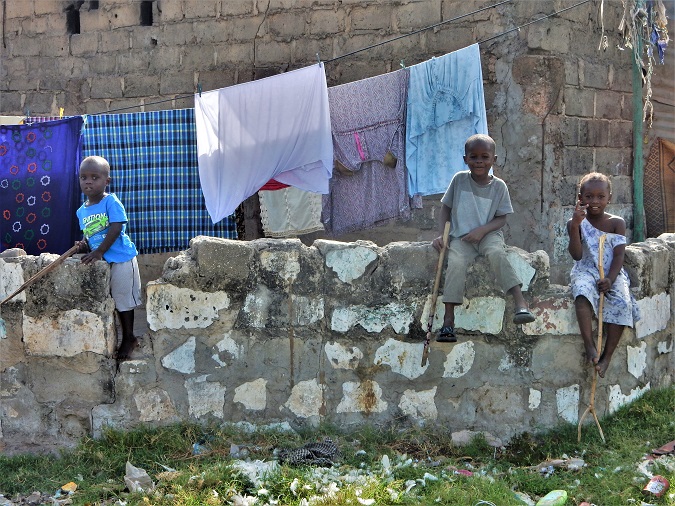
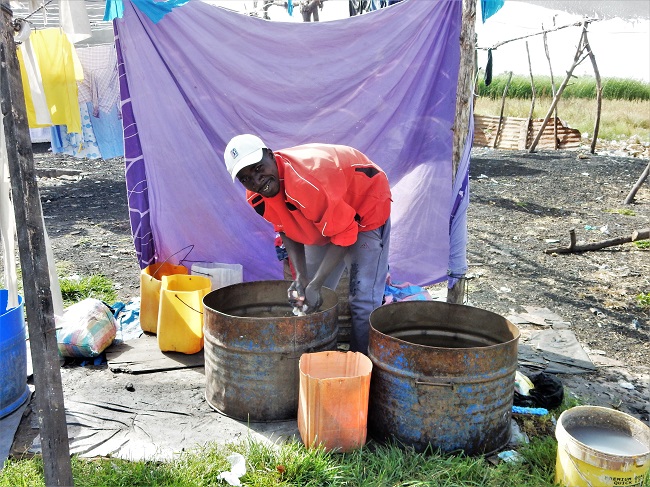
Dean took pictures of these kids with permission of the man, presumably
the father, doing laundry nearby.
Young women and goats on the road.

Delivering onions and other vegetables...

More goats...
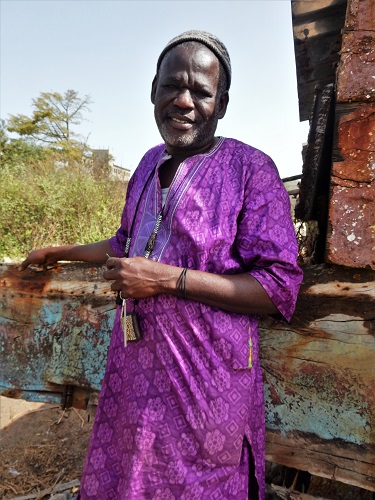 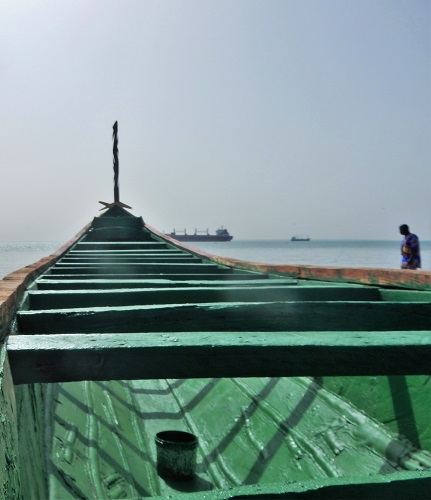

We headed back via the village and the beach.
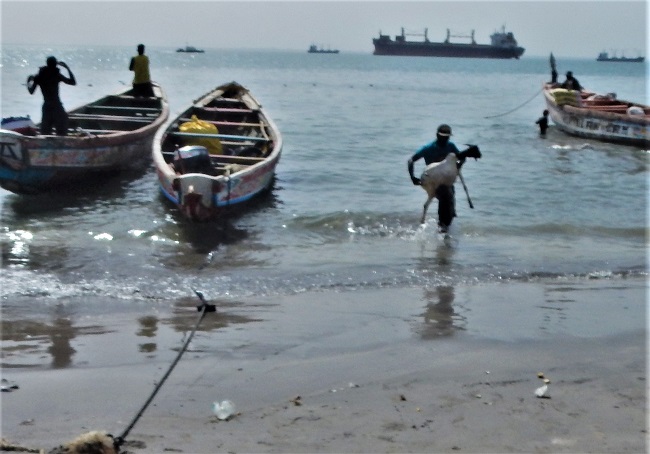
We watched the unloading of goats from the boats. They also were
carried in because they collapsed in the water instead of wading
through the shallow water to the beach.

The goats stood there shivering on the beach.
 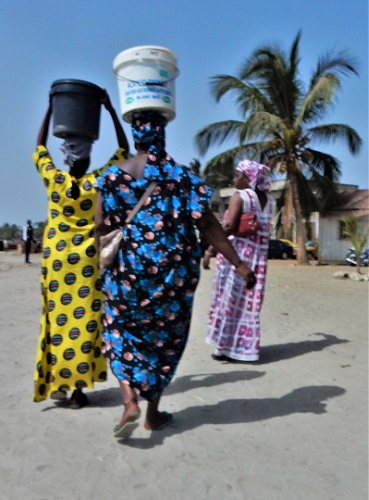
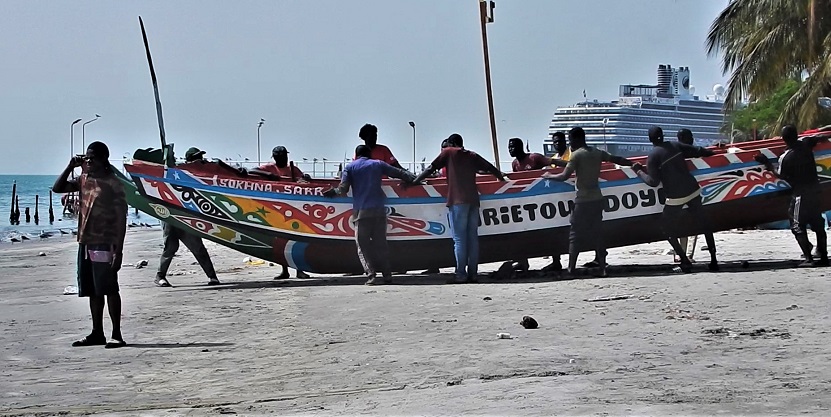
We watched as a bunch of guys rolled a boat from the beach to
the water using a series of well-worn rolling logs and other cylindrical
objects.

We passed by a fish-drying space on some netting.
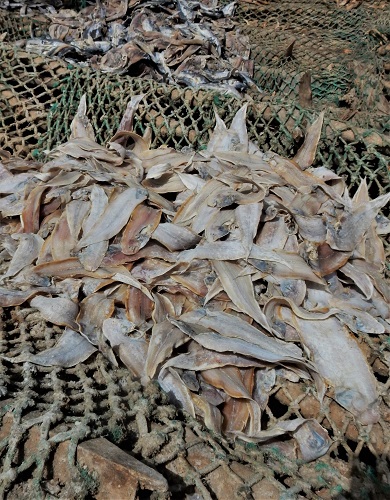 
A close-up of the fish and back into the village we liked this
large baobab tree.
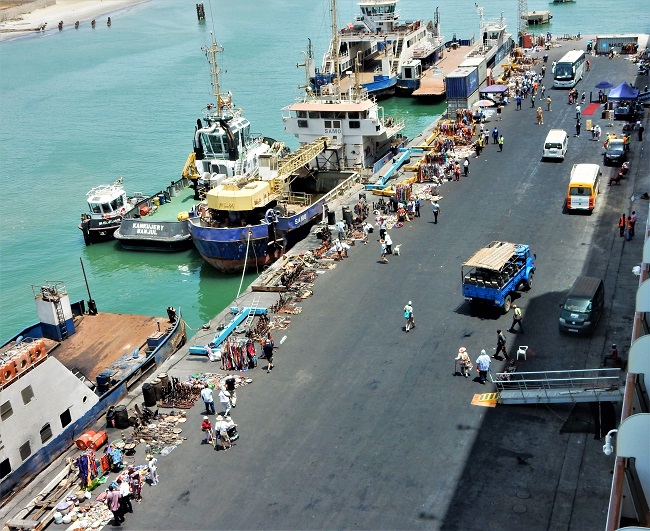
Back on the ship, it was clear that the dock merchants had brought
in a lot of stuff...

...and that many of our shipmates were buying their stuff.

A brass band was set up on the dock for a concert. This happened
last time we were here as well.
Our next port was Dakar, Senegal on the next day.
|