|
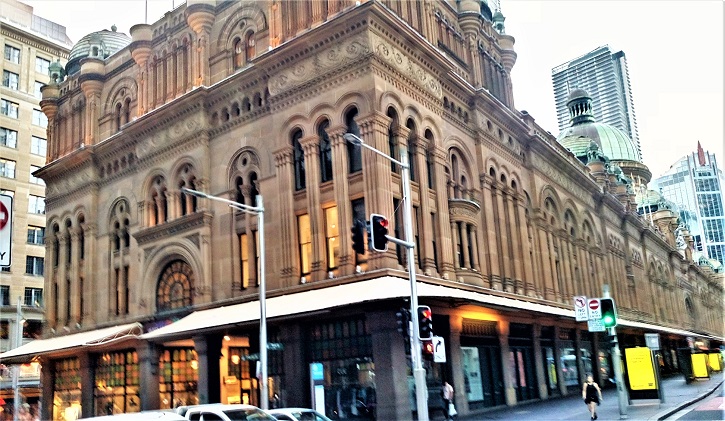
The next day, we were again out way before the shuttle buses were
running. This time we walked a mile out of the port to a bus stop
and caught a bus to the Queen Victoria Building where we took
a tram to Circular Quay. We walked to the Sydney Botanical Garden
from there.

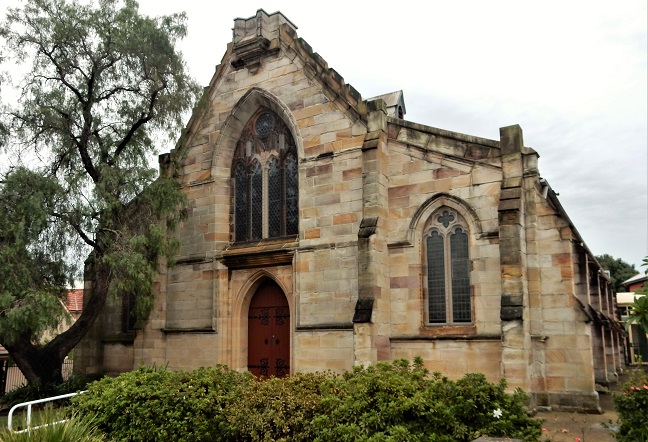
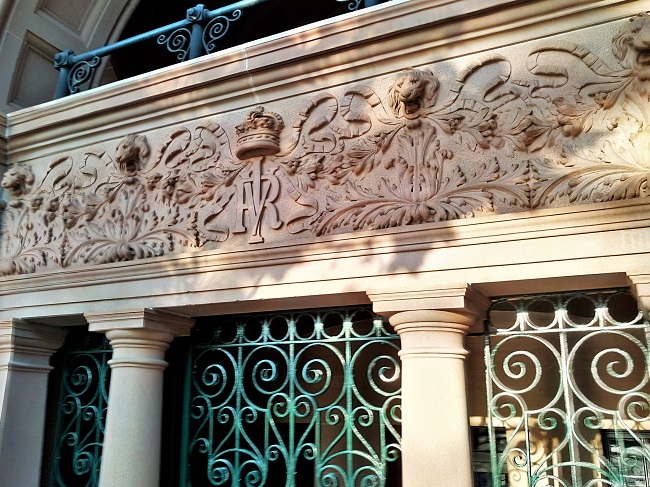
Some great old stone buildings on the way to the botanic gardens.


The morning light was wonderful.

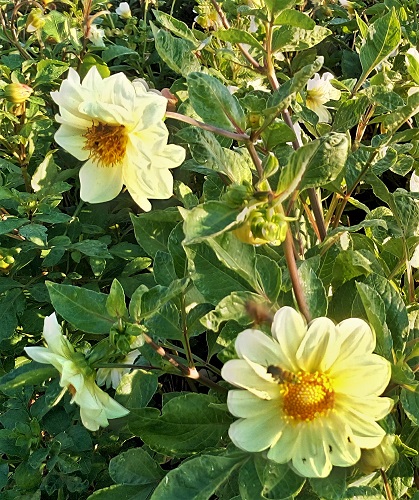
"Walk on the grass, touch the trees, smell the flowers..."
So we did.

Again, we enjoyed watching the Australian White Ibis.

An interesting sculpture of a wale's tale with iridescent streamers
to simulate the water running off the tale.
Cat's whiskers (Orthosiphon aristatus) a member of the
mint family native from India, SE Asia and the tropical island
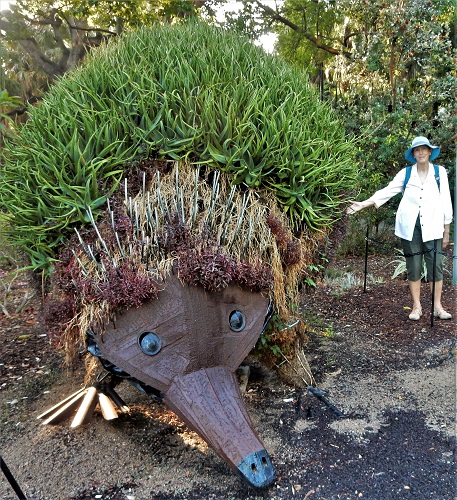
between there and northeast Australia. And the Echidna is a living
sculpture with aloes growing on its back, while the ants are covered
with sphagnum moss. Echidnas,
sometimes known as spiny anteaters, are quill-covered monotremes
belonging to the family Tachyglossidae. The four extant species
of echidnas and the platypus are the only living mammals that
lay eggs.

 
A Cassowary Bird sculpture was across from the Echidna. We loved
these beautiful pink bananas.
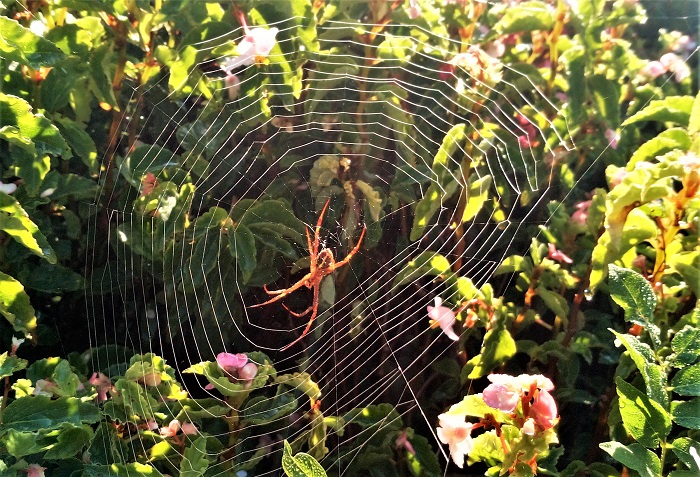
While there are no flying foxes in this garden any more, there
were still plenty of wild things to see.
(The flying foxes are large fruit bats with leathery wings that
the garden managers had been trying to chase away because the
bats were causing so much damage to the trees. They had succeeded
and still have some self-flying kites shaped like predators on
strings that were attached to mounted wands placed around the
grounds. )

We saw many of these Australian Swamphens (Porphyrio melanotus)
here and in our other Australian and New Zealand ports. They are
related to the American Coots and Mudhens.

 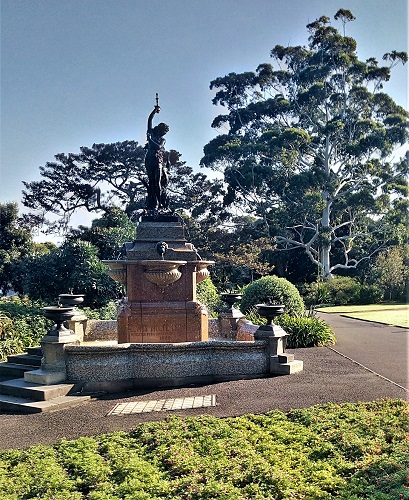

The light was nice on this wide spreading gum or eucalyptus tree.

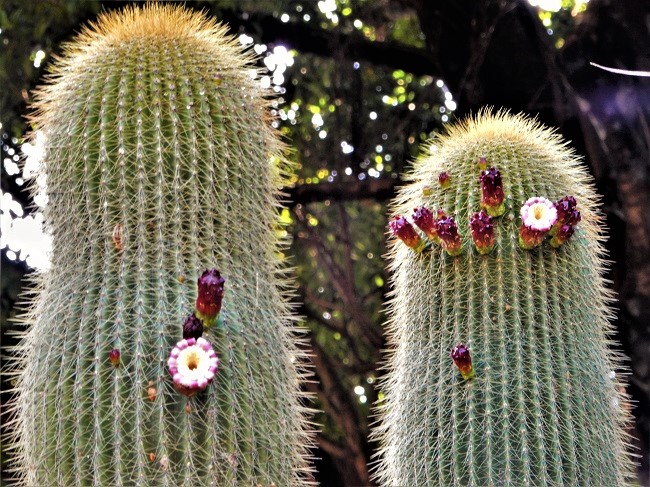
This was part of the cactus display...


The Greater Sulphur-crested Cockatoos (Cacatua galerita)
are well-known tool users, but here they didn't need tools other
than their beaks to eat the fruit of a fig tree.
 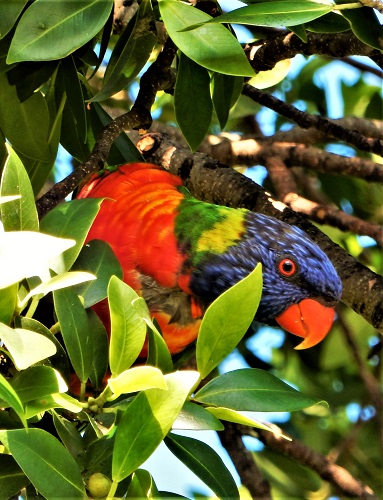
There were also many raucous calls of the Rainbow Lorikeets (Trichoglossus
haematodus), but they were not easy to photograph, since they
stay hidden among the foliage. These are true
parrots, while the cockatoos, which are related, are not.

After traipsing around the gardens for a couple of hours, we decided
to take a closer look at the opera house, which was on our way
back to Circular Key.
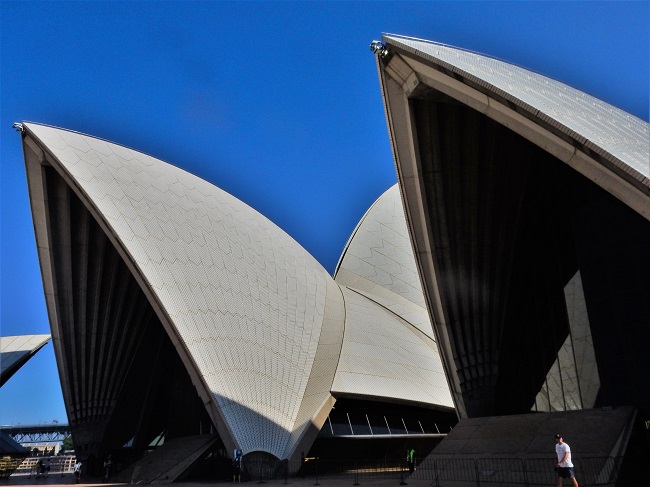
 
A close-up look at those iconic tiles and a look back to a section
of the botanic garden, which was at the same level as the top
of the stairs of the opera house, and at a new sculpture there.
It's called "bara" which is the word for an ancient
fishhook shaped like this and was used by women of the Eora native
people. This sculpture was recently unveiled in May 2022.

We took a light-rail train to the Queen Victoria Building (QVB
was the name of the stop.) It's a huge thing running the full
length of a long block which is now basically a mall with vendors
and restaurants inside at street level.

From there we walked a few blocks to the ship's shuttle bus at
Darling Harbor.

From our balcony, evening kayakers, moved to the outside of the
deep water marker and stopped paddling to let the Amera navigate
through a narrow space of the harbor.

Later, as we sailed through the harbor, we noticed this double-decker
apartment complex built into the side of the rock ledge and with
a green roof and park atop the lower level.

This whole park at the end of Darling Harbor was constructed on
reclaimed land. They had started it in 2018, but now it looks
more established with many mature trees and shorelines built to
resemble the natural rocky shorelines in the area. Next time we'll
make a point to walk over to it.

A lovely sunset from our balcony...
It had been a wonderful two days in Sydney. We
then sailed south to Tasmania, the large island south of Australia.
|