Nuku Alofa, Tonga
We'd been to Tonga
in 2015, so visit that page to see what we did then. One big
difference is that we had two days there then. This time only
one, but what an interesting people-oriented day it was...
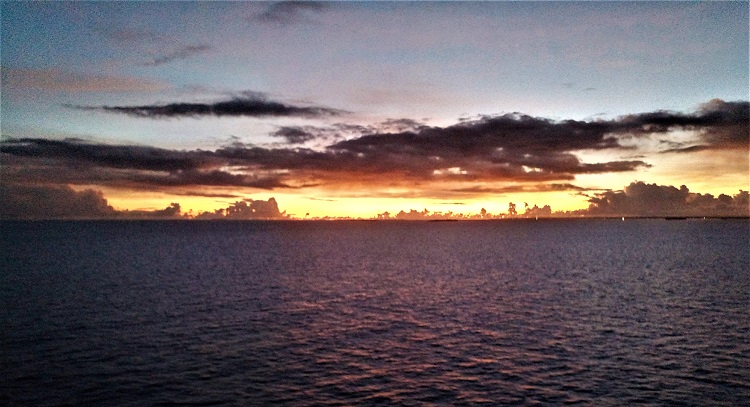
A beautiful sunrise started our day on a positive note...
 
Lovely young girls danced for the ship as a welcome and again
as we were sailing away. The dresses were made from a type of
tapas cloth.
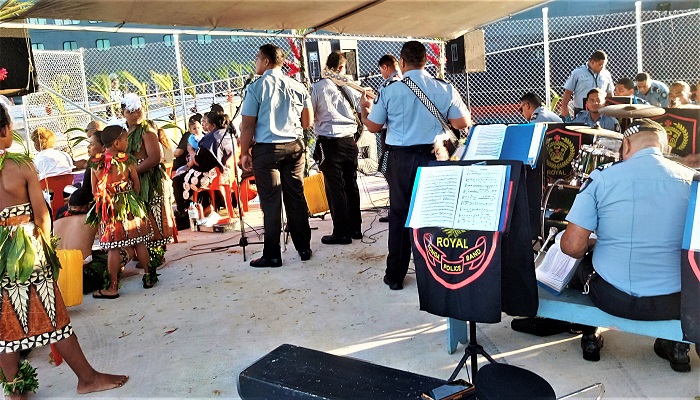
And as happened last time, there was also a brass marching band
which made for an innocuous combination.
But we were the first off the ship at 7am and they were not playing
or dancing at that time.
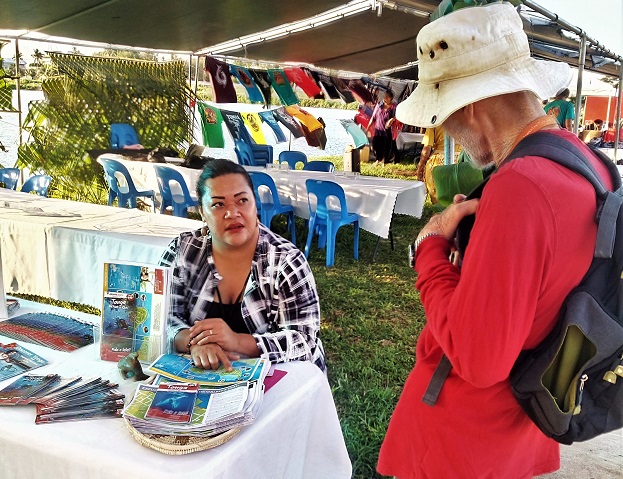
There were dozens of tents set up along the dock where people
sold jewelry, sarongs, and other merchandise.
Dean stopped to talk to the one tourist information tent to find
out if buses were running and other information because most of
this island and other Tongan islands had been hit by a huge tsunami
the previous year. It had been caused by a major volcanic eruption
on one of the nearby islands.

In 2015, our photo through this arch had only the low tourist
visitors center. The large treasury building with the red roof
was not there at all.
 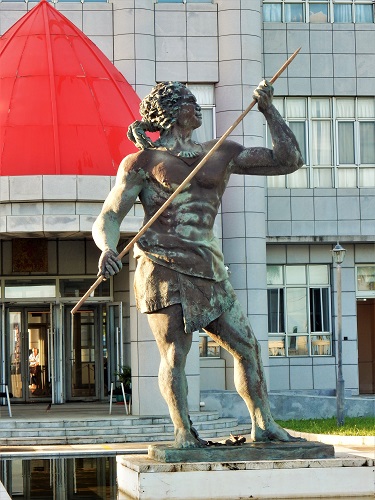
It was well guarded.

A restaurant in a quaintly decorated house with Victorian trim
was opening up for the day. The smell of freshly brewed coffee
was in the air.
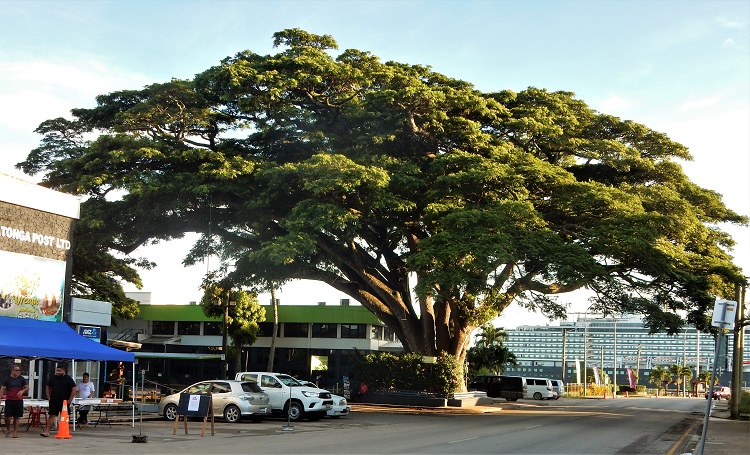
With our ship in the background, a wide-spreading tree shades
a whole block.

We'd found a New Zealand bank with an ATM, so we could buy some
Tongan cash so we could take the buses. When that ATM didn't work,
we walked further into town where there were two other ATMs. The
second one worked, but was going to charge a huge transaction
fee, so we canceled the transaction. These two friendly women
had witnessed this and offered to the exchange our US dollars
for Tongan money.

This one insisted that Dean should take her picture with me.
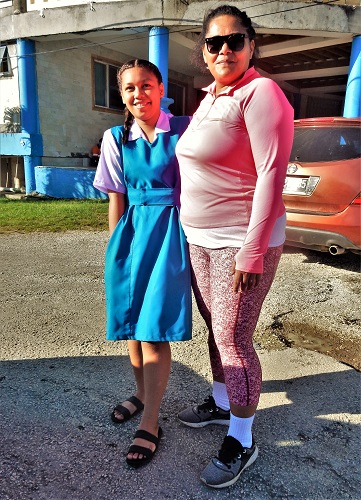 
Another woman who was also there at that ATM asked if she could
give us a lift. She had been raised in California, but had come
back to Tonga, got married, and had this "Munchkin."
She was taking her daughter to school, which had just started
after last year's tsunami. We had a lovely conversation along
the way. There was a bus stop at the school.
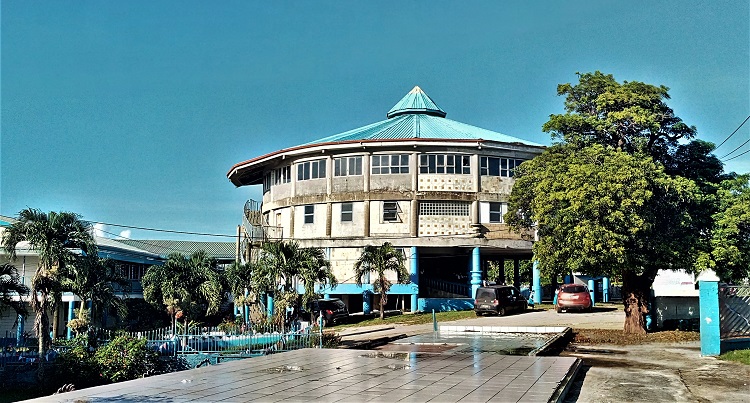
This was the high school where the daughter went.
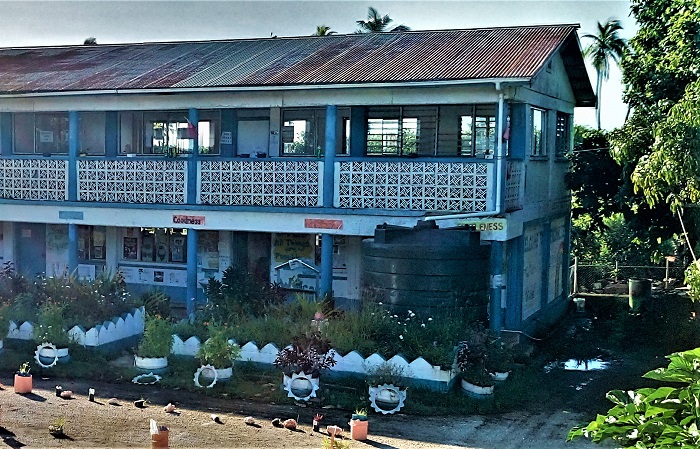
This is the elementary school next door. I love that each classroom
had a garden. We waited for quite a awhile for a bus, but none
going to the location we wanted showed up.
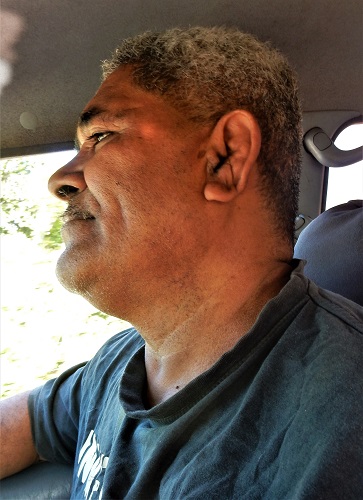 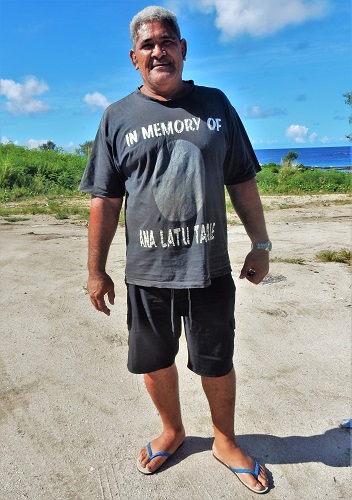
This man stopped and asked if we needed a ride somewhere. His
name was, Siupile Tamale and he agreed to take us to the two sites
we were interest in seeing. Dean offered him our bus money.
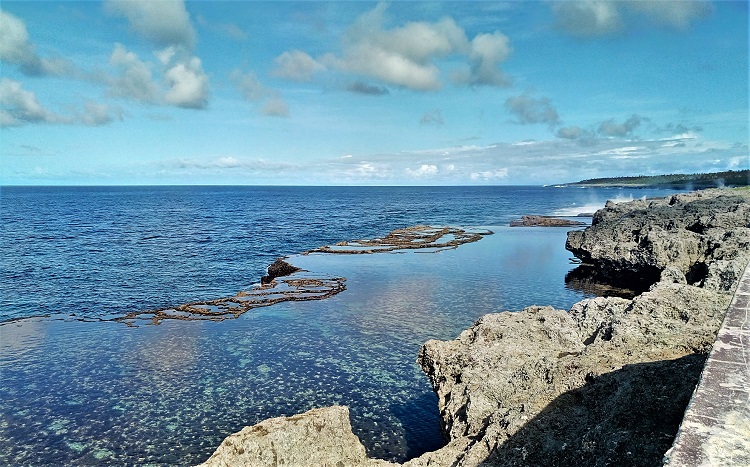
Our first stop was the tidal pools and blow holes.

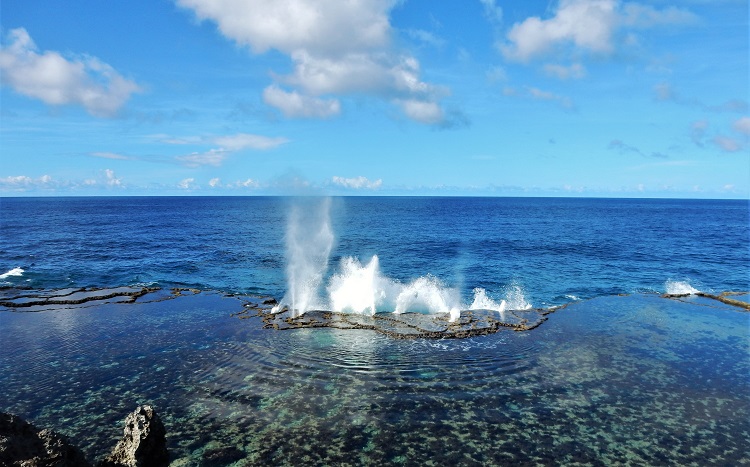
As the swells rolled in along the coast, there were spouts blowing
up through the endless series of holes in the tidal pool shelves.
We had come here in 2015 as well.
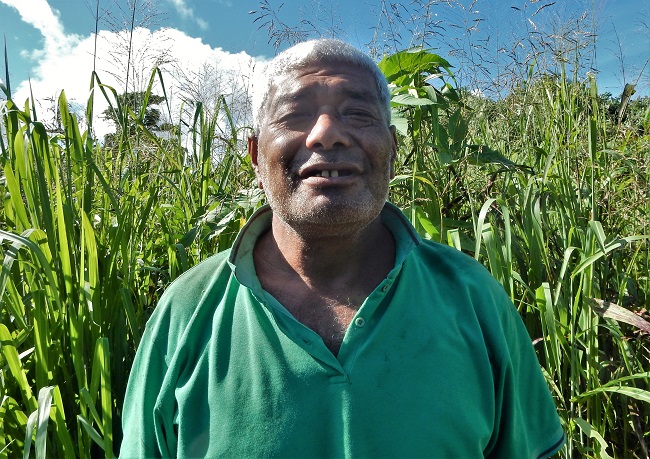
Another friendly character we ran into at the blow hole site.
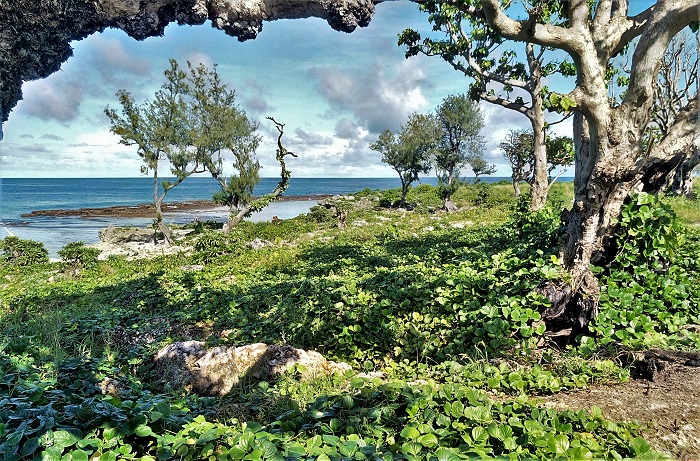
Siupile drove us to the tsunami rock site, not too far away. Dean
showed him where it was on the map on the tablet.

It is the largest known rock to have been moved by a tsunami.
It happened many years ago...

...long enough to have allowed this whole ecosystem, including
palm trees to have grown on the porous surface of the rock.
 
Dean asked Siupile if he had been to this rock before and surprisingly
he had not. He then stopped to show us a tall, tripled headed
coconut palm, which is extremely rare. There was a sign next to
the road about it. Palms almost always have unbranched trunks.
This was probably caused by two separate injuries about 10 to
20 years ago: maybe lightning strikes. After this, we thanked
Siupile and said that we were ready to go back to the ship, but
he had a surprise for us.
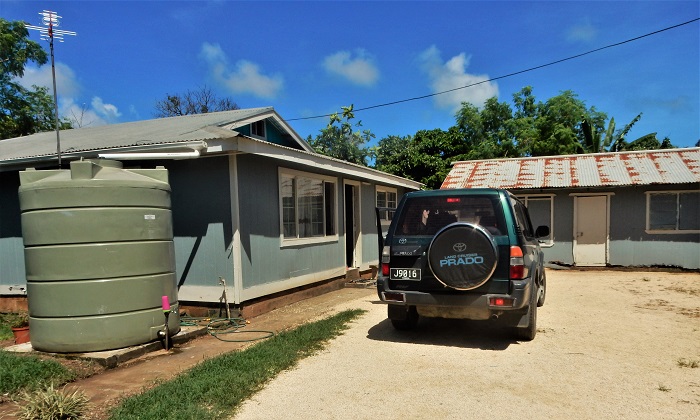
He took us to his house!

His wife, Laete, with some of their kids and grandkids. Their
adult daughter had died recently, but we did not find out what
she died of, but both of her children were now part of the household.
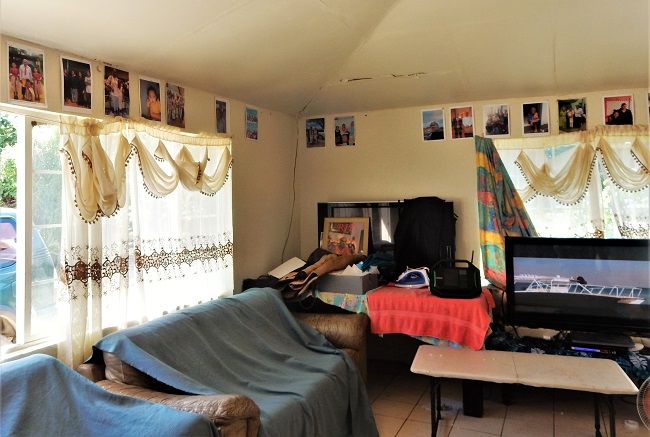
They had photos of the family along the ceiling. A TV was playing
an English movie. There is a strong movement to teach English
in Tonga. We also learned from his wife that Siupile was a pastor
at the 7th Day Adventist Church. There are a wide variety of churches
in Tonga including Mormon and others.
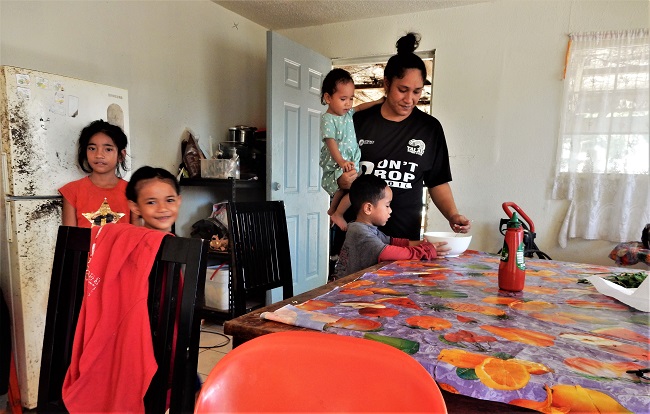
The large, square kitchen table and through that door was the
kitchen...
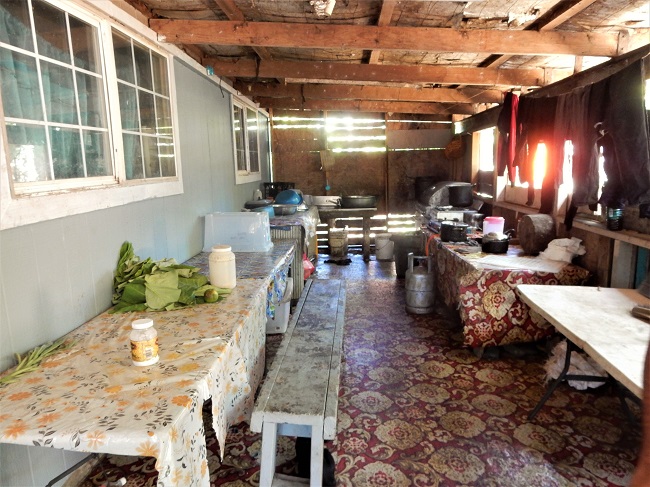
This was the kitchen and being mostly outside meant that it didn't
heat up the house.
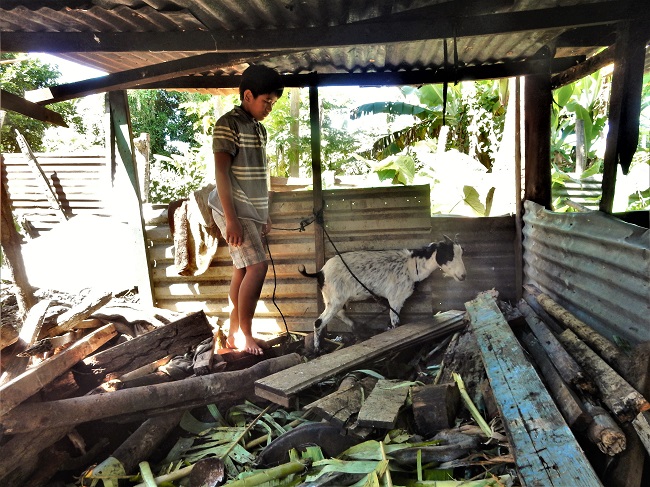
Out back they had a couple of goats, coconut palms, taro plants,
a large breadfruit tree, banana trees, papaya trees, and cassava
shrubs.
 
Siupile peeled away the husk of a coconut and then deftly tapped
it around the middle with a knife to split it. He offered us the
coconut water to drink. Then he shredded the meat into a bowl.
 
The son climbed one of the papaya trees to harvest a ripened fruit.
Someone peeled it and sliced it and served it to us with the shredded
coconut, which was a lovely combination. They wanted us to take
this food with us, but we told them that we were not allowed to
take food onto the ship. After some time, we asked Siupile to
take us back to the ship. His wife came along with us because
she needed to pick up some supplies for the restaurant they own
or manage, but it was closed on that day because of a broken ice
machine. So on the way to the ship he took us the long way around
and we wanted to stop and photograph this Greek Orthodox church
out near the shore, that is up on stilts to better weather the
bad storms.
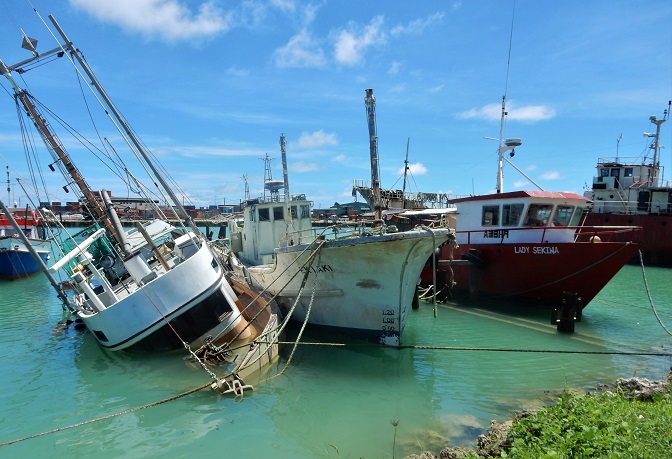
Some of the fishing boats damaged by the tsunami have not been
repaired a year later.
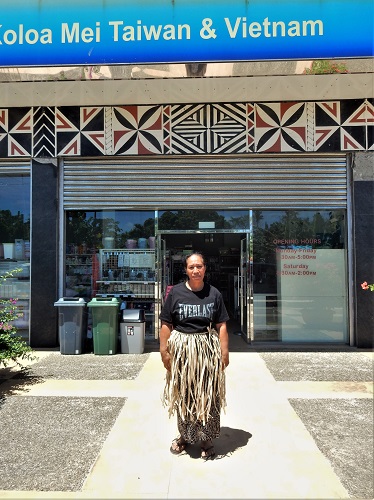 
As is the tradition, Laete wrapped a grass skirt over her other
one before she went out in public. Both she and Siupile were wearing
mourning shirts for their daughter. This was the restaurant supply/container
store.
This whole experience was eerily similar to Raimundo
in Paratins, Brazil up the Amazon River, who also gave us
a ride to show us the local attractions and then took us to his
house. Raimundo was more prosperous than this family, but still
we found it fascinating that they both wanted to show us how well
they were doing and to meet their families, which were very important
to them.
|