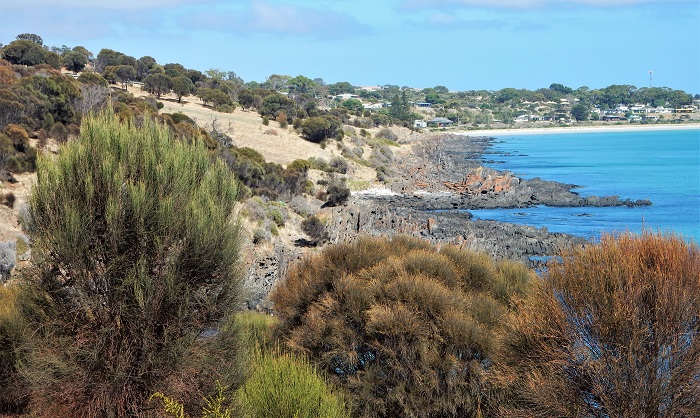
Adelaide, South Australia
We were in Adelaide in 2018,
so check out that page to see what we did then.
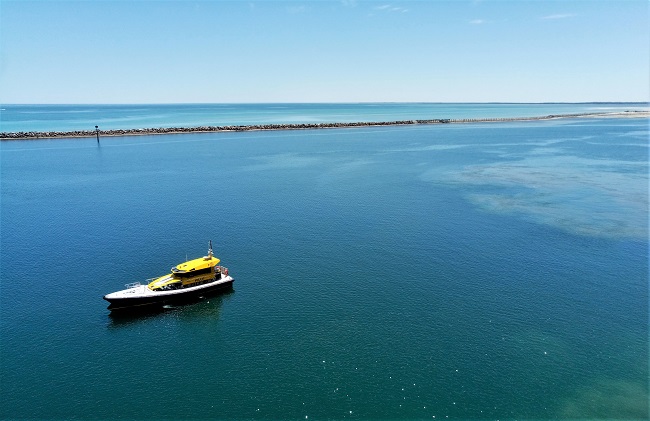
We arrived in the early afternoon. The peaceful view from our
verandah includes only our Pilot boat, but this is an industrial
port and a couple of large cargo/container ships were in port
with us.
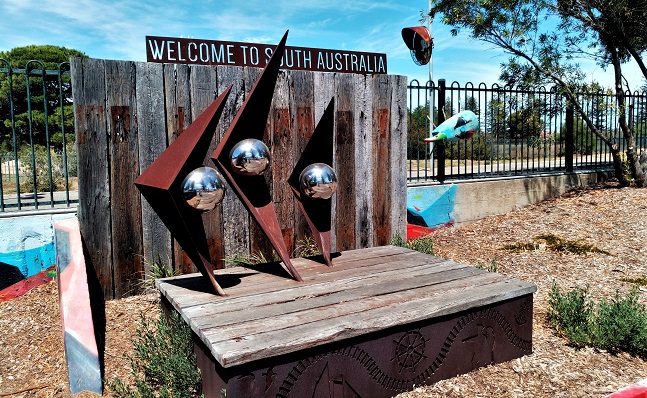
This welcome sign is by the train station across the street from
the dock. We were going to buy a day pass for the next day and
since it's good for a calendar day--not 24 hours--we opted to
walk around the port area that afternoon. The map on our tablet
showed some park or reserve lands nearby.
 
We walked in one direction that looked like a park, but it was
a fenced-off golf course. Then we saw a sign for a dolphin lookout
point, which we did not find, but we did find a friendly fisherman
who was rinsing off his boat and pointed us in the right direction.
We retraced our steps and went in the opposite direction to a
coastal path along the jetty where we had sailed in, and then
on to a beach.
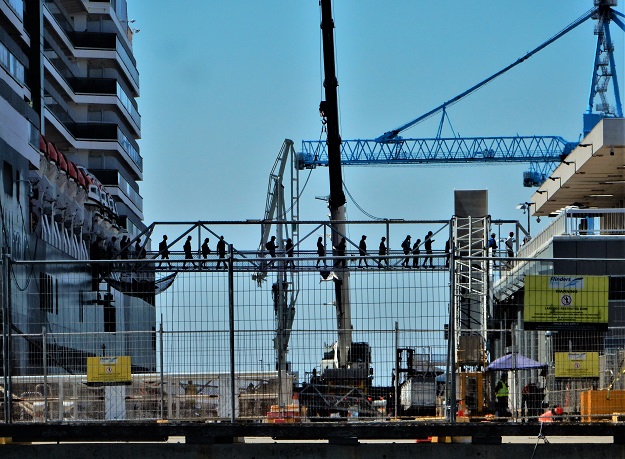
Looking back at our ship, we took this telephoto of our shipmates
crossing the walkway into the terminal building. Most of them
took the train into town, so there were not many people on the
trail or the beach.
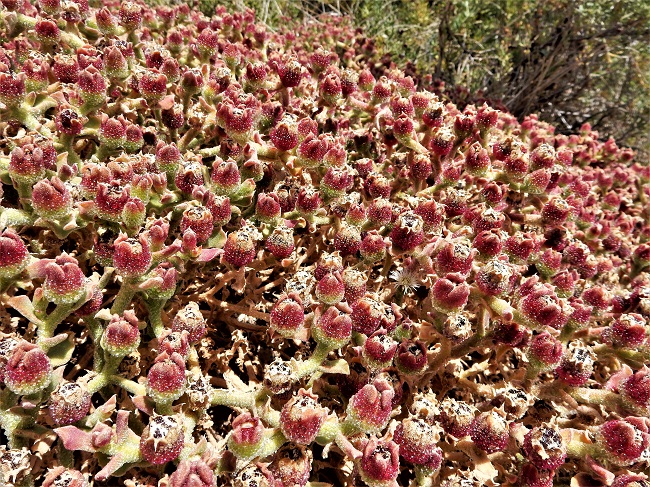
There were masses of this beach plant...
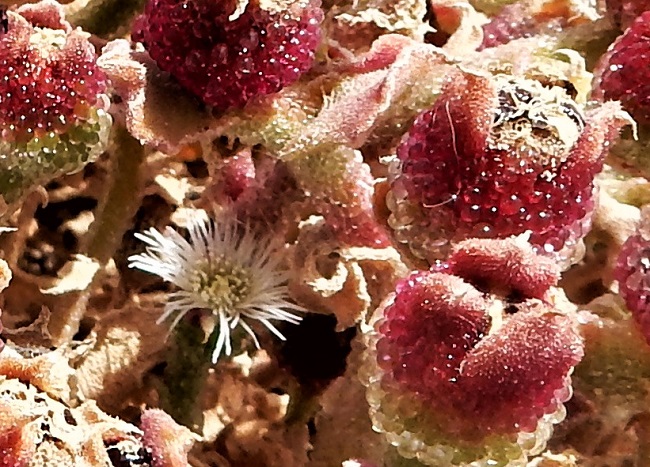
... The pink parts were apparently enclosing the fruit or the
seeds, but there were a few daisy-like flowers still blooming.
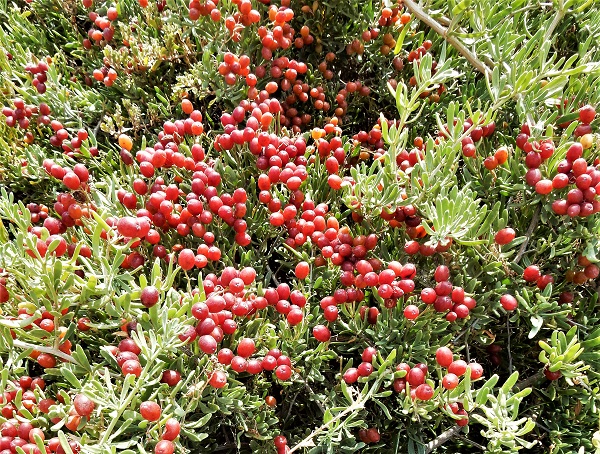
These red berries were on a different beach plant.

After a short walk along the jetty trail and looking for dolphins,
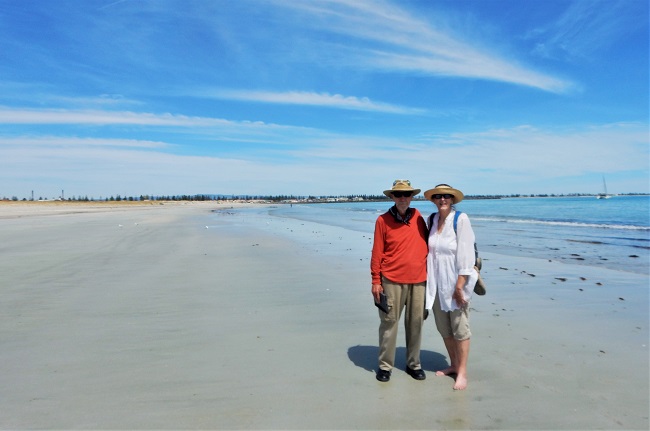
we came to a beach, which you can see is not far from our ship.
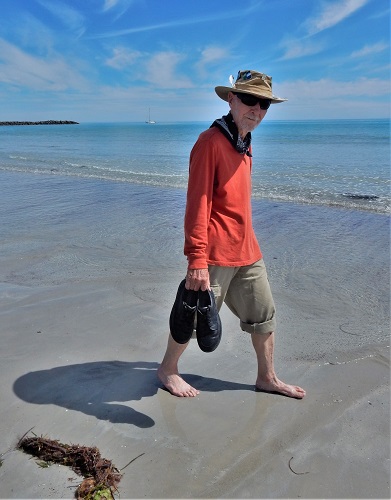 
Even though it wasn't far, we had the beach mostly to ourselves.

We noticed a behavior that we'd not seen before. Silver Gulls
were stomping their feet up and down in the shallow puddles on
the beach to stir up critters, which they then snatched up to
eat. We looked up and down the beach and many of them were doing
this same thing. A learned behavior for the whole population.
How interesting!
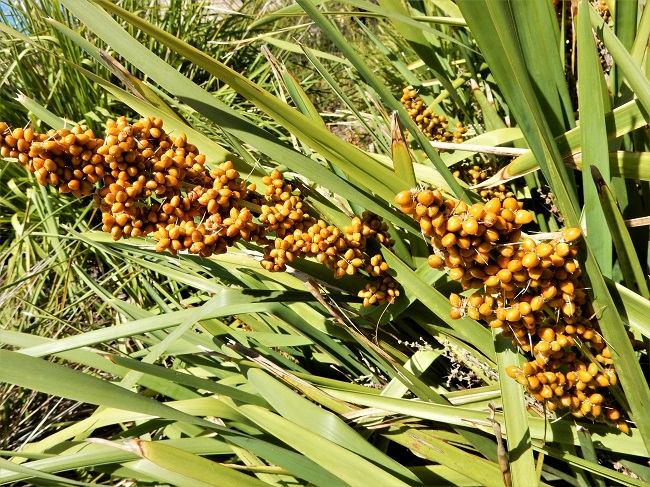
We walked to the end of the beach and thought briefly about putting
on our shoes and walking around the small community there, but
in the end, we just took this photo of the yellow berries growing
there and walked back along the beach.

We used this boat wreck as a sitting spot to put our shoes on,
but it seemed strange to see a ship pass by at eye-level from
a beach.
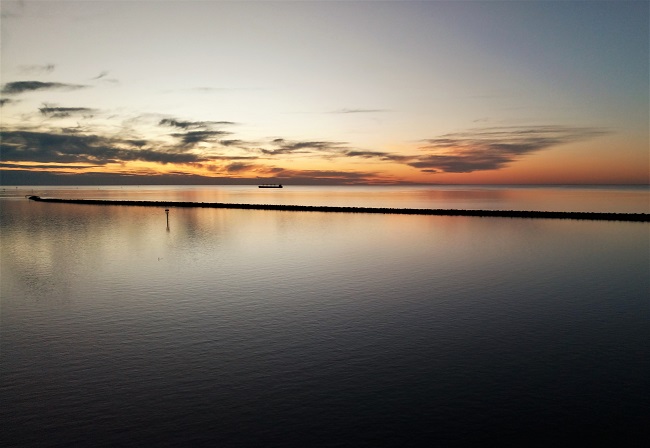
The setting sun from our verandah.
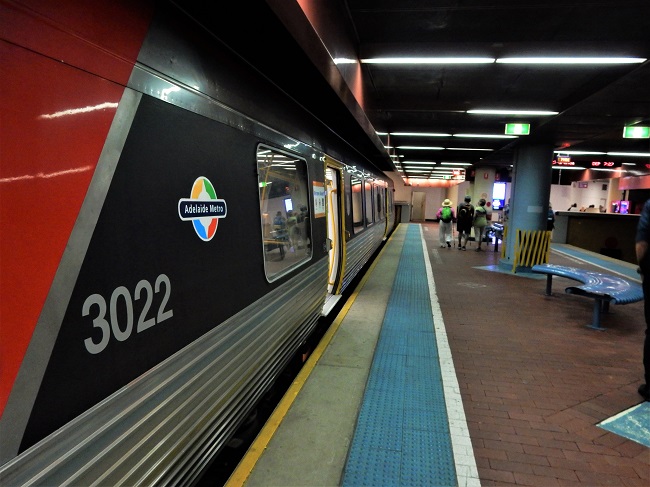
Early the next morning, we jumped on the first train and topped
our metro cards (saved from 2018) with money for a day pass, which
was good for trains, trams, and buses.
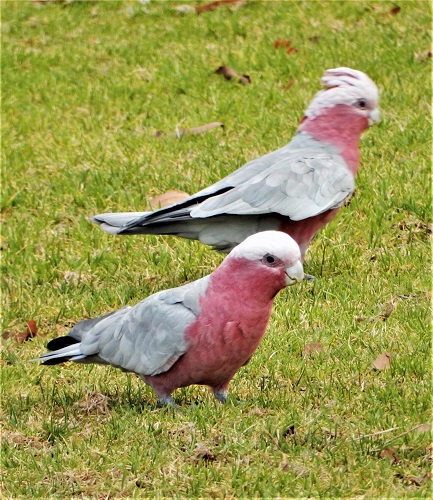 
Our first goal was a long river park on the north side of town.
We saw Galah birds (Eolophus
roseicapilla), also known as the pink and grey cockatoo
or rose-breasted cockatoo. We followed a trail designed for kids
that told a story with a positive message about being different
and the signs along the way had curvy metal support structures.
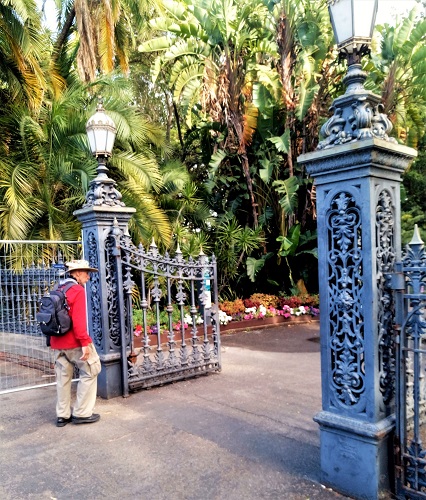
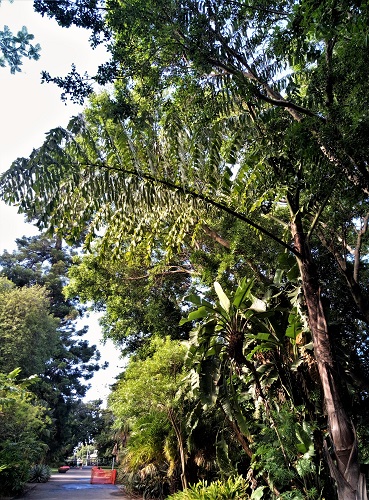
We took a tram to the other end of the city to the Botanic Gardens.
We'd been here before and found new things to do, but also enjoyed
some of the same sights as before.
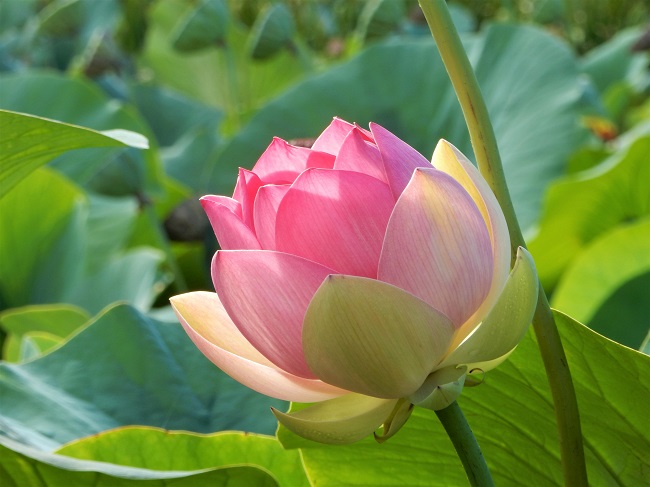
A perfect lotus flower (Nelumbo nucifera) growing in a
large wet patch. It's native to Australia, India, and most most
of eastern Asia. Its tubers, seeds, and flowers are dietary staples
in Asian cooking.

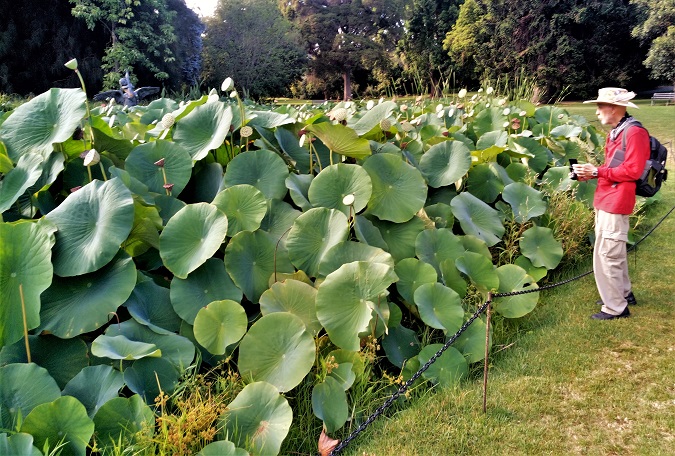
Just for scale, here's the whole patch.
 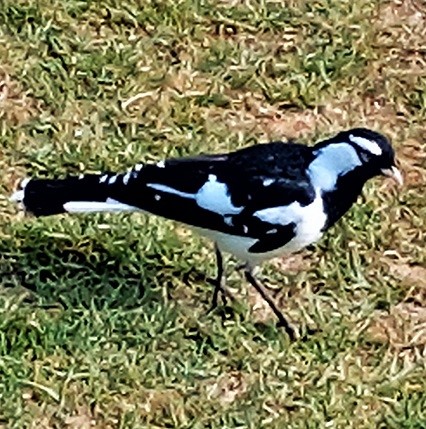
Here is the lotus fruit. We saw quite a few Magpie-larks (Grallina
cyanoleuca) in the gardens which are smaller and more mottled
than the standard Australian magpies (Gymnorhina tibicen),
which were also in the area. Neither of these birds is related
to the European Magpies.
 
This impressive Mexican grass tree (Dasylirion quadrangulatum)
was covered with pollinators, and as you might guess from its
common name, it's native to Mexico, not Australia.

Kangaroo apple (Solanum aviculare) is in the nightshade/tomato
family, but like many of this family, the fruit is toxic, although
it is grown for its steroids and is used as rootstock for eggplant.
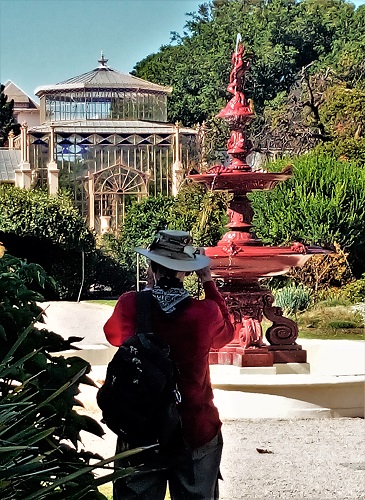
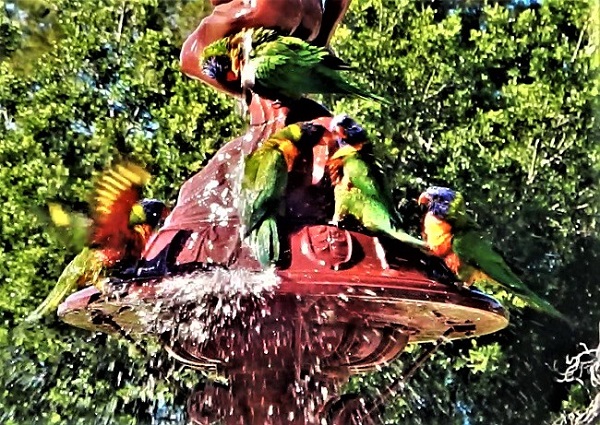
The rainbow lorikeets were using this fountain and making a lot
of noise while refreshing themselves with showers and drinks.
 
Near the fountain, I talked to a cook for the the garden restaurant
who was harvesting fennel flowers that were going to be used in
their special crocodile dish that they'd be preparing for that
night's menu.

A stand of dried teasel (Dipsacus sativus) makes quite
a statement.

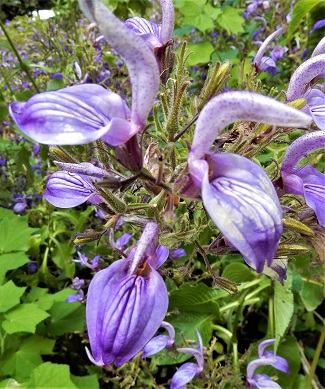
A beautiful mass of blue flowers, probably in the mint family.

A thick stand of brown-eyed susans (Rudbeckia triloba)
pay tribute to Carl Linnaeus, the guy who invented the binomial
naming system for plants, animals, and other organisms.
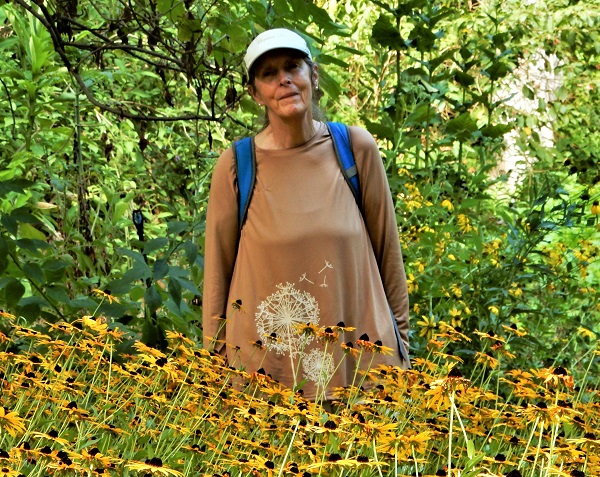
Another botantist in the brown-eyed susans who looks like she's
speading dandelion seeds in the garden.
 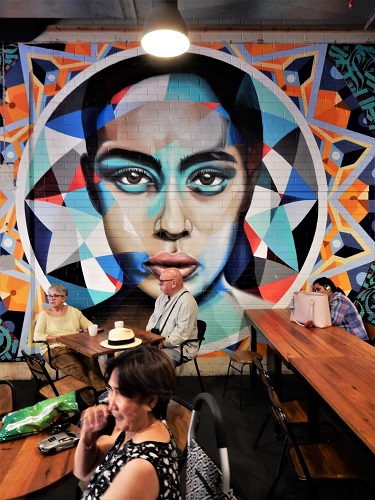
After the gardens, we went to the central market. It was busy
with shoppers. Murals decorate the walls of the market where people
can sit to drink their coffee or eat a snack.

A beautiful sunset before our departure, which was late, because
the next day's port on Kangaroo Island is just off the coast of
Adelaide.
|