Adventures of a Transplated Gardener- Ginny Stibolt

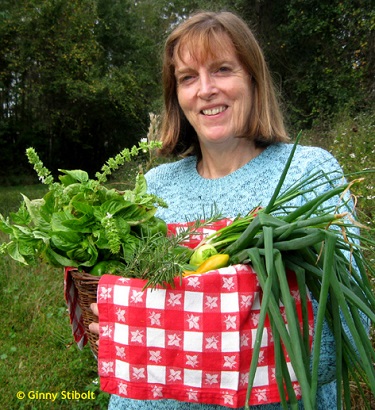
Ginny Stibolt with a pile of mulch.  Typical!

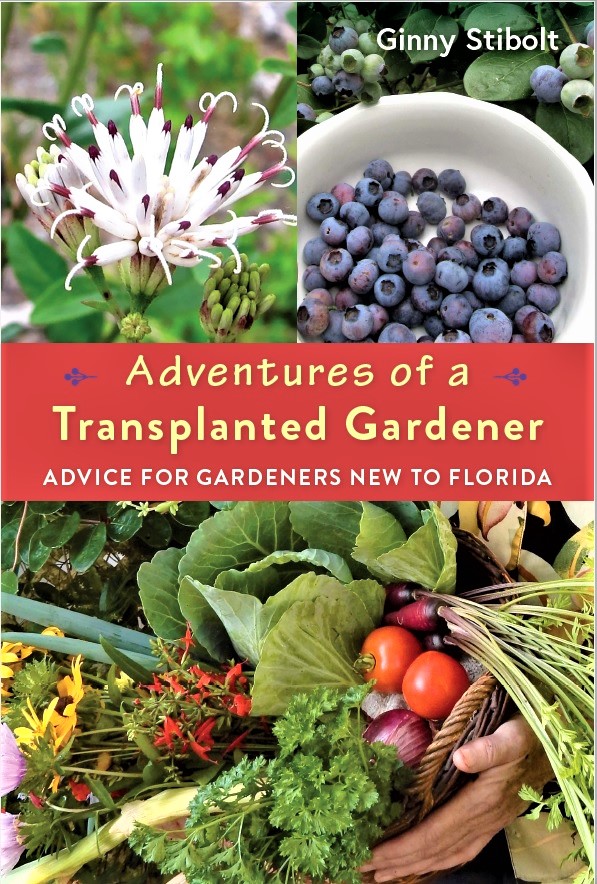
Ginny Stibolt, a naturalist with a master's degree in botany, moved from Maryland to Green Cove Springs in northern Florida.  These are her adventures in gardening.  Follow along and learn with Ginny as she tackles a wide range of gardening and environmental subjects from butterfly gardening, plant mythology, stinkhorn fungi, to rain barrels and more... Now she's writing a book, "Sustainable Gardening for Florida" for University Press of Florida.

Read Ginny's gardening articles
Ginny is a community columnist for Jacksonville's Times Union and is a contributing editor for the online plant encyclopedia: www.floridata.com
Have a gardening question or an idea for a future column?    Contact Ginny
Hear Ginny talk about some of your favorite topicsclick on the links below to the Times Union's podcasts:

Ginny's Garden Log

The main purpose of this log is to expand on the gardening adventures that I write about in my Adventures of a Transplanted Gardener columns.

Ginny in the process of de-lawning her yard.

This is the Current postings page (from 5/3/08 to present). Topics on this page include: rain garden, mystery, US Sugar, errors, summer solstice, grow more food, back meadow, coral honeysuckle, swallowtails, microclimates, Mothers' Day5 wrens

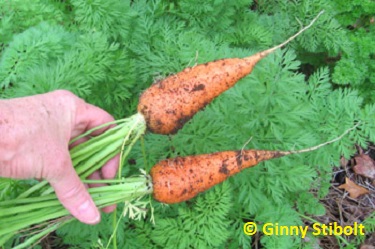
Postings from (1/6/08 - 4/27/08) topics include:  zucchinis, blue-eyed grass, grasshoppers, bolting lettucebird-friendly, irrigation, great sunflower, pot bound, spring, woodpeckers, carrots, mothyellow mulch, warm day, JAX arboretum, NOAA's predictionsedges

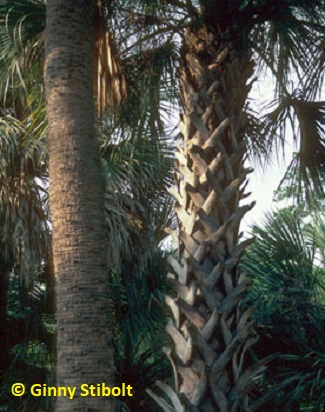
Postings from 9/16/07 to 1/1/08 topics include: new year salad, end of year, poinsettias, say no to poisons, Lucia Robson, palmettos, purselane, podcast links, beggarticks, peppers, hornworms

Postings from 1/12/07 to 8/15/07 topics include: jewels, podcast links, onions, first draft, wildflowers, SW trip, compost, myths web page, spring, herbs, podcasts, wedelia, yellow jackets

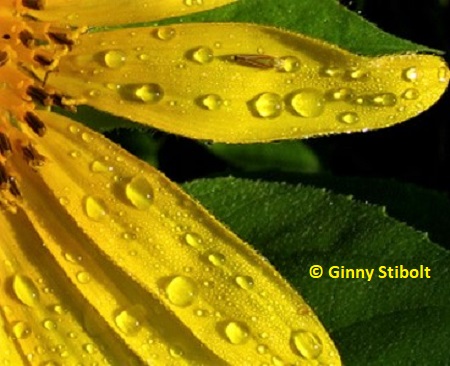
Postings from 8/12/06 to 1/10/07 topics include: 2007 plans, Poem, Tropical Home, Mantis, Fall roundup, Purple meadowsGardenfest, Gil Nelson, Good & Evil, North, Sunflowers

Postings from 12/21/05 to 7/11/06 topics include: Meadow Management, Tomatoes, Pond, Monocots, Garden Detective, Reducing lawn, Backyard Habitat, Water Hyacinths, Lawn dispute.

River of Grass cover

<< The Everglades, River of Grass should be required reading for anyone with any interest in Florida's history or environment.  

Order your
copy today
!

Postings from 7/10/05 to 12/8/05 topics include:  Fall/Winter, Mulch, Basil/Pesto, Stinkhorns, Hornworms, WrensCatbriars, Scarlet Snake, Sagos, Containers.

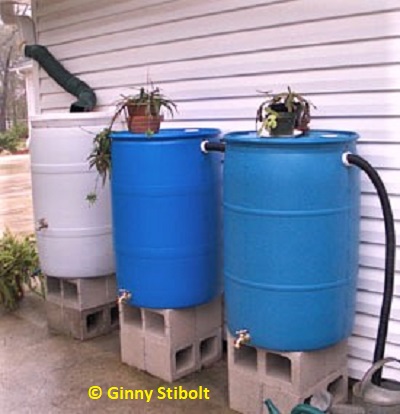
Postings from 3/19/05 to 6/28/05 topics include: Magnolias, Prickly Pears, Turtles, Botanicals, Ferns, Rain Gardens, & Rain Barrels

The Meadow page: a tour of Ginny's meadows: the flora & fauna.  Plus information on more natural meadow management. 


The overflow arrangement for our front raingraden.  Photo by Stibolt.

7/3/08 There's an article by Adrian Higgins in today's Washington Post about rain gardens.  With links to the low impact development website which has rain garden templates and examples.  

We've expanded our rain garden on the front corner of the house that catches the water from the downspout there.  I'll post an article about what we did sometime soon, but it does include this overflow arrangement so the excess water doesn't run across the pathway out there.  We created an upper tier in the rain garden where the water that fills up to this level will drain into the rocks wrapped with heavy-duty weed barrier cloth.  Here's a link to my original rain garden article


7/1/08  You might be interested in this interview, "Michael Pollan on What's Wrong With Environmentalism," from a new on-line environmental magazine called  e360 published by Yale University.  One of Michael's ideas is that environmentalism starts in your own garden and what you put on your table.


Kashmir boquet.  Photo by Stibolt.

6/30/08 Today my podcast on planning for microclimates was posted.  This is a follow-up on the column I wrote about how we've handled some of our microclimates from hot and dry to sloped and wet... 

I finally solved a mystery last week about a plant that a neighbor gave to me several years ago--saying it was some kind of hydrangea.  Since it has opposite leaves, I thought she might have been right.  It has been spreading around the front area under some water oaks amongst the azaleas since then.  The darn thing finally bloomed and while it's pretty as my neighbor promised, I'll probably start pulling it out.  I found out that this has a number of common names: rose glory bower, Kashmir bouquet, Mexican hydrangea, and Cashmir bouquet.  

Here's a link to Floridata's profile on this plant to find out why I'll be removing this plant: (Clerodendrum bungei)


6/24/08  Oh my gosh!!  Florida has made a deal to purchase US. Sugar with its 187,000 acres of farmland just north of the Everglades.  Most of this property will be returned to its natural state to improve the flow of water from Lake Okeechobee to the Everglades.  Marjory Stoneman Douglas (She wrote The Everglades: River of Grass in 1947.) must be cheering from her grave.  This is a stunning development--just stunning.  I've got goose bumps!!  Here's a link the the NYTimes story. Even though there is a lot of negotiating and work to make all this work, I'm optimistic.  Way to go Governor Charlie Christ!


Black swallowtail caterpillar.  Photo by Stibolt.

6/24/08 Success!!   We have black swallowtail caterpillars in our parsley!  In my column on parsley, I mentioned that I'd planted enough for us and for the caterpillars, but at that time I hadn't actually seen any.  It's ironic that they are on the unplanned for curly parsley, not the flat-leaved variety.  Hmmm.

My podcast Errors in Landscaping was posted today.  This is a short tour of the neighborhood looking at what some of my neighbors have done to their woody plants.  Here are some resources for further information:
·
International Society of Arboriculture's website provides a search tool to find a certified arborist near you: www.isa-arbor.com.
· University of Florida professor of horticulture, Ed Gilman's website has detailed information on pruning, planting, and other care of woody plants: http://hort.ifas.ufl.edu/woody


Bouquet of calla lilies on my desk.  Photo by Stibolt.

6/20/08 Celebrate The Summer Solstice tonight at 7:59pm EDT. My office faces east and I've been watching the sunrises move farther north.  As of tomorrow they'll start moving south again, as always.  While we're talking about my office, on my desk I have a lovely bouquet of calla lilies from the front garden.  I don't cut them until they start fading in the garden, but I can enjoy them for a week or more by cutting them.  As with most bulbs, if you cut the blooms, it strengthens the bulb.  Of course cutting three of the leaves to make a better flower arrangement doesn't help the bulbs any, but so it goes.

Zebra longwing caterpillars on a passionflower vine. Photo by Stibolt

A couple of weeks ago I saw some Gulf fritillary butterflies flitting around the yard.  Yesterday, I saw that they had done their work and their eggs have hatched on my passion flower vines.  The vines are bigger this year and can support more caterpillars.  I saw a lone zebra longwing butterfly a few weeks ago, too, and was hoping to see some of those caterpillars on the passion vine.  They would be white with black hairs, but I haven't seen any so far.  We butterfly gardeners hope for a moth-eaten landscape.


Parsley flower on my Italian flat -leaf parsley.

6/11/08 A couple of news items recently have made the case for growing your own vegetables stronger than ever.  Here's a link to an AP story: Why did food sellers treat tomatoes like hot potatoes?  There was another article in today's NY times in the dining section, not home and garden: Banking on Gardening. Combined together these articles give two of the most important reasons for growing your own food: 1) it's safer, and 2) it's more economical.   That you might also increase vegetables eaten by more members of your family is a bonus.

Also, today I posted an article called, "The Tale of Two Parsleys."  Here is a photo of a flower in the bed of Italian flat-leafed variety parsley.  I also ended up with a surprise second crop of curly parsley.  Rich in Vitamins A, C, & K, sow some parsley in next fall's garden, and enjoy better health and better butterflies.  I didn't mention in the article that it's best to soak the seed overnight before you plant it, because otherwise it will take so long to germinate that it'll have time to go to hell and back before you see sprouts! 


elderberry in the back meadow.  Photo by Stibolt.

6/6/08 Our back meadow has been looking much better since I pulled out all of that invasive wedelia.  While the elderberry has been expanding out there since we stopped mowing four years ago, it looks really good this year with lots of blooms as shown to the left.  Maybe we'll even get to harvest some of the elderberries this year, or maybe the birds will beat us to them again.  My podcast on the back meadow was posted today.  

I'll post an update on the whole project from pulling the wedelia to sowing some wildflower seeds on the Meadow page soon.  


Coral honeysuckle.

5/30/08 My podcast on our native hummingbird magnet, coral honeysuckle (Lonicera sempervirens), was posted yesterday.  We have a big vine right next to our hummingbird feeder and it reduces the "hummer wars" a little.  It's fun to watch the hummingbirds push up into these pendulous tubes.  We are just beginning to see female hummingbirds.  For the last couple of months we've seen only males, and as beautiful as they are it's good to have the ladies back.


2 swallowtail butterflies visit Ginny's zinnias.  Photo by Stibolt

5/21/08 Two freshly emerged swallowtail butterflies graced our zinnias the other day.  Aren't they beautiful?  We harvested the rest of our lettuce and Swiss chard.  Our thought was that the greens will keep better in the refrigerator than out in the hot sun and that no more bolting will take place.

My podcast, The Lawn Less Mown, was posted yesterday.  Here's the link to the related article.


As two small bees (about 1/2-inch long) work furiously amongst the numerous stamens of the prickly pear flower, pollen flies everywhere.  Photo by Stibolt

5/14/08 Microclimates:  I posted an article today on how we've handled various microclimates on our lot.  The typical advice relating to microclimates is to plant succulents in hot dry areas, but there are more microclimates than just hot and dry.   

Succulents are a group of plants that have fleshy stems, extensive root systems, and/or thick cuticles.  They withstand drought very well.   I talked mostly about our prickly pears which are a true cactus, but there are many more succulent plants than just cacti.  All cacti are succulents, but not all succulents are cacti.

As two small bees (about 1/2-inch long) work furiously amongst the numerous stamens of the prickly pear flower, pollen flies everywhere. >>

Also today, my most recent podcast was posted where I talked about the 2007 word of the year--locavore.


Mother spider with babbies on her back.  Photo by Stibolt

5/11/08 Happy Mothers' Day to all !!   I thought you might be interested to see a mother spider that was on our screened porch out back.  See all the babies clinging to her abdomen?  Oh boy, more bug eaters.

The mulch gets dumped on the driveway. Photo by Stibolt

We acquired another huge load of mulch the other day even though the one we have out in the front meadow is only half used.  When we heard a tree chipper in the neighborhood, my husband rode his bike to locate the chips, because we have a couple of big projects that need a lot of mulch.  More on the projects later.  One of our previous loads of tree chips was from this same tree trimmer.  This time, we had it dumped on the side of the driveway near the rain barrels so it would be closer to the projects and so we can just leave it here until it's all used up.  We'll use all of this pile before we continue to use the old pile out front.  


4 wrens think the photographer is a parent; one is not fooled.  Photo by Stibolt

5/3/08 While we are talking about bird-friendly yards, we have five baby wrens being raised on our front porch.  The nest was constructed under the leaves of a spider plant and peace lily in a pot placed in a wicker planter.  We haven't watered this pot since we noticed the nest, so the plants have suffered.  We also have reduced our use of the front door.  It's a small sacrifice for five new insect-eating predators in the neighborhood. 

Ladies tresses orchids grow in the front meadow.  Photo by Stibolt

The two parents make dozens of trips each hour with bugs for their brood and we've enjoyed a close-up view because the nest is visible from one of our front windows.  This is a very good year for the wrens.  The last time we had knowledge of a wren nest, only three fledged. Here's a podcast on our 5 Baby Wrens. (Update on 5/7/08: While we were out doing some errands yesterday, a predator, probably that red shouldered hawk, took the babies.  The hawk probably has babies of its own to feed, so that's the circle of life.  I cheer for the predators--their success is a mark of a balanced ecosystem, but I was so looking forward to watching them learn to fly.)

I spent some time this week transplanting about 40 ladies tresses orchids (Spiranthes spp) from the lawn before we mowed it again.  I replanted them in various garden and meadow areas where they joined ones that I'd rescued in previous years.   I love these treasures from the lawn.  One of the places they landed was around the newly expanded rain garden next to the front porch.  More on this project later.

I called my daughter on May Day.  When we lived near Annapolis, I would pick her up from school on May Day every year and we'd go down to Annapolis for the May Day basket celebration.  The garden club hands out ribbons for the best baskets for commercial or residential entries.  The winners are invited to a tea.  This contest started in the '50s and has been one of the traditions since then.  Next year we decided that we'll fly up there, pick up my granddaughter from school, and enjoy the celebration again.   I'll take some photos and post them here.  

 Previous postings-page seven


Podcasts recorded with Cherri Pitzer at Florida's Times Union.

podcast Microclimates 6/30/08
podcast Errors in Landscaping 6/24/08
podcast
Back Meadow6/6/08
podcast Coral Honeysuckle 5/29/08
podcast
The Lawn Less Mown 5/20/08
podcast Locavore 5/14/08
podcast  5 Baby Wrens 5/6/08
podcast Book Progress 3/31/08
podcast Bird-Friendly Yards 3/24/08
podcast 
Pot Bound Plants 3/20/08
podcast 
Great Sunflower Project 3/10/08
podcast Global Warming 1/17/08
podcast Don't Feed the Algae 1/17/08
podcast Cutting edges 1/17/08

podcast
NOAA's weather predictions 1/8/08
podcast Christmas pickle 12/14/07
podcast Composting leaves 12/14/07
podcast End of year gardening 12/14/07
podcast Poinsettias 12/5/07
podcast Pest  Management 10/12/07
podcast Butterfly Gardens 10/12/07
podcast Butterflies & Moths 10/12/07
podcast Too much Rain?? 10/12/07

podcast Container Gardening 9/15/07
podcast Horticultural Myths 8/15/07
podcast Wildflower Grants 8/15/07
podcast
The Skinny on Onions 8/9/07

podcast Invasive Aliens 3/2/07
podcast Spanish Moss Tales 3/2/07
podcast Hurricane Readiness 2/14/07
podcast Tomatoes for Florida's heat 2/14/07
podcast Myths and Traditions of Holiday Plants
 - Mistletoe
12/14/06
podcast
Holiday Traditions - Week 2 12/14/06
podcast
Holiday Traditions - Week 3 12/14/06
podcast Caring for holiday greens 11/27/06
podcast
Fall roundup 11/27/06
podcast Organic Gardening 9/20/06
podcast The Florida Native Plant Society 9/20/06

podcast
Ragweed and Goldenrod 8/17/06
podcast Sunflowers 8/17/06
podcast Meadow Management. 7/5/06
podcast Ebony Spleenworts 7/5/06
podcast
Stinkhorn Fungi 7/5/06
podcast Ginny's  Yard--Certified Habitat #59063 7/5/06
podcast Rain Barrels 6/5/06
podcast Rain Gardens 6/5/06
podcast More Diversity in your Landscape 6/5/06
podcast Less Lawn 6/5/06

Gardening articles:

Top of page

© Ginny Stibolt 2004-2008


Website by www.sky-bolt.com 


This site is a member of WebRing.
To browse visit Here.